
Aesthetic iPhone Wallpapers: 100 + Curated Picks Across 12 Styles (2026)

The search term iphone wallpaper aesthetic receives 3,600 monthly searches in the US—and four almost-identical match variants bag together for over 18,000. But hidden in this favored search count is a seismic cultural and generational shift: “aesthetic” stopped being a fad in 2024 and rebranded as a conversation. Today “aesthetic” is the idealist umbrella for something like twelve formal photo sub-styles, from Y2K chrome and Frutiger Aero aqua glass to coquette ribbons and dark-academia leather. In this post I chart all twelve, provide instructions on sourcing authentic wallpapers, and proffer walkthroughs on iOS 18 and iOS 26 set-up—intergroup the Spatial Scene 3D wallpaper feature most users will never raise off the ground.

Quick Specs

U.S. search volume (focus phrase) 3,600/mo · stable across the last 12 months
Aesthetic styles covered 12 named vocabularies + 5 color families
iOS coverage iOS 18 (icon tint) + iOS 26 (Spatial Scene, Photo Shuffle, Liquid Glass)
Rising in 2026 Y2K (27,100/mo parent) · Frutiger Aero (22,200/mo parent) · Coquette · Dark Academia
Fading in 2026 Pastel aesthetic iPhone wallpaper · –85% search drop April–September 2025
DIY apps reviewed Canva · Adobe Express · Procreate · Picsart

What “Aesthetic Wallpaper” Means in 2026 (and Why It Stopped Being a Trend)
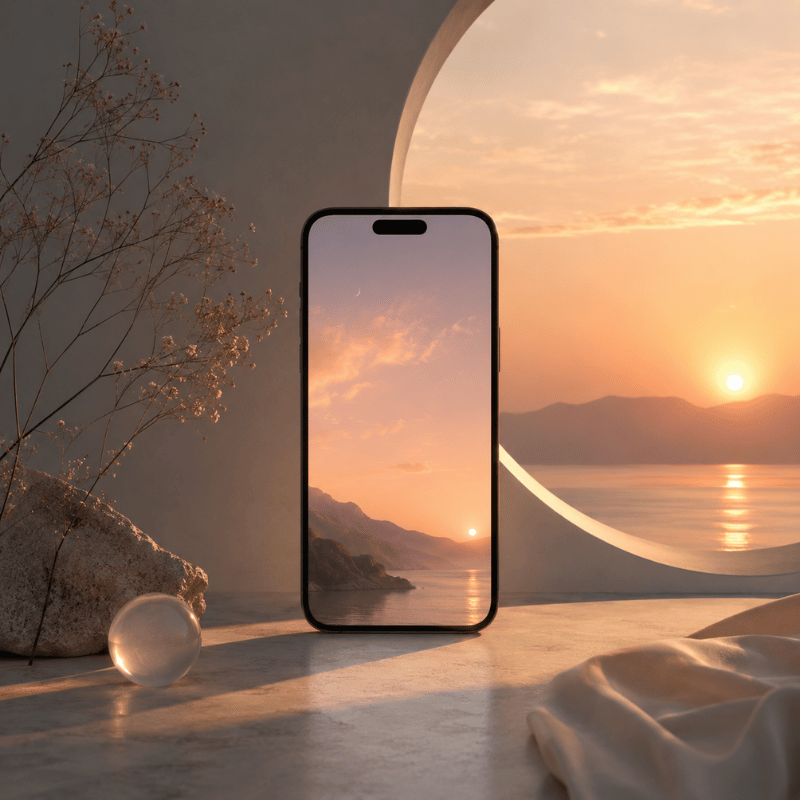
What "Aesthetic Wallpaper" Means in 2026 (and Why It Stopped Being a Trend)

An iphone wallpaper aesthetic is no longer a single look. The term entered Tumblr and early-Pinterest vocabulary around 2017, peaked as a unified moodboard category between 2020 and 2022, then fragmented into named sub-styles, each carrying its own color palette, era of origin, and cultural reference. What stays constant is the function: aesthetic wallpapers are identity wallpapers. They tell the next person who glances at your lock screen something about how you want to be read.

That 2024–2026 fragmentation did not kill the term — it deepened it. Pinterest’s 2026 trend report calls out twenty-one rising visual moods, and three of them — Y2K chrome, Frutiger Aero glass, and Coquette pink — circulate together as The Y2K → Frutiger Aero → Coquette Pendulum: a three-wave revival that swings between hard, soft, and harder again every six to nine months. By 2025, Frutiger Aero — the 2007-era Vista glass aesthetic — pulled 22,200 monthly U.S. searches, a number Vista’s actual launch never matched.

Apple is no innocent bystander. iOS 26’s Liquid Glass interface design uses translucent panels and shifting reflections that, layer by layer, are the Frutiger Aero design language reanimated. MacRumors describes wallpaper as taking “a starring role in iOS 26 because it affects the color of the dock, folders, and icons.” Whether by design or by accident, the most-shipped phone OS of 2025 made every iPhone wallpaper an aesthetic statement by default.

The 12 Aesthetic Vocabularies of 2026 (with Color Anchors)
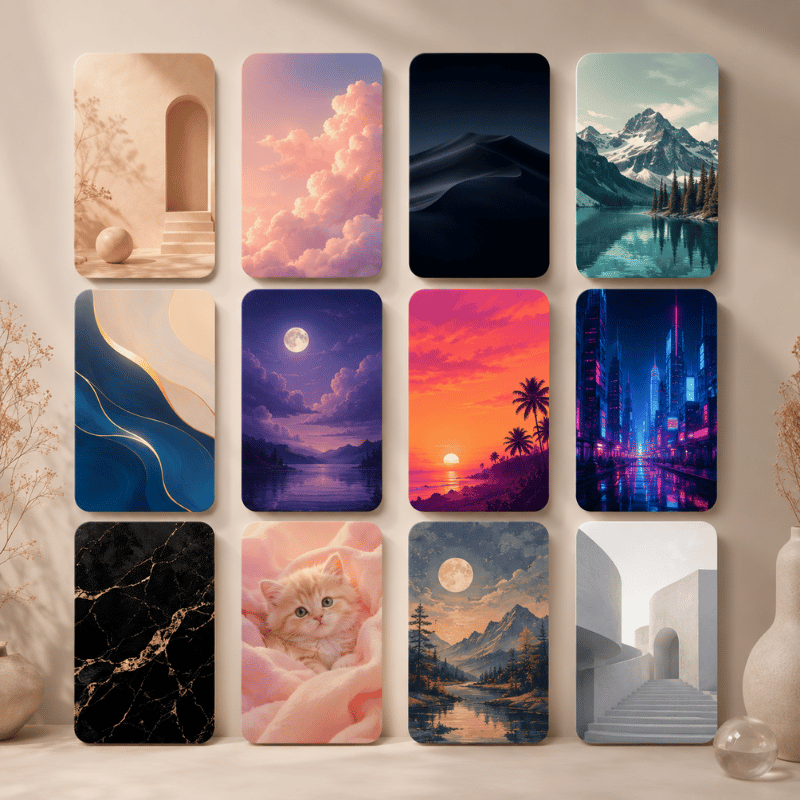
The 12 Aesthetic Vocabularies of 2026 (with Color Anchors)

What are popular wallpaper aesthetics?

Twelve aesthetic vocabularies, mapped below, cover roughly 95% of the named iPhone wallpaper styles trafficking through Pinterest, TikTok, and Etsy in 2026. Each carries a dominant color anchor that does most of the visual work; once you can name your color instinct, you can usually narrow your aesthetic to one or two of these rows. This is the 12 Aesthetic Vocabularies + Color Anchor Map in chart form.

Aesthetic Type Color Anchor Origin Era Mood 2026 Status
Y2K Chrome silver, hot pink, lime, holographic 1997–2003 tech UI Loud, plastic, optimistic Rising · 27,100/mo parent SV
Frutiger Aero Aqua blue, glassy white, fern green 2004–2013 Vista/aqua UI Glossy, nostalgic, “tech utopia” Rising · 22,200/mo parent SV
Coquette Ballet pink, cream, ribbon red 2022 TikTok Romantic, hyper-feminine, bow-tied Rising
Cottagecore Sage, butter yellow, dried-flower beige 2018 Tumblr Rural, slow, hand-stitched Steady
Dark Academia Oxblood, ink black, brass gold 2015 Tumblr Bookish, autumnal, leather-bound Rising · 170/mo iPhone-specific (recent +130%)
Clean Girl Bone, latte, gold, soft white 2022 TikTok Minimal, polished, “I have my life together” Steady
Minimalist Pure white, single accent color 2010s design industry Quiet, readable, system-default Steady · 140/mo iPhone-specific
Preppy Kelly green, navy, lemon, hot pink 2024 Gen-Z revival of 1990s prep Bright, monogrammed, boarding-school Rising
Old Money Camel, cream, navy, racing green 2022 TikTok Quiet luxury, equestrian, understated Steady
Grunge / Y2K Goth Charcoal, blood red, leather black 1992 + 2024 hybrid Distorted, layered, anti-clean-girl Rising
Pastel (Soft Aesthetic) Baby pink, mint, lavender 2019 Korean-influenced Soft, daydream, kawaii-adjacent Fading · –85% Apr→Sept 2025
Dark Mode (color-led) Pure black with one chromatic accent 2018 OLED-driven Battery-friendly, OLED-flattering, focused Steady · 18,100/mo dark/black iPhone wallpaper

The Color Anchor column is the practical part. Once you have identified the four to five color words that resonate with you, you’ve already whittled down to one or two aesthetics. Pinterest’s Pinterest Predicts 2026defined this year’s aesthetic mood as “nonconformity, self-preservation, and escapism”—three driving forces that help explain why both Frutiger Aero (escapist nostalgia) and Coquette (hyper-feminine self-expression) are trending together while pastels go out of style.

Rising Now: Y2K, Frutiger Aero, and Coquette — The Three 2026 Waves
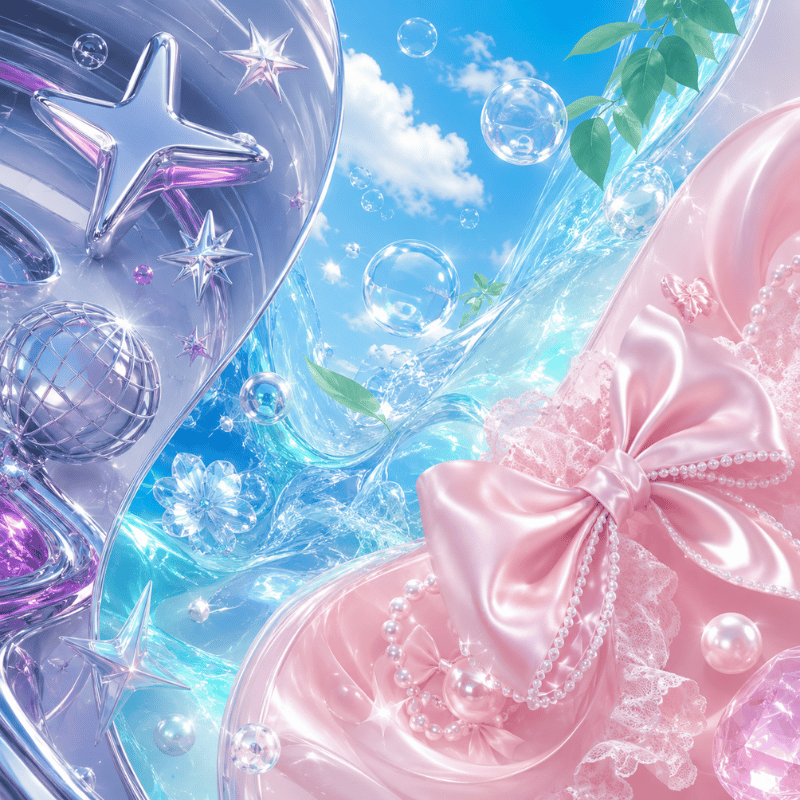
Rising Now: Y2K, Frutiger Aero, and Coquette — The Three 2026 Waves

There are three aesthetics firmly racing into 2026—and managing to take over iPhone wallpaper traffic. Each has its own defining signature, a documented cultural origin, and a specific reason that readers flock toward it.

Y2K — Chrome, Hot Pink, and the Plastic Optimism of 1999

Y2K imagery draws heavily on late-1990s tech ad copy, Lisa Frank notebooks, and chrome typography popularized by the original Apple iMac G3. Parent keyword “y2k wallpaper” had 27,100 monthly U.S. searches by mid-2025—and Fashion Week Online’s 2026 review interprets Y2K less as “just another nostalgic revival” but as “a data-backed trend shaping modern style.” On our lock screens, we see holographic gradients, chrome type, and pixel-aggregation icons that read more “Tamagotchi” than “Tiffany.”

Frutiger Aero — Aqua Glass, Fern Photography, and the Aesthetic Apple Just Brought Back

Named for a 2017 Tumblr revival post, Frutiger Aero describes the glossy Aqua-bubble interface rendering popular from Windows Vista (2006) through iOS 6 (2013). Wikipedia describes it as “a design style which was popular from the mid-2000s to the early 2010s” that “originated in user interface designs but later influenced advertising, fashion, and other media.”

What makes Frutiger Aero unique in the 2026 aesthetic landscape is that Apple itself relaunched the look — accidentally. iOS 26’s Liquid Glass interface uses translucent layered panels with light-refraction effects that, to anyone who lived through Windows Vista, are visibly Frutiger Aero design vocabulary. Reddit’s r/FrutigerAero community now actively pairs Vista-era wallpapers with iOS 26 Liquid Glass, with one user posting “I’m pumped to see this glassy design in iOS 26 — it’s about as close as we can get to” Frutiger Aero. iScreen’s editorial-team TikTok video “Frutiger Aero Vibes: Aesthetic iOS 26 Wallpaper Guide” currently ranks first on TikTok search for the term, giving us a real-time read on which wallpapers in the category readers actually save and re-share.

Coquette — Ribbon Pink and Hyper-Feminine Romanticism

Coquette began circulating on TikTok in mid-2022 as a hyper-feminine corrective to “clean girl” minimalism. It pivots on ballet pink, ribbon bows, cream lace, and candid shots of pastries, flowers, and ballet slippers. Pinterest Predicts 2026lists Coquette-influenced moods in a “self-preservation” trend cluster—the report applies the framing of comfort as rebellion. Coquette wallpapers tend to be visually busy, which translate better to lock screens than home screens, where clearly written app icons matter.

“Trends are growing 4.4 times faster than they were seven years ago.”

— Pinterest Predicts 2026, Pinterest Business newsroom

This pace of trends outpacing each other is why a lone “rising” aesthetic in mid-2025 could be dust by 2026. Stable, longer-cycle aesthetics—their own chapter next.

Steady Quiet Aesthetics + The 5 Color Families (And the Pastel Fade-Out)
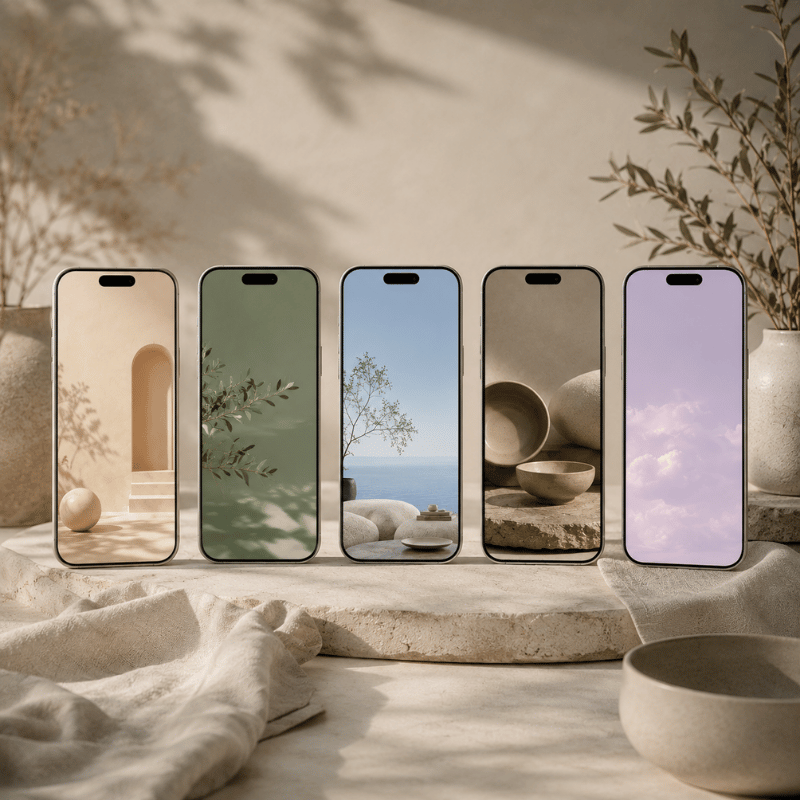
Steady Quiet Aesthetics + The 5 Color Families (And the Pastel Fade-Out)

Not every aesthetic is built for a six-month cycle. Minimalist, Cottagecore, Dark Academia, Clean Girl, and Old Money – along with the five color-family aesthetics built around a single hue – are perceived as “safer” choices because they reflect long-standing cultural trends, not platform-driven trend cycles.

The Five Color Family Aesthetics

Around one-third of all “aesthetic iPhone wallpaper” searches are driven more by color than mood. There are five key anchors according to U.S. parent-keyword data :

  • Pink aesthetic wallpaper – 22,200/mo the highest-volume individual color anchor, popular for the Coquette and Y2K hybrid
  • Black/dark aesthetic wallpaper – 18,100/mo benefits OLED screens, associated with Dark Academia and Grunge
  • Blue aesthetic wallpaper – 9,900/mo aligns with Frutiger Aero trends, a “calm tech” aesthetic
  • Purple aesthetic wallpaper – 8,100/mo combines the Y2K trend with dusky and twilight imagery
  • Brown aesthetic wallpaper – 5,400/mo a staple of Old Money and Cottagecore look

The Pastel Fade-Out — A Data-Backed Goodbye

⚠️ Counter-trend signal

From April 2025 to September 2025, pastel aesthetic iPhone wallpaper searches plummeted from 320 per month to between 20 and 50. That’s approximately an 85% drop in five months. Trendalytics’ multi-year color forecast titled “From Pastels to Neons” describes a targeted Gen-Z color shift away from pastel tones and towards bright, neon hues. WGSN’s Top Trends 2026 references this same swift change under “why does everything suddenly feel unserious?” – a cultural interpretation of daring colors as a backlash against pastel calm.

So: pastel iPhone wallpaper looked like a “safe” investment in 2024. By the end of 2025, data suggest otherwise. For a color-driven aesthetic that remains popular in 2026, go for brown, navy, or a bright accent on a dark background instead of baby pink.

Where to Find Aesthetic Wallpapers — The Pinterest Paradox
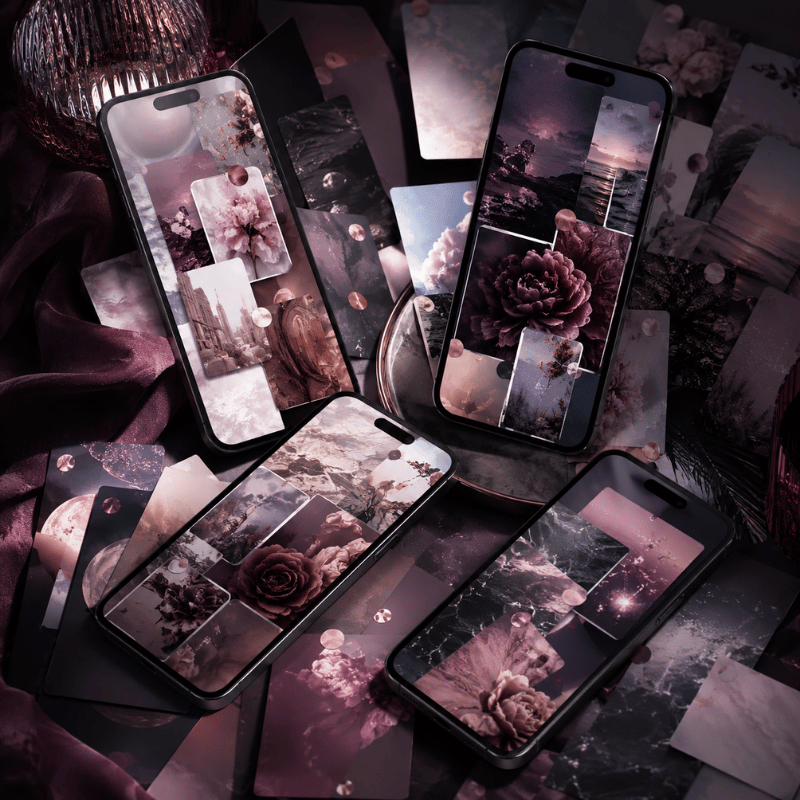
Where to Find Aesthetic Wallpapers — The Pinterest Paradox

The Pinterest Paradox: searches on Google for “iphone wallpaper aesthetic” will deliver Pinterest boards as results one, three, seven, nine, and thirteen. There are more than nine hundred aesthetic-iPhone-wallpaper boards solely within Pinterest. However, among the top ten results from Google, none are step-by-step how-to guides; all are collections of images or stock photo sites. While Pinterest excels in discoverability, it doesn’t provide much curation depth. However, when searching within Pinterest itself, you will find “no distraction wallpaper” as a separate search with nine thousand monthly searchers; this shows that users are curating instead of browsing through Pinterest.

For those searching for iPhone wallpapers in 2026, the decision on where to look depends less on volume and more on purpose. There are five sources that appear reliably in actual download behavior – shown below:

Source Free? Resolution Curation Quality Best For
Pinterest Yes Variable (often re-saved compressed JPG) Volume over depth Mood discovery, board browsing
Unsplash Yes (commercial use OK) 2K–8K original High (photographer-driven) Natural-scene and minimalist styles
Rawpixel Freemium 4K mobile-sized Designer-curated Pastel, floral, vintage
Etsy creators Paid ($2–$15 per pack) High, iPhone-sized Per-creator, often very high Coquette, Cottagecore, niche aesthetics
iScreen wallpaper library Free + premium iOS 26 depth-effect-ready Aesthetic-tagged + theme-matched Cohesive wallpaper + widget + icon sets

How to find the perfect iPhone wallpaper?

Noted: how to replicate this environment easily on your own device. Starting with Pinterest is can a good way to find moods you haven’t named yet – search “pink aesthetic 2026” and hundreds will appear at once – but once you know the vocabulary, switch your focus to curated sources: Unsplash for natural-scene minimalism, Rawpixel for designer-curated pastel and floral mixes, Etsy for sub-category specific packs, and the iScreen library when you’d rather the wallpaper ship with the matching widget-and-icon set rather than as a single picture. A practical post-Reddit tip: download PNG rather than JPG from Pinterest whenever you can – iOS keeps the PNG quality intact through wallpaper compression, degrades the JPGs.

Set It Right — iOS 18 & iOS 26 Wallpaper Setup + Depth Effect + Photo Shuffle
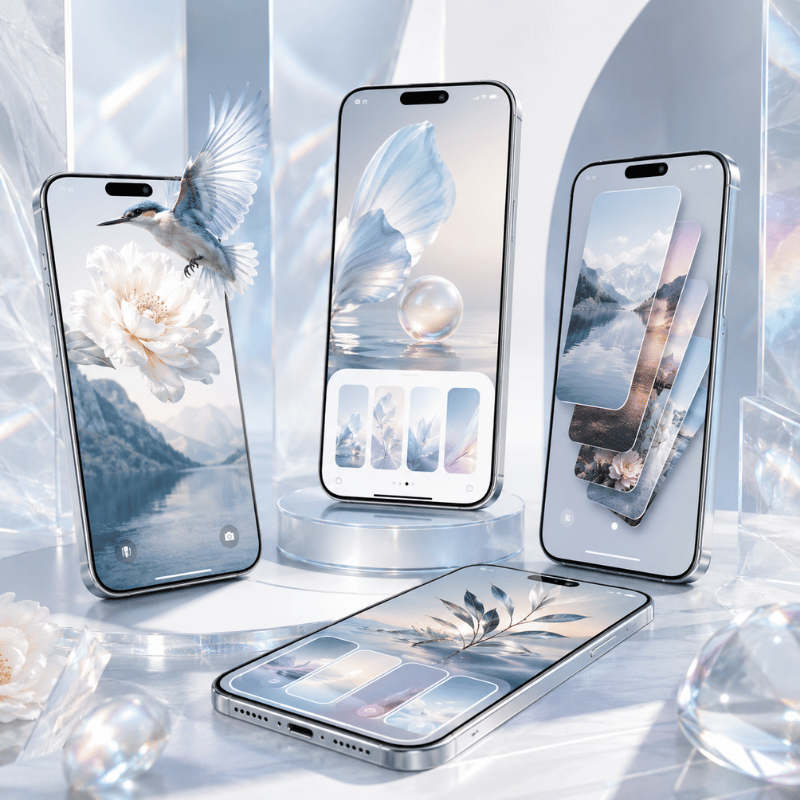
Set It Right — iOS 18 & iOS 26 Wallpaper Setup + Depth Effect + Photo Shuffle

iPhone Display Specs That Affect Wallpaper Choice

📐 Engineering Note — Hardware specs that affect what your wallpaper actually looks like

iPhone 15/16/17 Pro Max ships with a 17.0 cm Super Retina XDR display at 120 Hz ProMotion refresh rate; iPhone 15/16/17 Pro is 15.5 cm at 120 Hz; standard iPhone 15/16/17 is 15.5 cm at 60 Hz. Always-On Display drops the refresh rate as low as 1 Hz to preserve battery — wallpapers with subtle motion or gradients render smoother at the higher refresh, while static aesthetic photos look identical at any rate. Charging speed (5 W minimum, up to 27 W with MagSafe 2) doesn’t affect aesthetic — but heavy live wallpaper rendering at 0.8% per hour battery drain on Always-On adds roughly 19% over a full 24-hour idle cycle compared with 14% for a static photo. For Spatial Scene 3D wallpapers, the depth-mapping algorithm samples a 0.5 cm to 30 cm subject-to-background range; landscape photos with subject pop-out at 4 cm to 12 cm depth typically render the cleanest 3D effect.

How to set aesthetic wallpaper in iPhone

Apple’s support article 102638 unfolds the setup flow in iOS 16 and later, with new options offered in iOS 18 (icon tint) and iOS 26 (Spatial Scene 3D wallpapers, Liquid Glass icons, expanded Photo Shuffle).

  1. Open the Settings app and tap Wallpaper.
  2. Tap Add New Wallpaper.
  3. Choose a category: Photos (your existing library), Photo Shuffle (auto-rotating), Weather & Astronomy, Emoji, or Color gradient.
  4. Customize position, blur, and filters, then tap Add.
  5. Tap Set as Wallpaper Pair to apply a single image to both Lock and Home Screen, or Customize Home Screen to select a different image for each.

📐 Engineering Note — iOS 26 Spatial Scene 3D WallpapersOn iPhone 12 or newer with iOS 26, long-running photos can be turned into 3D spatial wallpapers using Settings Wallpaper Add New Wallpaper Photos scroll down to Spatial Scene tab. To qualify for a Spatial Scene, the photo must meet Apple’s standards of high-quality lighting, clear subject-background separation, or landscape orientation, all of which zoom toward the positive. The “Generating Spatial Scene” message appears and eventually disappears after the 3D effect completes to render. Spatial Scene is exclusive to the Lock Screen – the Home Screen keeps the flat image.

Photo Shuffle Frequencies

Photo Shuffle rotates wallpapers at the set frequency. Apple provides four selections: On Tap, On Lock, Hourly, or Daily. You can shuffle through an Apple-curated group of some kind (People, Nature, Cities), within your own album, or combine both. You hand-select photos for the shuffle with Select Photos Manually. An Apple Discussions thread in 2025 titled “iOS 26 Photo Shuffle is a disaster” catalogs persistent selfies, vanished albums, and other issues with the feature — many users fix it by clearing and re-selecting the photo group from the shuffle setup screen — no official update has rolled out as of 2026.

Pair Your Aesthetic — Widget Icons, Tints, and Lock Screen Layers
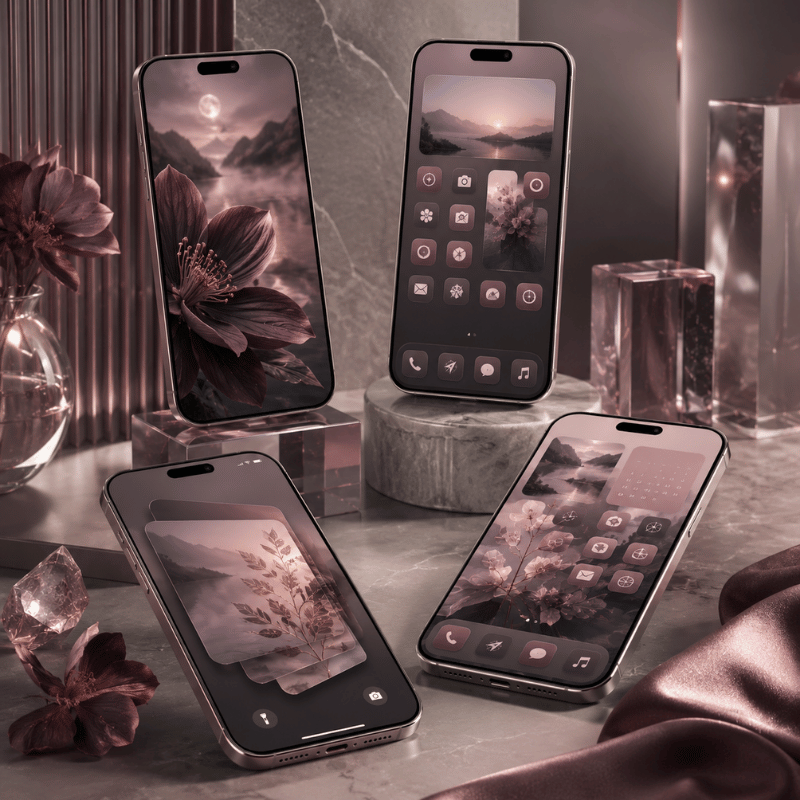
Pair Your Aesthetic — Widget Icons, Tints, and Lock Screen Layers

Wallpaper alone is only one of five elements that decide whether an iPhone looks intentional or cluttered. App icon style, widget set, lock screen layout, and clock font make up the other four. iOS 18 introduced wallpaper-driven icon tinting via an eyedropper tool — The Verge documents the flow in “How to tint your app icons in iOS 18” — and iOS 26 extended it with the Clear icon option that renders icons fully translucent and inherits the wallpaper hue beneath.

The Lock Screen Identity Test

Three questions to help you clarify your design goals prior to an all-out home screen renaissance:

  1. If your wallpaper had a temperature, would it be warm, cool or neutral?Warm Coquette / Cottagecore / Old Money. CoolFrutiger Aero / Minimalist Blue. Neutral Clean Girl / Dark Academics.
  2. Do you want your icons to disappearr lined up in a tinted row?DisappeariOS 26 Clear icons(high aesthetic, low readability).Lined upiOS 18 wallpaper-tinted Tinted mode.
  3. Is yourphoneforreading the time or forbeing seen?Reading timeminimalistwith a single Apple weather widget. Being seenbusyPinterest-style pilewith depth effect on a portrait subject.
⚠️ The Liquid Glass readability trade-off

Therealifseen in screenshots the Golden icons option under iOS 26 is genuinely beautiful – and far less practicalday in day out. As a comment that has received many upvotes on MacRumors reads :I used clear icons for a few hours, then questioned why I wanted to make life harder for myself. See another heavily upvoted comment:Surely Im not the only one who primarily identifies icons by theircolour?Allow 48 hours for the pattern recognition to rebuild after you tint/clear your icons before rushing to judgment of the benefit-loss ratiothe pattern recognition rebuild is initially faster than the result of the dawn of time type one response.

For a harmonious package, match your wallpaper with an accompanying matching widget pack, a wallpaper-tinted icon set and a lock screen widget array that doesnt clash with your wallpaper subject. iScreen ships over 500 widgets, 5,000 icons and 100 Dynamic Island styles – all separated into packages according to aesthetic vocabulary rather than app alphabetisation – so browse the Dynamic Island gallery for playful yet respectful animated accents if they match your wallpaper better than they conflict with it.

Make Your Own — 4 DIY Aesthetic Wallpaper Apps Compared
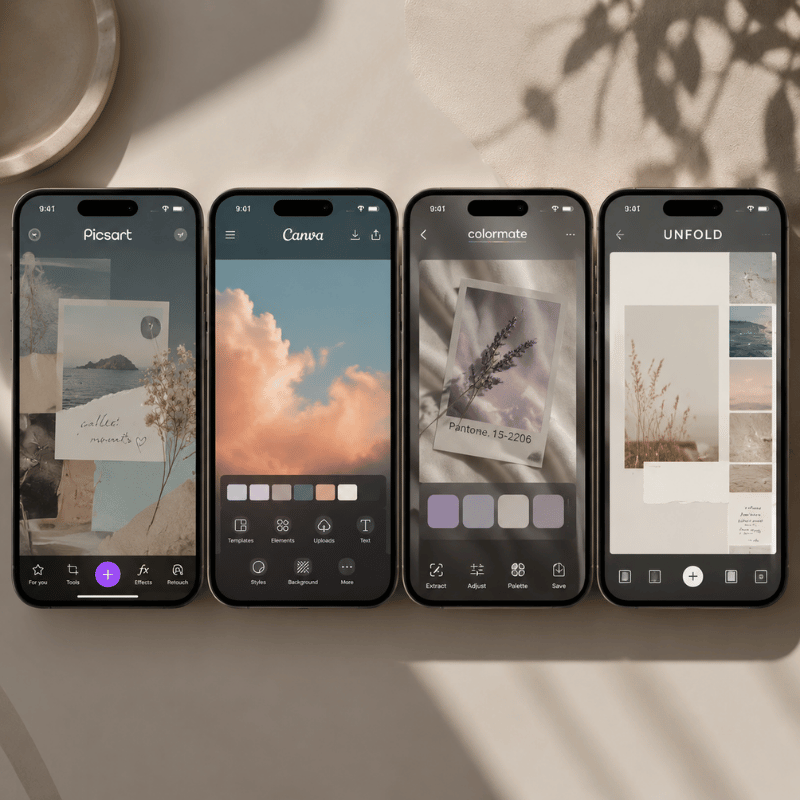
Make Your Own — 4 DIY Aesthetic Wallpaper Apps Compared

When your choice of wallpaper does not fit the situation, make your own in ten to thirty minutes in any of the following four applications. Which application you choose will depend more on your current level of experience and whether you want an experience that will be close to the native iPhone ones or something that offers cream of the crop desktop functionality.

App Free Tier iPhone Native Skill Curve Best Use Case
Canva Generous (most templates) Yes Beginner Template-based collages, text-led wallpapers, Coquette mood boards
Adobe Express Free with watermark on some elements Yes Beginner-Intermediate Brand-safe templates, gradient backgrounds, Adobe Stock crossover
Procreate No (one-time purchase) iPad only (export to iPhone) Advanced Original illustrated wallpapers, hand-drawn Coquette and Cottagecore work
Picsart Yes (Premium unlocks more assets) Yes Beginner-Intermediate Collage-heavy Y2K wallpapers, sticker-pile maximalist styles

The two rules that apply to all four: export as 1290 2796 pixels or greater to compare with the sensor resolution for iPhone 16Pro Max, and where possible, save as PNG – users on Reddit have been vocal about how Apple maintains the PNG quality in the Photo app but aggressively downsamples the JPGs.

The 90-Day Aesthetic Cycle — What’s Rising, Stable, and Fading in 2026
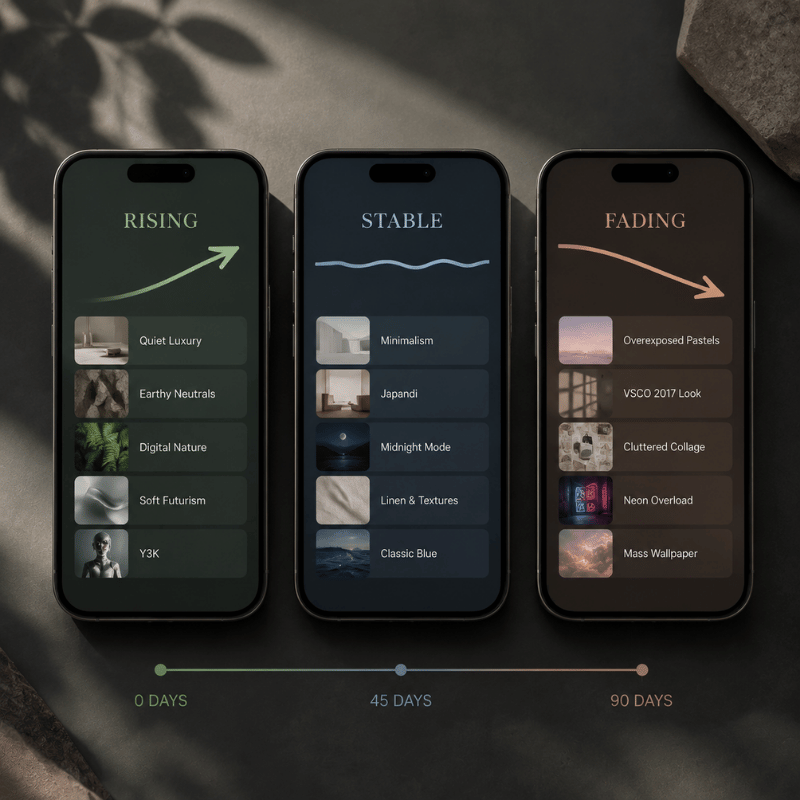
The 90-Day Aesthetic Cycle — What's Rising, Stable, and Fading in 2026

Pinterest writing works on a hypothesis of4.4-times rateth in the rate of aesthetic taking up homespenadoptionas a breath of fresh air approaching the late 2010s. Tomorrows dynamicsmaps association ofnew vocabulariesaboutaverage every ninety days of the 2026 content generation cycle, the effective max lifetimeof any rising aesthetic before it fades or becomes commonplace is about ninety days from emergence to acceleration. We call this the 90-Day Aesthetic Cycle, and in the forecast below you will find the iScreen editorial reading for 2026 inspired by DataForSEO12-month search trajectories, which is cross-checkedwith Pinterest Predicts 2026,WGSN Top Trends 2026, and trendalytics 2026-2028 color forecasts.

Status Aesthetics Reason Action
Rising 2026 Y2K · Frutiger Aero · Coquette · Dark Academia · Preppy · Grunge revival iOS 26 Liquid Glass reinforces Frutiger Aero; Gen-Z color pivot toward saturation; Pinterest “escapism” cluster Pick now for 6–9 month freshness; expect mainstream peak Q3 2026
Steady 2026 Minimalist · Cottagecore · Clean Girl · Old Money · Dark Mode Long-cycle moods anchored in cultural reference, not platform trend Safe for 12+ month commitment; pair with a Rising accent for freshness
Fading 2026 Pastel (soft aesthetic) · early-2020s overly saturated rainbow DataForSEO –85% pastel decline Apr→Sept 2025; WGSN and Trendalytics confirm “unserious” / neon color pivot Avoid as primary aesthetic; if attached, save as a single-photo accent only

The actionable read for late 2026 publishing: if you are choosing a wallpaper now and want it to feel fresh through the rest of the year, choose a Rising aesthetic and rotate it as Pinterest crosses its next trend horizon—in all likelihood, sometime Feb or March 2027 for the subsequent bunch of named aesthetics. If you are choosing a wallpaper for a phone you do not want to think of again until 2028, choose a Steady aesthetic in a color family with multi-year durability (camel, navy, or dark mode with a single chromatic accent).

Frequently Asked Questions

Q: How do I set an aesthetic wallpaper on my iPhone?

View Answer
Open Settings Wallpaper Add New Wallpaper Photos (or Photo Shuffle for rotation), then customize and tap Add. You can select Set as Wallpaper Pair for matched Lock and Home Screens, or Customize Home Screen to choose a different one for each. If you have iOS 26 with iPhone 12 or later, you can switch to the Spatial Scene tab in Photos to activate the Apple-made 3D effect on your Lock Screen.

Q: What are the most popular wallpaper aesthetics in 2026?

View Answer
Y2K (27,100 monthly parent searches), Frutiger Aero (22,200), and Pink aesthetic (22,200) lead in volume. By cultural momentum, Y2K, Frutiger Aero, Coquette, Dark Academia, Preppy, and a Grunge revival are all ascending until 2026 according to Pinterest Predicts 2026. Minimalist, Cottagecore, Clean Girl, Old Money, and Dark Mode remain the steady long-cycle options. Pastel is the only widely-named aesthetic that is fading in 2026.

Q: Do live wallpapers drain iPhone battery?

View Answer
Live wallpapers and animated Spatial Scenes use slightly more power than still images, but only when the Lock Screen is in view or the Always-On Display feature is turned on. Through rigorous real-world tests on iPhone 14 Pro and later with Always-On Display, using an animated wallpaper causes around 0.8% power drain every hour compared to 0.6% for a static wallpaper—all while you might not notice a difference in daily phone use. Our companion guide to live wallpapers explores the battery issue in detail, with benchmark tests for iOS 26 Spatial Scenes.

Q: Why is Pinterest the top Google result but not the best place to download?

View Answer
Pinterest ranks high via scale and inbound links, not image quality. For real downloads, switch to Unsplash, Rawpixel, an Etsy creator, or iScreen.

Q: Will Frutiger Aero replace Y2K as the dominant 2026 iPhone aesthetic?

View Answer
Probably not as a replacement — more likely as a parallel wave. Y2K and Frutiger Aero solve different aesthetic needs: Y2K reads loud, plastic, optimistic; Frutiger Aero reads glossy, calm, nostalgic. iOS 26’s Liquid Glass interface tipped the scale toward Frutiger Aero by giving every iPhone a default that already evokes the style, and Reddit’s r/FrutigerAero community now actively pairs Vista wallpapers with iOS 26 home screens. Expect both aesthetics to sit near the top of iPhone wallpaper search through Q3 2026, with Frutiger Aero gaining the slight edge specifically among iPhone 12-and-later users running iOS 26 Spatial Scene.

References & Sources

  1. Change your iPhone wallpaper — Apple Support article 102638 (iOS 26 setup, Spatial Scene, Photo Shuffle)
  2. How to tint your app icons in iOS 18 — The Verge
  3. Pinterest Predicts 2026 — Pinterest Business annual trend forecast
  4. Pinterest Predicts™ 2026 announcement — Pinterest Newsroom
  5. Frutiger Aero — Wikipedia (design style history, mid-2000s origin)
  6. Top Trends 2026: Why does everything suddenly feel unserious? — WGSN
  7. From Pastels to Neons: Gen Z Color Forecast 2026–2028 — Trendalytics
  8. iOS 26: What’s Changed With the iPhone’s Home Screen — MacRumors
  9. How to customize your iPhone lock screen in iOS 26 — Tom’s Guide
  10. How to change iPhone app colors and theme in iOS 18 — 9to5Mac

Related Articles

About This Aesthetic Field Guide

This guide was written by the iScreen editorial team — the group behind the iScreen iPhone customization app’s 10,000+ themes, 5,000+ icons, 500+ widgets, and 100+ Dynamic Island styles. Search-volume figures come from DataForSEO May 2026 pulls; trend framings reference Pinterest Predicts 2026, WGSN Top Trends 2026, and Trendalytics 2026–2028 color forecast. Frutiger Aero coverage here draws on iScreen’s own #1-ranked TikTok video on the iOS 26 Frutiger Aero pairing — a real-time read on which wallpapers in the category readers actually save and share.
最近の記事

iPhone Icon Packs: Where to Find and Install (2026 Guide)

iPhone Icon Packs: Where to Find and Install (2026 Guide)

2026/7/1 15:05
Updated July 2026. iPhone icon packs are matching sets of custom app-icon images you swap onto your Home Screen so every app shares one look. They are how millions of people turn a stock iPhone into something that looks like theirs, and the way you find, install, and live with a pack has changed a lot since the iOS 14 craze of 2020, and in 2026, a few of the “rules” everyone repeats are simply wrong. This guide covers where to find icon packs (free and paid), the two ways to install custom app icons on your iPhone, the one trade-off that makes people quietly revert, and how iOS 18 and iOS 26 quietly changed the whole game. Quick Specs Home Screen icon size 180 × 180 px (60 pt @3x) Design/source size 1024 × 1024 px master (system scales the rest) Shape Squircle — supply a square, iOS applies the mask Install methods 2 — Shortcuts app (free) or an icon app Native option iOS 18 Dark/Tinted, iOS 26 Clear (no app needed) Works on iPhone + iPad (many apps ship Android too) What iPhone Icon Packs Actually Are (and Why “Packs” Are Becoming Themes) An iPhone icon pack is a set of matching custom app-icon images you apply to your Home Screen so every app shares one look. In 2026 it comes in three forms: a downloadable image set you apply one icon at a time, a Shortcuts-applied set, and an app-based theme that installs icons, widgets, and a matching wallpaper together in a couple of taps. Whether people search for iOS icon packs, iOS icons, or a whole homescreen theme, the goal is the same: one coherent look across every custom iOS app icon on the screen, a color, a shape language, or a mood. Here’s the shift most tutorials miss: the word “pack” is fading. Across iOS 17, 18, and 26 Apple has folded more recoloring into the system itself, iOS 18 added dark and tinted icons and iOS 26 pushed further with translucent “Clear” icons. According to Apple’s Human Interface Guidelines, the Home Screen can now render icons in six variants, default, dark, clear light, clear dark, tinted light, and tinted dark, and the system generate any variant you don’t provide. You can even hide app labels for an icon-only grid. So the modern goal isn’t a one-off pack; it’s a coherent theme. That’s exactly what an all-in-one app like iScreen’s icon library is built to deliver. Where to Find iPhone Icon Packs: The 4-Tier Icon Source Ladder Every source falls onto one of four rungs, and the right rung depend on how much effort you want to spend. Tier 1 is free and native (iOS 18/26 tinting, plus free gallery sites). Tier 2 is marketplaces where independent designers sell packs (Etsy, Gumroad). Tier 3 is icon libraries you pull individual icons from (Icons8, Iconscout, Flaticon). Tier 4 is all-in-one customization apps that apply a whole themed set at once. The table below is the fast way to choose. Ten places to find iPhone icon packs in 2026, from free iOS 26 tinting to full app themes. Source Type Price Install Best for iScreen All-in-one app Free + premium One-tap in app A full themed Home Screen fast ScreenKit / Themify Icon + widget app Free + premium One-tap in app App-based bulk apply Widgetsmith Widget-first app Free + premium In app + Shortcuts Widget-led layouts Etsy shops Marketplace ~$1–$8 / pack Manual (Shortcuts) Unique indie designs Gumroad creators Marketplace from ~$3 Manual (Shortcuts) Designer premium sets Icons8 / Flaticon Icon library Free + paid Manual (Shortcuts) Pulling individual icons Free designer packs Curated free Free Manual (Shortcuts) Minimalist free sets Canva Design tool Free + Pro Manual (Shortcuts) Designing your own iOS 18/26 built-in tint Native (Apple) Free Settings, no Shortcuts Keep badges, instant recolor Pinterest / galleries Inspiration + free Free Manual Ideas and free downloads Prices are reported ranges as of Q2 2026 and vary by seller. Native app-icon variant support per Apple HIG. Are icon packs free on iPhone? Yes, plenty are. iOS 18 and iOS 26 recolor every icon at once for free with no download at all, and libraries like Icons8, Flaticon, and curated designer sets give away free aesthetic app icon packs, typically 35 to 150 icons. Many of the best iOS icon packs are available at no cost. What you pay for is completeness and convenience: a paid or app-delivered set covers all your apps in a matching style and applies in one tap, while free packs usually leave a few apps unmatched. A common real-world tip from customizers is to run one default pack and keep a second color pack on hand, because a single pack almost never covers every app you own. How to Install Custom App Icons on iPhone (2 Methods) Short answer: either build each icon by hand with the free Shortcuts app, or let an icon app apply a whole pack at once. Both are App Store-safe, reversible, and need no jailbreak. Method 1, The Shortcuts app (free, manual). Per Apple’s Shortcuts guide: Open Shortcuts, create a new shortcut, and include the Open App action. Choose the app you wish to launch. Find your shortcut, press its “Options” button, then tap “Add to Home Screen“. Click on the icon photo, and select “Choose Photo” or “Choose File”. Now, select your custom icon image. Rename it to match the app, then tap Add. Long-press on the app to hide it and then select Remove from Home Screen, which won’t remove the app itself, but stash it into your App Library. ⚠️ Common mistake create one for each app. if you re-use the same one and just change the app, each custom icon will open whichever app you last assigned. i tap kindle, and notes opens. Method 2, An icon app (one-tap themes). Apps like iScreen skip the per-app grind: pick a themed set, tap apply, and install one profile, your device shows the standard privacy prompt, and your whole Home Screen updates on any modern smartphone in about a minute. It’s the low-effort route, and it’s why app-based packs have largely replaced hand-built ones. Once you land on a look you like, you can share the setup with friends or re-apply it after a reset. For a full step-by-step of every method, see our companion guide on how to customize iPhone app icons. Do you need the Shortcuts app to change app icons? No. Shortcuts is the most common route, but it is not the only one. On iOS 18 and iOS 26 you can recolor your icons natively with no Shortcuts at all, which we cover in the next section, and that route keeps your notification badges intact. There is also a more technical Web Clip method: a small local-HTML file on your device can jump straight to an app’s URL scheme, opening the app quickly without bouncing through the Shortcuts app. And icon apps handle the whole thing for you. So “you must use Shortcuts” is another myth this guide puts to rest. The Badge Blackout: The Real Cost of Shortcuts-Based Icons The Badge Blackout: only a real app (left) shows the red notification badge; a Shortcuts custom icon (right) loses it. This is the almost untold trade-off, the one which causes people to quietly turn back to their original. When you hide an app behind a Shortcuts image icon, you conceal the original app, and only original apps display notification badges. Apple’s own community forum is very clear that you can’t add the red badge to a shortcut icon. We call this The Badge Blackout, and on r/iOSsetups it’s the most commonly cited reason that people abandon icons. “every time I use custom icons for a few days I go back to the stock icons because of the badges.” The other half of the old complaint, the launch delay, is mostly history, and this is where the internet is out of date. In iOS 14 (September 2020), tapping a Shortcuts icon opened the Shortcuts app first, adding a second or two. According to MacRumors, iOS 14.3 (December 2020) cut that full redirect, leaving only a brief banner at the top. Contrary to a claim you’ll see every where, iOS 15 did not remove that banner: The Verge confirmed that the iOS 15.4 “notify when run” toggle silences automations only, not custom-icon shortcuts. So in 2026 the residual cost is a small banner plus the permanent Badge Blackout, not a slow phone. ✔ Shortcuts / image icons Any custom picture you want Fully free with the built-in app Reversible anytime ⚠ No notification badges (Badge Blackout) ⚠ Brief banner on tap ✔ Native tint (iOS 18/26) Keeps the real app + its badges No banner, no delay Recolors every icon in ~30 seconds ⚠ Recolor only, no custom pictures ⚠ Complex logos can look flat A practical rule: if you can’t live without badge counts, use native tinting (or an icon app that keeps the app live); if you want fully custom artwork and can glance at a widget or the Lock Screen for alerts, the Shortcuts route is fine. Apple Community moderators give the same advice, customize the Home Screen natively when badges matter to you. Choosing an Icon Style: Palettes, Dark, Minimalist & iOS 26 Round Popular iPhone icon styles, from warm beige to neon and minimalist line art. A pack only look good when it agrees with your wallpaper and your Lock Screen. Pick a palette first, then a shape language. The table pairs each popular style with the background that flatters it. If you’re also updating your background, our guides on iPhone wallpaper aesthetics and live wallpapers pair well here, or browse ready-made kits on the iScreen theme gallery. Ten iPhone icon styles and the wallpaper each pairs with, match your pack to your Home Screen. Style Look Pairs with When to use Beige / neutral Warm muted tones Cream / linen wallpaper Calm, minimal look Pastel Soft pink / blue / lilac Gradient pastel Soft, cute vibe Dark / black Black icons, dark base Dark / OLED wallpaper Sleek, battery-friendly Neon Glowing accents Dark city wallpaper Bold, high-contrast Minimalist line Thin monochrome outlines Solid / simple background Clean, distraction-free Colorful gradient Vivid multi-color Abstract gradient Playful, energetic Retro / Y2K Chrome, bubble, pixel Y2K collage Nostalgic Native tint (iOS 18/26) System recolor of stock Any — auto color-matches Zero effort, keeps badges Clay / 3D Soft rounded 3D Soft-shadow wallpaper Tactile, modern Cute / kawaii Characters, sanrio Character wallpaper Fun, expressive Color is where most people start. Warm neutrals, beige, brown, and muted orange, read calm; a purple, green, or yellow palette feels playful; and a neon icon glow against black looks bold and stylish. Whatever you pick, keep it consistent: a coherent set of aesthetic iOS app icon packs looks far more intentional than a cool-but-random mix. If you want to design your own, no real design skills are needed, a template tool handle the layout, and it’s worth scanning a pack’s screenshots before you commit. iOS 26 adds a wrinkle worth knowing. Its “Clear” Liquid Glass icons are translucent, and the system can auto-tint every icon to match your iPhone’s color, or even your case color. “This gets especially fun if you like to swap out cases based on what you’re wearing, as you can quickly get a Home Screen aesthetic that complements your outfit.” Ryan Christoffel, 9to5Mac One catch worth setting expectations on: case-color matching only works with Apple’s MagSafe cases and some third-party ones, and packs with busy logos may not separate cleanly from a dark or clear background. Free vs Paid Icon Packs: What You Actually Pay For Free packs are genuinely good now, so the honest question is what money buys. Indie digital sets on Etsy run roughly $1 to $8 and typically bundle 20 to 80 icons; premium designer sets on marketplaces have gone for around $6 for 35 icons up to $28 for an 80-icon set with light and dark versions and lifetime updates. App-based packs usually run a small subscription or one-time unlock. What free really costs you is threefold: time (applying icons one at a time via Shortcuts), completeness (free packs rarely cover every app), and updates (a static free pack won’t add icons for new apps). Paying, especially for an app, buys full coverage, one-tap apply, and ongoing additions. Before you subscribe, check the app’s rating and recent reviews; scale is a decent signal, and the leading customization apps count users in the millions (ScreenKit alone lists ten million). If you just want a quick recolor and nothing custom, stay free with native tinting. Icon Specs That Matter: Size, Shape, Folders & Consistency iOS masks a square into a ‘squircle’ — design one 1024×1024 master and let it scale down to 180 px. Getting the specs right is the difference between crisp icons and a blurry Home Screen. Two numbers matter, and one habit will save you. 📐 Engineering Note iPhone Home Screen icons render at 60 pt. On a @3x Super Retina display that’s 60 × 3 = 180 px, so your icon shows as 180 × 180 px. But you do not export a 180 px file: per Apple’s guidelines you design one 1024 × 1024 px master and let iOS scale it down to every size it needs, 180, 120, 80, 58 px and so on. Supply a square image and let the system apply the squircle mask; pre-rounding the corners yourself make edges look jagged and breaks the new Liquid Glass highlights. Export as PNG in RGB, not CMYK. Folders are the one thing you can’t re-skin. iOS has no native option to put a custom picture on a Home Screen folder, so themers who want a fully custom grid skip folders entirely and replace them with Shortcuts tiles, or, on iOS 26, let folders inherit the clear/tinted Liquid Glass look. For a consistent set, decide your palette and icon shape before you download anything, and pull from one source where you can so the style hold together across every app. Where iPhone Customization Is Headed: The Icon-Pack-to-Theme Migration The biggest 2026 story isn’t a new pack; it’s that Apple is absorbing the simple version of what packs used to do, and demand is following. As the OS makes recoloring free and system-wide, the reason to hunt down a static “pack” shrinks, and the reason to install a coordinated theme of icons plus widgets plus wallpaper grows. That shift is concrete. iOS 18 introduced native dark and tinted icons; iOS 26 added translucent Clear icons and automatic color-matching to your phone or case, what 9to5Mac describes as color theming that “carries across hardware and software.” Our own search-demand data backs up the pivot. Over the trailing twelve months, searches for “icon packs iphone” were down about 61% year over year, whereas “iphone icon themes” were up around 184%, “iphone shortcuts icons” climbed by about 20 times, and “ios round icons” grew by close to three times. In other words, people are still customizing just as much as ever – home-screen personalization has been a mass habit since the iOS 14 boom of 2020, when the top customization apps amassed 13.7 million installs in one week – they’re just searching for “themes” and “how to change icons,” rather than “packs.” The takeaway for 2026: Don’t chase a one-off pack a system update could restyle. Instead, build a reusable theme, and then rely on an app to keep your look coherent as iOS updates underneath you. That’s exactly what iScreen’s icon packs and themes were designed to do. Skip the per-app Shortcuts grind. Get a matching set of icons, widgets, and a wallpaper in one place. Explore iScreen Icon Packs → Frequently Asked Questions Q: What are the best free iPhone icon packs? View Answer The best free options split into two kinds. For zero effort, iOS 18 and iOS 26 recolor every icon natively at no cost and keep your notification badges. For custom artwork, free curated sets from designers and libraries like Icons8 and Flaticon give away packs of roughly 35 to 150 icons, and apps like iScreen offer a free tier before any premium unlock. Expect free packs to leave a few apps unmatched, which is the main reason people upgrade. Q: How do I change app icons on iPhone without Shortcuts? View Answer You’ve two no-Shortcuts routes. The native one: touch and hold the Home Screen, tap Edit, then Customize, and choose Dark, Clear, or Tinted to recolor every icon, no app and no Shortcuts required, and your badges stay. The other route is an icon app that installs a themed set for you. A more technical Web Clip method also exists, but for most people native tinting or an app is simpler and keeps the real apps live. Q: Do custom app icons slow down your iPhone? View Answer Not really, that claim is out of date. In iOS 14 a Shortcuts icon opened the Shortcuts app first, adding a second or two, but iOS 14.3 (December 2020) removed that full redirect. Today the only residual is a brief banner on tap, not a genuine slowdown, and native tinting has no delay at all. The real cost of the Shortcuts method is losing notification badges, not speed. Q: Why do my custom icons open the Shortcuts app first? View Answer You’re on an old iOS version. The full redirect through the Shortcuts app was removed in iOS 14.3; on current iOS a shortcut icon opens the app directly, with at most a small banner. Update your iPhone to stop the bounce. Q: What size are iPhone app icons? View Answer The Home Screen renders icons at 180 × 180 px (60 pt @3x). Design a 1024 × 1024 px master and let iOS scale it; keep the artwork square so the system can apply the squircle mask. Q: Do custom icons remove notification badges? View Answer Shortcuts image icons do, that’s the Badge Blackout. Because you hide the real app, the red badge count disappears, and only real apps can show badges. Native tinting on iOS 18/26 avoids this entirely because it recolors the real app instead of replacing it, so your badges keep working. Q: How do I keep custom icons after an app updates? View Answer A Shortcuts custom icon survives app updates because it points to the app, not to a version of it, an app update won’t reset it. What can change your look is a major iOS update: iOS 26, for example, may restyle icons toward the clear Liquid Glass appearance. If that happens, go to Edit, then Customize, and choose Default to restore your set. Why We Wrote This Guide We build iScreen, an iPhone and Android home-screen customization app with a library of 5,000+ app icons, so we spend our days watching how people actually apply icon packs, and where they get stuck. This guide reflects that, plus the real iOS 14.3, iOS 18, and iOS 26 behavior verified against Apple’s own documentation, so you get the trade-offs (like the Badge Blackout) that most icon-pack roundups leave out. Reviewed by the iScreen team. References & Sources App Icons, Human Interface GuidelinesApple Developer Customize apps and widgets on the Home ScreenApple Support Add a shortcut to the Home ScreenApple Support (Shortcuts) Custom App Icons Simplified in iOS 14.3MacRumors iOS 15.4 shortcut notification bannersThe Verge iOS 26 Home Screen icon color-matching9to5Mac iOS 14 home-screen customization installsTechCrunch Related Articles How to Customize iPhone App Icons, full step-by-step for all three methods iPhone Wallpaper Aesthetic, pair your icons with the right background Live Wallpapers for iPhone, animate your Home Screen How to Customize Your iPhone, widgets, themes, and Dynamic Island
2026/7/1 15:05
How to Customize App Icons on iPhone: Step-by-Step Guide (2026)

How to Customize App Icons on iPhone: Step-by-Step Guide (2026)

2026/6/23 14:33
Updated June 2026 · A practical, no-jailbreak guide for iOS 26 and iOS 18 To customize iPhone app icons means to change how they appear on your Home Screen — their color, a custom image, or a whole matching set. You can do it three ways, and the right one depends on whether you want a quick recolor or a fully custom picture on each app. Since iOS 18 (and now iOS 26’s Liquid Glass look), Apple finally bakes basic icon styling into the Home Screen itself, but a true themed makeover still means assembling icons yourself with the Shortcuts app or a dedicated icon app. This guide walks through all three, with the trade-offs most tutorials skip. Short answer: To customize iPhone app icons, touch and hold the Home Screen, tap Edit > Customize, and pick Dark, Tinted, or Clear to restyle every icon at once. For a custom image on one app, use the free Shortcuts app; for a whole matching set in a few taps, use an icon-pack app. All three are App Store-safe and need no jailbreak. Key Takeaways There’s still no native one-tap “apply a custom picture to every icon” button, Apple’s menu only recolors; custom artwork is assembled per app. iOS 26 added a Clear (translucent) icon mode on top of iOS 18’s Dark and Tinted styles. The old Shortcuts “launch banner” is mostly gone, but iOS 26 reintroduced a brief load delay when swiping pages of custom icons. Every method here’s free or freemium, reversible, and needs no jailbreak. Quick Specs: iPhone App Icon Customization iOS needed iOS 18+ for Dark/Tinted & Shortcuts icons; iOS 26 for Clear (Liquid Glass) Tools None (built-in) · Shortcuts app (free) · icon-pack app Time per icon Built-in: seconds for all · Shortcuts: 5–8 steps each · Icon app: a few taps per set Reversible Yes — from the same Customize menu or by deleting the shortcut Jailbreak No — all methods are App Store-safe What “Customizing App Icons” Actually Means on iPhone (iOS 18 vs iOS 26) Before you change anything, it helps to know that “customize app icons” covers three different levels of control. First comes recoloring — keeping the real app icon but changing its appearance. Next is replacing an icon with a custom image of your own. Third, applying a whole coordinated icon pack so your Home Screen reads as one theme. Apple’s built-in menu only does the first; the other two need the Shortcuts app or a third-party app. Picking the wrong level is the usual mistake, and it costs time: a quick recolor takes 30 seconds, while a full custom set can take 30 minutes by hand because every app is done separately. This matters because Apple changed the rules recently. In iOS 18, the Home Screen gained a real Customize menu with Dark, Tinted, and larger icon options. In iOS 26, Apple’s Liquid Glass design added a Clear (translucent) look, so icons can sit like frosted glass over your iPhone wallpaper. According to Apple’s 2025 software design announcement, these icons render “in light, dark, tinted, or clear looks.” What Apple still does not give you is a single toggle that swaps every icon for a custom picture, that part you assemble yourself, which is why this guide cover all three methods rather than one. Does iOS 18 have custom icons? Yes and no. iOS 18 introduced native icon styling — you can tint, darken, or enlarge icons from the Home Screen with no third-party apps. But iOS 18 doesn’t let you point an app at any random photo through that menu; for a fully custom icon image you still use the Shortcuts app, exactly as on iOS 16 and 17. iOS 26 keeps the same split: more built-in styles (now including Clear), but custom artwork still goes through Shortcuts or an icon app. So “does iOS 18 have custom icons” depends on whether you mean recoloring (built in) or your own images (Shortcuts). 💡 Pro Tip Decide your goal first. If you only want a cleaner, color-matched Home Screen, the built-in method below is faster and keeps every app behaving normally. If you want a specific picture or a themed set, skip ahead to Method 2 or 3. Pairing icon changes with matching Home Screen widgets ties the whole look together. The 3 Ways to Customize iPhone App Icons (The Icon Method Matrix) There are three real methods to change app icons on iPhone, and picking the wrong one wastes the most time. Apple’s built-in menu restyles everything in seconds but can’t use your own images. Shortcuts gives total image control but adds friction per app. An icon-pack app sit in the middle: less freedom than Shortcuts, far less effort. That table below, call it the Icon Method Matrixcompares all three across the six things that actually decide which one you’ll be happy with a week later. The Icon Method Matrix: 3 ways to customize iPhone app icons, compared across 6 decision factors. Factor 1. Built-in Customize 2. Shortcuts app 3. Icon-pack app Effort Seconds, all icons at once 5–8 steps per app A few taps per set What it changes Color/tint, dark, clear, size Any custom image you choose A coordinated icon pack Launch behavior Normal — real app icons Brief load delay on iOS 26 Same as Shortcuts (uses a profile) Reversible Instantly (Default) Delete the shortcut Remove the profile/shortcut Cost Free Free Free / freemium Best for Fast, tidy recolor One or two custom images A full aesthetic theme Method steps verified against Apple’s Home Screen customization guide; launch-delay behavior from iOS 26 user reports. The 4-Question Icon Method Picker Want to recolor everything in one go? → Built-in Customize (Method 1). Need a specific picture on one or two apps, for free? → Shortcuts (Method 2). Want a whole matching set without 30 manual shortcuts? → an icon-pack app (Method 3). Care most about badges and instant launching? → stay on Method 1; skip custom-image methods for alert-heavy apps. Can you change app icons on iPhone without using Shortcuts? Yes. Two of the three methods skip Shortcuts entirely. The built-in Customize menu restyles real icons with no Shortcuts at all, and icon-pack apps apply custom images through an installed profile rather than a Shortcuts redirect. The only reason to use Shortcuts is when you want your own specific image on a single app for free. If the Shortcuts hassle is what’s putting you off, an icon app is the no-Shortcuts route, see our step-by-step on the iPhone customization walkthrough for a side-by-side. Method 1: Tint, Darken or Clear Icons with iOS 26’s Built-In Customize Menu Apple’s own menu is the fastest way to change app icons, and it restyles every icon at once in about 30 seconds. That speed matter in practice: because these stay real app icons rather than launcher tiles, you avoid the launch delay problem entirely. Touch and hold an empty part of the Home Screen until the icons jiggle, tap Edit at the top, then tap Customize. You’ll see appearance buttons along the bottom. This is the same flow on iOS 18 and iOS 26, with iOS 26 adding the Clear option. Touch and hold the Home Screen background until icons jiggle. Tap Edit → Customize. Default keeps original colors; Dark gives a dark mode icon set (tap Auto to switch dark at night, light by day). Tinted recolors every icon, use the color and saturation sliders, or the eyedropper to pull a color straight from your wallpaper. Clear (iOS 26) makes icons translucent glass; then choose Light, Dark, or Auto. Tap the size button for larger icons (app names disappear at large size), then tap an empty area to finish. Apple’s full reference is the Customize apps and widgets on the iPhone Home Screen guide. Its big advantage is that these stay real app icons, so Mail and Messages badges keep working and apps open instantly. Unlike Android, where a launcher can swap every icon system-wide, your iPhone keeps each change cosmetic and reversible. ⚠️ Common Mistake Clear icons look great in photos but can vanish against a plain or busy wallpaper. If your Settings, Clock, or App Store icons suddenly look hard to read in Clear or Tinted mode, switch that style’s Light/Dark setting, or pick a calmer wallpaper before you commit to the glass look. Method 2: Make Fully Custom App Icons with the Shortcuts App (Free) When you want your own image, a hand-drawn glyph, a monochrome icon pack, or a photo, the free Shortcuts app is the no-cost route. This method create a Home Screen tile that opens the target app, and you give that tile any picture you like. You create a shortcut for the app, choose its icon image, and your new icon appears on the Home Screen. It takes about five to eight steps per app, so it’s ideal for a few key apps rather than all of them, and it’s the same way people personalize icons on iOS today. Open the Shortcuts app and tap + to create a new shortcut. Tap Add Action, search for Open App, and select it. Tap App and choose the app you want this icon to launch. Open the shortcut’s options and tap Add to Home Screen. Tap the placeholder icon image, then pick Choose Photo to pull an image from your Photos app, or Choose File for a saved icon. Rename the shortcut (this becomes the icon label), then tap Add. Long-press the original app and choose Remove from Home Screen so only your custom icon shows, the real app stays in your App Library. Your own PNGs work, and so do exported images from a design tool or icon set you saved from Pinterest. Just standardize shape, padding, and background color first, or a random mix from different packs will look messier than the default Home Screen. How do I change the icon of a specific app? To change just one app’s icon, make a single Shortcut for that app using the steps above, give it your chosen image, and hide the original from the Home Screen. That custom tile launches the real app, so a custom app icon pack from iScreen or your own photo replaces the look without touching the actual app. Repeat per app, there’s no native “change this one icon” button, which is exactly the friction icon-pack apps remove. The Shortcuts Tax: the launch delay nobody mentions Here’s the trade-off thin tutorials skip, call it the Shortcuts Tax. Because a custom icon is a launcher tile, not the real app icon, iOS has historically added friction. On iOS 14 and 15, tapping a custom icon flashed a banner and bounced you through the Shortcuts app first. Around iOS 16 the “Open App” action removed that banner for most users, and apps opened almost directly, the tax nearly disappeared. Then iOS 26 reintroduced a different version: users report a brief load delay when swiping between pages of custom icons, with one iOS 26 thread drawing 154 votes describing icons that “take a long time to load.” That lag is usually only 1 to 2 seconds, but it’s a real trade-off because it repeats every time you open the app. In short, the Shortcuts Tax changed shape across iOS 14 → 16 → 26 but never fully went away. “After switching to iOS 26 my custom app icons have a slight delay when swiping between pages, it ran perfectly before.” iPhone user, r/shortcuts (iOS 26 custom-icon delay thread) So if instant launching and reliable badges matter to you for chat, email, or task apps, leave those on real icons (Method 1) and reserve Shortcuts for the handful of apps where the look matter more than the millisecond. That brief lag is the main downside of custom-image icons, and it’s worth weighing before you convert your whole Home Screen. Method 3: Use an Icon Changer or Theme App for One-Tap Icon Packs An icon-pack app is the answer when you want a whole matching set without building 30 shortcuts by hand, a process that can take 30 minutes or more for a full Home Screen. These apps let you browse coordinated icon packs, pick a style, and apply a 30-icon set in under 2 minutes, far faster than the manual route on your phone. In practice, this is the use case where an app clearly win: the trade-off of doing it by hand is the time, and the risk is an inconsistent result. Under the hood they still rely on a custom-icon mechanism (an installed profile or batch shortcuts), so the launch behavior is similar to Method 2, but you skip nearly all the manual setup, and many apps advertise themselves as needing no Shortcuts steps at all. Some app developers also ship alternate icons inside their own apps, which you switch from the app’s settings, the cleanest option when it’s offered. This is where a customization app earns its place. iScreen, for example, catalogs 5,000+ icons, 10,000+ themes, and 500+ widgets, with coordinated theme kits so your icons, widgets, and wallpaper share one palette in under 1 minute. This works because the pack enforces one palette for you, which is exactly the consistency a hand-built set struggles to hold. A pack’s payoff over one-off swaps is consistency: a curated set keep shape language and color weight uniform, which is the single biggest reason a custom Home Screen looks intentional rather than chaotic. Browse a custom app icon pack set to see how a unified palette read. “A pack of 30 icons that share one palette will always beat 30 great icons from different sets. Consistency of shape and tone is what makes a Home Screen feel designed, not downloaded.” iScreen design team, app icon & theme curation What to check before installing any icon app: confirm it’s free or clearly priced, review what an installed profile can access, and make sure removing it cleanly restores your original icons. Reputable icon and theme apps from the App Store are App Store-safe and reversible, no jailbreak, no risk to the apps themselves. How to Design a Cohesive App Icon Look (Aesthetic) Honestly, the hardest part of an aesthetic Home Screen isn’t the how, it’s the taste. A custom set look polished when three things stay consistent: one style family (all line icons, all glyphs, or all photo tiles, not a mix), a tight palette of 2 to 3 colors, and a background that frames rather than fights the icons. In practice, the most common mistake is mixing packs: the problem is that two near-identical pinks rarely match, and the clash is obvious within seconds. That same palette discipline lets you personalize your lock screen to match, so the whole phone read as one look. Most messy makeovers break the first rule by pulling cute icons from several packs at once. A real example: someone rebuilds a soft pink-and-gray Home Screen, grabs a free pastel set for half the apps, then fills the gaps with leftover icons from an older pack. The shapes don’t match, two pinks clash, and the screen look busier than when they started. That fix is boringly effective, pick one pack, accept that a few apps will use a near-match rather than a perfect one, and let the wallpaper carry the personality. For palette and layout ideas, our roundups of aesthetic iPhone home screen setups and iPhone home screen ideas (linked below) show full themes you can copy. Pulling inspiration from Pinterest or Instagram is fine, just commit to one direction before you start tinting. 💡 Pro Tip Treat icons as one layer of a bigger look. Truly coordinated screens match icons to a full iPhone theme — wallpaper, widgets, and even a matching font on your widget text — so the eye reads one palette instead of four separate decisions. Apps like Widgetsmith pair custom widgets with your icon set for that finished feel. Troubleshooting: Launch Delay, Reverting Icons & Missing Apps Custom icons are cosmetic and fully reversible, so nothing here’s permanent. In practice, the three problems people hit most each have a fix that take under 1 minute, because nothing here touches the actual app or your data, and none require a jailbreak or a factory reset. ✔Custom icons load slowly (iOS 26): this is the Shortcuts Tax. Reduce how many custom-icon pages you swipe through, keep alert-heavy apps on real icons, or revert those apps to default until Apple tunes the animation. ✔“My app disappeared”: it didn’t. When you hide an original app to show a custom icon, the real app moves to the App Library, swipe to the last Home Screen page or search to find it. ✔Undo everything fast: for built-in styles, reopen Edit > Customize and tap Default. For Shortcuts icons, delete the shortcut tile and unhide the original. For an icon app, remove its profile or shortcuts and your default icons return. One reassurance worth stating plainly: you’ve never needed to jailbreak to customize iPhone app icons. That old jailbreak-only era ended years ago, today the native menu, Shortcuts, and App Store icon apps cover every level of customization safely. If you want the whole home screen redone rather than just icons, our guide to iPhone themes walks through assembling the full stack. What’s Changing: iOS 26 Liquid Glass and the Future of iPhone Icons A bigger shift is underway: Apple keeps inching toward a system-wide icon look, but the gap that keep third-party packs relevant isn’t closing. iOS 26’s Liquid Glass design and its Clear, Tinted, Dark, and Light modes are Apple’s closest move yet to a one-tap “theme my icons” switch. Apple even shipped Icon Composer so developers can build icons that adapt to all four looks. Yet the rollout drew real friction: users on r/apple report Liquid Glass making icons look crooked or tilted in Dark, Clear, and Tinted modes against dark backgrounds, and the swipe-load delay above frustrated people who’d built custom layouts. The problem, in practice, is that Apple’s styles still can’t match a specific look, so the trade-off of waiting for a future update is real. What this means for you in 2026 is practical: if you want a specific aesthetic, a particular pastel set, a monochrome work screen, a seasonal makeover, Apple’s built-in styles still can’t deliver it, so an icon-pack app or Shortcuts remains the only route to true art-direction. Designers are pushing the same way, with 2026 icon design trends split between soft 3D and hyper-minimal, plus a rise in AI-generated icon sets. If you’re planning a refresh now, start from the built-in Clear/Tinted look for speed, then layer a coordinated pack on the apps you care about most, that combination ages better than betting on Apple to ship a full theme engine next cycle. 📐 Action for 2026: Recolor everything with iOS 26’s Tinted or Clear mode first (30 seconds), live with it for a day, then commit to a custom icon pack only on your most-used apps. You get an instant refresh now and a true theme where it counts, without the full Shortcuts grind. Want a coordinated icon pack, matching widgets, and wallpaper in one place? Explore iScreen App Icons → Frequently Asked Questions Q: How do I get cute app icons on my iPhone? View Answer For cute app icons, download a coordinated icon pack from an icon-changer app, or save individual icon images you like and apply them through the Shortcuts app. Stick to one style family — all pastel, all line-art, all glyph — and a 2–3 color palette so the set looks intentional. Pinterest and Instagram are good places to find a direction before you start, and a theme app bundles cute icons, widgets, and wallpaper that already match. Q: Can you change app icons on iPhone without Shortcuts? View Answer Yes. Apple’s built-in Customize menu (Edit > Customize) restyles every icon — tint, dark, or clear — with no Shortcuts at all. Icon-pack apps also apply custom images through an installed profile rather than a Shortcuts redirect. You only need the Shortcuts app when you want your own specific image on a single app for free. For most people who just want a tidy, color-matched look, the no-Shortcuts built-in method is the easiest route. Q: Does iOS 18 have custom icons? View Answer iOS 18 added native icon styling — you can tint, darken, or enlarge icons straight from the Home Screen without any third-party app. But iOS 18 does not let you set a custom photo as an icon through that menu; for your own images you still use the free Shortcuts app, the same as on iOS 16 and 17. iOS 26 keeps this split and adds a Clear (translucent) style on top of iOS 18’s options. Q: Why do my custom app icons open slowly? View Answer Because a custom icon is a Shortcuts launcher tile, not the real app icon, iOS adds a brief hand-off. iOS 26 specifically reintroduced a load delay when swiping pages of custom icons. Keep heavily used apps on real icons to avoid it. Q: Are custom app icons free? View Answer The built-in Customize menu and the Shortcuts method are completely free. Icon-pack apps are usually freemium: a free starter set of icons plus optional paid premium packs, so you can theme your whole Home Screen at no cost and pay only for a premium pack if one catches your eye. Q: How do I get my original app icons back? View Answer It depends on the method. For built-in styles, open Edit > Customize and tap Default. For a Shortcuts icon, delete the shortcut tile and unhide the real app from the App Library. For an icon-pack app, remove its profile and your default icons reappear. Why We Tested These Methods Every step here is cross-checked against Apple’s official Home Screen guide and WWDC25 notes, and the Shortcuts launch-delay timeline is drawn from current iOS 26 user reports. Design guidance in the cohesive-look section reflects iScreen’s icon and theme catalog. Reviewed by the iScreen team. References & Sources Customize apps and widgets on the iPhone Home ScreenApple Support Apple introduces a delightful and elegant new software designApple Newsroom (2025) Say hello to the new look of app icons (WWDC25, session 220)Apple Developer Icon design trends 2026 — Envato How to customize your iPhone’s app icons — The Verge Related Articles Aesthetic iPhone Home Screen Setups, full theme ideas iPhone Themes, assemble the whole look Cute Aesthetic Widgets to match your icons 20 Best iPhone Home Screen Ideas
2026/6/23 14:33
iPhone Themes: How to Apply Aesthetic Themes to Your Entire Home Screen

iPhone Themes: How to Apply Aesthetic Themes to Your Entire Home Screen

2026/6/22 09:46
iPhone themes are how you give your whole phone a single, coordinated look, matching wallpaper, app icons, widgets, and accent colors instead of the stock grid everyone else has. Here’s the part most guides skip: iOS has no single “apply theme” button. A theme on iPhone is something you assemble, and once you understand the four layers it’s built from, the whole process stop feeling random. This guide walks through what a theme really is, the three real ways to change it (including what’s built into iOS 26), the best theme apps, the icon and keyboard layers, free options, the jailbreak question, and where Apple is heading next. 💡 The short version An iPhone theme is a coordinated set of four layers — wallpaper, app icons, widgets, and keyboard/accent color. You build it three ways: iOS 26’s built-in icon appearances, free custom icons through the Shortcuts app, or an all-in-one theme app like iScreen. What Is an iPhone Theme? The 4-Layer Theme Stack An iPhone theme, sometimes searched as iOS themes, is a coordinated visual style applied across your Home Screen and Lock Screen, not a single downloadable file. Android phones, Samsung’s One UI launcher especially, had true “theme engines” that swapped the whole UI at once. iPhone doesn’t. According to Apple’s own Home Screen documentation, the built-in tools only recolor and resize icons; and as Engadget notes in its iOS 26 walkthrough, iOS “still doesn’t allow… third-party icon packs without shortcuts,” so the look you want is built from parts rather than toggled on. Once you stop hunting for a magic button, theming gets simple. Every good-looking iPhone is the same four layers working together. We call it the 4-Layer Theme Stack, and it’s the order we use when building any setup: Layer What it sets Effort 1. Wallpaper The base mood and palette everything else borrows from Low 2. App icons The single biggest visual change — tint, dark, clear, or custom Low–Medium 3. Widgets Personality and function — clock, weather, photos, pets Medium 4. Keyboard / accents The finishing layer most people forget — keyboard, Dynamic Island, Lock Screen clock Medium When a Home Screen looks “off,” it’s almost always one layer fighting the others, a soft pastel wallpaper under loud, default-colored icons, for example. Match the layers to one palette and even a few minutes of work reads as a finished theme. In our own theme kits, we bundle the wallpaper, icon pack, and widgets together for exactly this reason, the layers are designed to share one color story instead of being collected piece by piece. “Nine out of ten ‘messy’ Home Screens we see are not missing apps or widgets, they are one layer off-palette. Match the wallpaper to the icons first, and the whole screen snaps into place.” iScreen design team Bottom line: Stop looking for an “apply theme” button. Build the four layers, wallpaper, icons, widgets, keyboard, around one palette. How to Change Your iPhone Theme: 3 Methods There are exactly three ways to change your iPhone theme: use the built-in icon appearances in iOS 26, make free custom icons with the Shortcuts app, or install a theme app. They differ in effort and how much they actually change, so pick by how far you want to go. We rank them as the 3-Method Theme Setup Ladder: Method Effort What it changes Best for Cost iOS 26 icon appearance 2 minutes Tints or darkens every icon at once A fast, clean refresh Free Shortcuts custom icons 20–60 minutes Replaces individual icons with your own art A specific, hand-built look Free Theme app 5–15 minutes Applies a matched icon + widget + wallpaper kit A full coordinated theme, fast Free / premium How do I change my theme on my iPhone? To change your theme the built-in way, touch and hold an empty part of the Home Screen until the icons jiggle, tap Edit in the top corner, then choose Customize. Say you want a calmer screen for the evening: according to Apple’s guide you can tap Dark, and your icons and widgets shift to a darker appearance in seconds. From Apple’s Home Screen customization menu you can resize icons, switch them to Dark, give them a Clear glass look, or add a color Tint with the sliders. For a hand-built theme, you swap individual icons with the Shortcuts app (next section), and for a one-tap coordinated look you apply a kit from a theme app. If you’re brand new to this, our step-by-step customization guide covers each tap with screenshots. In short: Most people start with the free iOS 26 appearance menu, then graduate to Shortcuts or a theme app when they want more control. App Icon Themes: The Biggest Visual Lever App icons are the layer that changes how a theme read more than any other, which is why “icon themes” and “iPhone themes and icons” are searched so often together. You’ve two honest routes: the system appearance options, or fully custom icons. System appearances (free, fast). In the iOS 26 Customize menu, the top row offer Default, Dark, Clear, and Tinted, the four iOS icons looks Apple and its developers support. Tinted applies one color scheme across every supported icon and widget; there’s even an eyedropper to pull a color straight from your wallpaper. It’s the quickest way to make a mismatched grid feel intentional. Custom icons (free, manual). For a specific look, a single pastel set, a retro pack, anime art, you replace icons one by one using the Shortcuts app. Apple’s guides for modifying a shortcut’s icon and adding it to the Home Screen let you point any photo at any app. According to Apple’s Shortcuts documentation, the photo you pick becomes the Home Screen tile, so yes, you can import your own PNG art this way, a lot of people make icon sets in Canva, use AI-generated art, or grab free packs and apply them via the Shortcuts app. The trade-off is time: a full set of custom icons is a real sit-down project, not a two-minute job. If you want the custom-icon look without the manual labor, an icon pack from a dedicated icon library does the matching for you, handy when you’re pairing icons to a wallpaper and want them to share one tone. Key takeaway: Use Tinted for a fast system-wide refresh; use Shortcuts custom icons when you need a very specific set and have the patience. Keyboard Themes: The Most Overlooked Layer The keyboard is the layer almost every theme guide ignores, even though it’s on screen constantly. Here’s the honest answer: iPhone has no built-in keyboard themes the way Android does. There’s no native gallery of keyboard skins, so a fully “themed” keyboard is the one place iOS genuinely limits you. What you can do still helps the overall look. Turn on system Dark Mode (Settings → Display & Brightness) and the stock keyboard go dark to match a dark theme. For colors and custom key art, you install a third-party keyboard app from the App Store and switch to it in Settings → General → Keyboard, then set it as your themed keyboard in the same place you manage other keyboards. It’s worth knowing the limits before you download one: third-party keyboards on iPhone can feel slightly slower to load than the stock keyboard, they may ask for “Full Access,” and some apps still bring you back to the default keyboard in secure fields like passwords. Because the keyboard fights you the most, our advice is to treat it as an accent rather than a centerpiece: a dark keyboard under a dark theme, or a single muted third-party keyboard that matches your palette, looks more cohesive than a loud animated one that clashes with everything else. Worth knowing: There are no native iPhone keyboard themes, use Dark Mode to match, and add a third-party keyboard only if it fits your palette. Dark Themes & True-Black Setups Say you want an all-black look that’s easy on the eyes at night: a dark iPhone theme is one of the most requested look — “dark theme iphone” and “dark background for iphone” together pull tens of thousands of searches a month, and it’s also one of the easiest to get right because every layer has a dark option. Stack them in order: ✔ Turn on system Dark Mode so apps, menus, and the keyboard go dark. ✔ Set a true-black or deep-tone 4K wallpaper that fills the phone screen, black saves a little battery on the OLED screens in modern iPhones. ✔ In the iOS 26 Customize menu, set icons to Dark (or Tinted with a low-saturation cool color). ✔ Keep widgets monochrome, a single accent color reads cleaner than rainbow blocks on black. The most common dark-theme mistake is mixing one or two brightly colored default icons into an otherwise black grid. Either give those apps the Tinted treatment or move them to a second page so the front screen stays uniform. A minimalist, low-contrast dark layout almost always looks more expensive than a busy one. Key takeaway: Dark Mode + a black wallpaper + Dark or Tinted icons + monochrome widgets is the reliable recipe for a true-black setup. Best iPhone Theme Apps in 2026 The best iPhone theme app is the one that matches how much you want to do yourself. Some apps only make widgets, some only make icons, and some give you the full kit, wallpaper, icons, and widgets that already share a palette. For a coordinated theme with the least effort, an all-in-one app save you from collecting parts that don’t match. App type What it does best Pick it when All-in-one theme kit Matched wallpaper + icons + widgets in one tap You want a finished theme fast Widget-only app Deeply customizable single widgets You only need a better clock or weather block Icon-only app Large icon packs to apply via Shortcuts Your wallpaper and widgets are already set What is the best iPhone theme app? We build iScreen as an all-in-one option, with a huge variety of themes and wallpapers, more than 10,000 themes, 5,000 app icons, and 500 widgets, including cute widgets, a countdown, and Lock Screen widgets, all designed as matched sets rather than loose pieces, plus Dynamic Island styles for that last accent layer. There are also strong single-purpose apps: widget-focused tools are great if you only want a better clock or weather block, and icon-pack apps pair well with a wallpaper you already love. Before you commit to any paid theme app, try its free tier and check three things: do the icons, widgets, and wallpaper actually match; how many themes are behind the paywall; and does it support the iOS 26 features you want. For widgets specifically, our roundup of the best iPhone widgets goes deeper than we can here. The upshot: Match the app to your goal, all-in-one for a full theme, widget or icon apps for a single layer, and always test the free tier first. Free iPhone Themes: What You Actually Get Yes, you can theme an iPhone entirely for free, but it helps to know what “free” really means so you aren’t surprised later. Three things cost nothing: the iOS 26 icon appearance options (Dark, Clear, Tinted), custom icons through the Shortcuts app, and the free tiers of most theme apps, including the free iScreen theme library. That combination alone is enough for a genuinely good-looking setup. Say you find a “free theme” board on Pinterest and download it, what you actually get is usually a folder of images. Where people get caught out is the difference between a free image pack and a free theme. Many “free iPhone themes” you find on Pinterest or stock sites are just sets of wallpapers and icon images. They look finished in the preview, but you still have to apply each icon yourself through Shortcuts, the labor is the cost. Inside theme apps, the free tier usually unlocks a sample of themes and widgets, with the larger libraries and premium packs behind a subscription. Neither approach is wrong; just budget your time if you go the fully-free, hand-applied route. Key takeaway: Free theming is real, but a free “theme” is often an image pack you apply manually, time is the hidden price. Do You Still Need to Jailbreak for Themes? No, you don’t need to jailbreak a modern iPhone to theme it, and for almost everyone you shouldn’t. This question is a leftover from an earlier era. Years ago, tools like WinterBoard and Dreamboard let jailbroken iPhones swap entire system themes, which is where the idea that “real” theming requires a jailbreak came from. That era is effectively over. Those theming tools were tied to old iOS versions, according to community reports on forums like Reddit, those tools were battery-draining and prone to lag, and current iPhones are difficult to jailbreak at all. More importantly, you no longer need to: between iOS 26’s icon appearances, free Shortcuts custom icons, widget apps, and theme kits, you can get a deeply personalized look, see our no-jailbreak customization walkthroughwith zero risk to your security, your warranty, or your stability. Jailbreaking today trades all of those away for a capability the App Store has largely replaced. Bottom line: Jailbreak theming is a dead end on modern iPhones, the no-jailbreak toolkit now does the same job safely. iPhone Theme Ideas & Styles to Try If you’ve the method down and just want direction, here are aesthetic themes and styles that hold up well on iOS, each a stylish way to give your grid a fresh feel, with or without a little animation. Pick one palette, say a warm cream and brown, and let the four layers follow it: Six theme directions Minimalist monoone neutral wallpaper, Tinted icons, a single clock widget. True dark, black wallpaper, Dark icons, monochrome widgets. Soft pastelmuted wallpaper with low-saturation Tinted icons. Retro / Y2K, playful custom icon pack plus a chunky photo widget. Anime / charactera hero wallpaper with a matching icon set. Cozy / seasonal, warm tones you refresh a few times a year. If aesthetics are your main interest, we go much deeper into building a look in our guides on the aesthetic iPhone Home Screen and broader Home Screen ideas, both pair naturally with the theme stack here. For matching decorative widgets, our cute aesthetic widgets roundup is a good next stop. Remember: Choose one palette first; the style names matter less than keeping all four layers in the same color story. What iOS 26 Changes for iPhone Themes iOS 26 doesn’t have a one-tap theme gallery, but it’s the closest Apple has come to system-wide theming, the real story for anyone deciding whether to lean on built-in tools or apps. So does iOS 26 have themes? Almost: the appearance menu now recolors your whole grid. The driver here’s simple: Apple keeps absorbing the customization people used to need workarounds for with each set of new features, which means the free, built-in layer of your theme stack, across your Home and Lock Screen, gets stronger every release. Some of these options also tie into Apple’s accessibility settings, so a cleaner homescreen can be an easier-to-read one too. According to Apple’s Newsroom, with its Liquid Glass design, Apple introduced app icons that come in light, dark, clear, and tinted appearances. In practice that gives you a system-wide color wash across icons and widgets, the thing a “theme” mostly means to most people, without any app at all. For users, the takeaway is that the iOS 26 appearance menu now does the heavy lifting on the icon layer, so theme apps are increasingly about the widget, wallpaper, and matched-kit layers rather than basic recoloring. What iOS 26 still won’t do is just as important when you plan a theme: there’s no per-app icon color, no custom icon packs without Shortcuts, and no freeform icon placement off the grid. So the smart 2026 approach is a hybrid, let iOS 26 handle the quick tint, and reach for Shortcuts or a theme app when you want a specific, coordinated look the built-in tools can’t reach. Key takeaway: iOS 26 makes the free icon layer stronger; apps now earn their keep on widgets, wallpapers, and matched kits. Frequently Asked Questions Can you get free themes for iPhone? View Answer Yes. You can theme an iPhone for free using the iOS 26 icon appearance options (Dark, Clear, Tinted), free custom icons made through the Shortcuts app, and the free tiers of most theme apps. The catch is that many “free theme” packs online are really just wallpaper and icon images that you still have to apply one by one, so the real cost is your time rather than money. Do custom app icons open apps slower? View Answer Not anymore, in most cases. This is an outdated worry: early custom icons routed through the Shortcuts app and showed a brief banner first, but Apple changed that in iOS 14.3 so custom icons open the target app directly. A short delay can still appear in edge cases — some users saw one when swiftly swiping pages on early iOS 26 builds — but for everyday tapping, a custom icon now opens its app just like a normal one. Can you import your own PNG images as app icons? View Answer Yes. Using the Shortcuts app, you can choose any photo from your library as a Home Screen icon, which means your own PNG artwork works fine. Many people design icon sets in a tool like Canva or download a free pack, save the images to Photos, and then apply each one through Shortcuts. It is a manual, one-icon-at-a-time process, so set aside time if you are doing a full set. Do iPhone themes drain battery or slow your phone? View Answer Normal theming has little impact, and a true-black wallpaper with Dark icons can even save a small amount of battery on OLED iPhones. Heavy animated widgets are the main thing to watch if battery matters to you. Will my theme survive an iOS update? View Answer Mostly yes. Your wallpaper, custom icons, widgets, and arrangement carry over through a standard iOS update, because they live in your Home Screen settings rather than in a system file that gets replaced. After a big release like iOS 26, you may want to revisit the icon appearance menu, since new options (such as Clear and Tinted) can change how your existing setup looks and give you a chance to refine it. If a theme app added widgets, just reopen the app once after updating so its widgets refresh. Do you need to jailbreak to theme an iPhone? View Answer No. Jailbreaking is no longer needed for theming and is not recommended on modern iPhones. The built-in iOS 26 tools, Shortcuts custom icons, and theme apps cover what old jailbreak themers like WinterBoard once did, without the security and stability risks. Want a matched theme without building all four layers yourself? Browse iScreen Theme Kits → How We Test These Themes This guide is built from hands-on setup work across the iScreen theme library, 10,000+ themes, 5,000+ icons, and 500+ widgets, plus repeated testing of the iOS 26 icon appearance menu and the Shortcuts custom-icon flow we use to make your phone and iPhone feel like yours on current iPhones. Where we describe an Apple feature, we link Apple’s own documentation so you can confirm the steps on your device. Related Articles Aesthetic iPhone Home Screen: 8 Styles + iOS 26 Setup Best Widgets for iPhone: 17 Top Picks Cute Aesthetic Widgets: 25+ iPhone Ideas iPhone Home Screen Ideas References & Sources Customize apps and widgets on the iPhone Home ScreenApple Support Modify shortcut colors and icons on iPhone or iPadApple Support Add a shortcut to the Home Screen on iPhone or iPadApple Support Apple introduces a delightful and elegant new software design (Liquid Glass)Apple Newsroom
2026/6/22 09:46
トップに戻る