
How to Change Your iPhone Home Screen: Beginner’s Complete Guide

Your iPhone home screen is the first thing you see dozens of times a day – and as of iOS 26, Apple has given you more ways to customize it than ever before. Whether you want to swap your wallpaper in under a minute, set different images for your lock screen and home screen, or go all-in with matching icons, widgets, and a cohesive aesthetic theme, this guide covers every method step by step.

We’ve tested each approach on iOS 26 and included the gotchas competitors skip – like why tapping “Set as Wallpaper Pair” isn’t always what you want, and what “clear” Liquid Glass app icons actually look like in real use. Let’s get into it.

Quick Comparison: Native iOS 26 vs iScreen App

Feature Native iOS 26 With iScreen App
Change wallpaper ✓ Settings / Photos ✓ 4K aesthetic library
Lock screen customization ✓ Widgets + fonts ✓ 1,000+ widget designs
Custom app icons ✓ Tint / clear only ✓ 5,000+ icon packs
Home screen themes ✗ No one-tap theme ✓ 2,000+ one-tap themes
Dynamic Island ✗ Limited ✓ 100+ animations
StandBy Mode ✓ Basic ✓ 200+ StandBy designs

How to Change Your iPhone Wallpaper — 3 Methods That Work
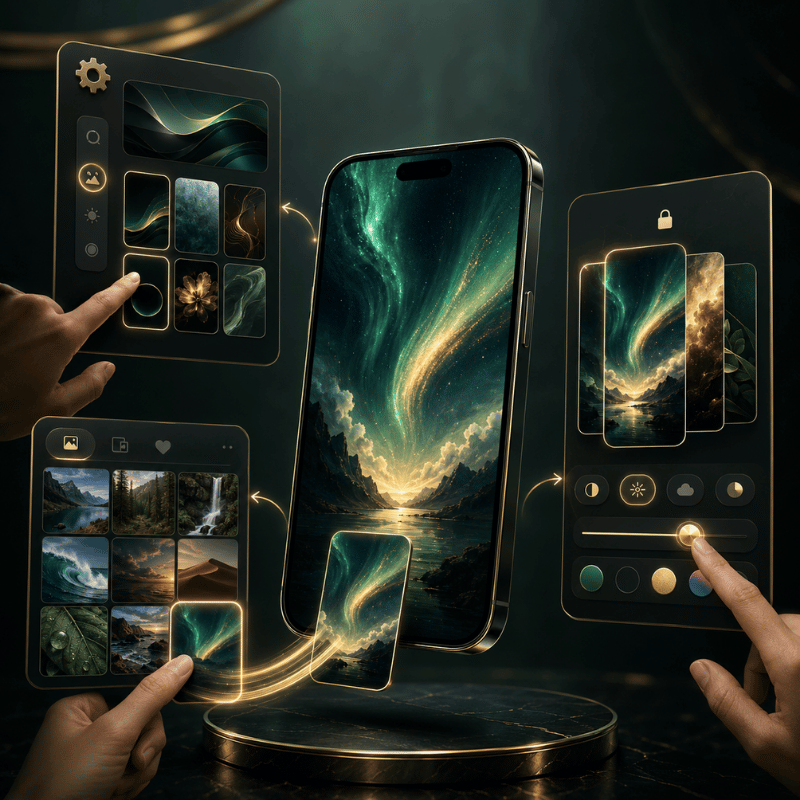
How to Change Your iPhone Wallpaper — 3 Methods That Work

There are three ways to change your iPhone wallpaper in iOS 26, depending on where you’re starting from. All three reach the same end result; the right one depends on what you want to use as your new wallpaper.

Method 1: Add a New Wallpaper from Settings (Most Control)

  1. Open the Settings app.
  2. Tap Wallpaper.
  3. Tap Add New Wallpaper.
  4. Choose from Apple’s gallery, your Photo Library, or the Spatial Scene tab for 3D depth wallpapers.
  5. Customize filters, shuffle settings, or depth effect as needed.
  6. Tap Add, then choose Set as Wallpaper Pair (both screens get the same image) or Customize Home screen (set each iScreen independently).

⚠ Common Mistake: Tapping Edit Wallpaper only modifies your current wallpaper. Tap Add New Wallpaper to start fresh with a completely different image.

Method 2: From Photos (Fastest for Personal Photos)

  1. Open the Photos app and select your image.
  2. Tap the Share icon (square with an arrow pointing up).
  3. Scroll down and tap Use as Wallpaper.
  4. Adjust depth and position, then tap Add to confirm.

Method 3: Directly from the Lock Screen (iOS 26)

  1. Wake your iPhone and long-press the lock screen.
  2. Swipe horizontally to browse your saved wallpapers – or tap the + button to add a new one.
  3. No need to open Settings at all.

💡 Pro Tip — Photo Shuffle: iOS 26 supports four shuffle frequencies: On Tap, On Lock, Hourly, and Daily. Photo Shuffle cycles through multiple photos from your library and updates your photo wallpaper automatically. We tested all four intervals; Hourly gives the best variety without being distracting during calls or work.

How Do I Change My Home Screen Background Without Changing the Lock screen?

After tapping Add at the end of any method above, choose Customize Home screen instead of Set as Wallpaper Pair. This lets you pick a solid color, gradient, or a completely different photo just for the home screen – leaving your lock screen untouched. The full walkthrough is in the next section.

Want wallpapers beyond Apple’s built-in gallery? Browse iScreen’s aesthetic wallpaper library for 4K options curated by style, or read our live iPhone wallpapers guide for animated background options.

How to Set Different Wallpapers for Your Lock screen and Home screen
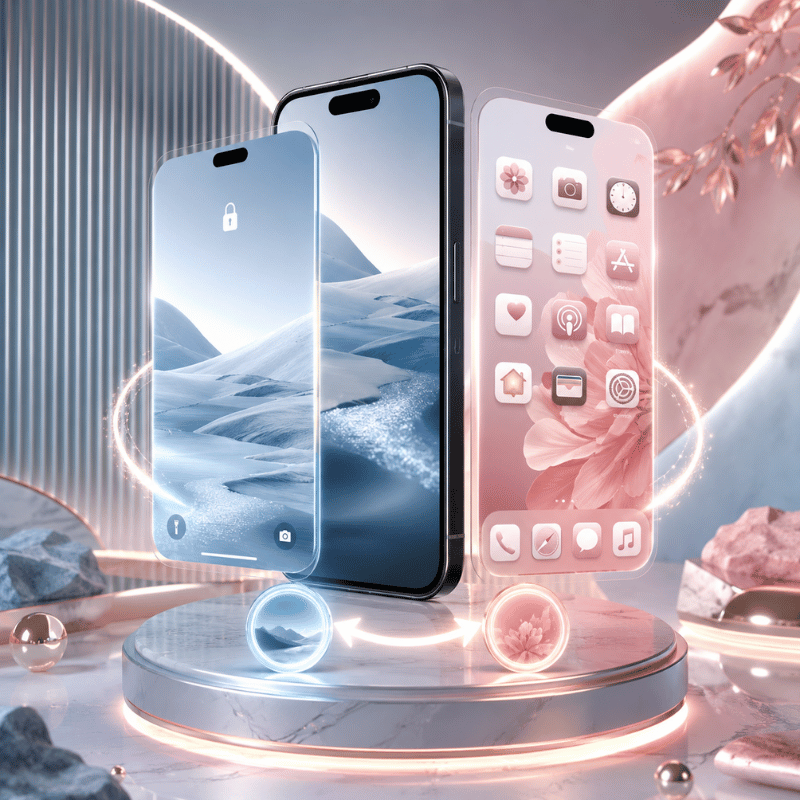
How to Set Different Wallpapers for Your Lock screen and Home screen

This is one of the most-asked iPhone wallpaper questions – and the answer comes down to one specific tap most people miss.

⚠ Warning — “Set as Wallpaper Pair”: Tapping this button applies the same wallpaper to both your lock screen and home screen simultaneously. To get different images on each iScreen, do not tap this option.


Here’s how to set separate wallpapers for your lock screen and home screen:

  1. Go to Settings > Wallpaper > Add New Wallpaper.
  2. Select and customize your lock screen wallpaper (filters, widgets, depth).
  3. Tap Add.
  4. On the preview screen, tap Customize Home screen – not “Set as Wallpaper Pair.”
  5. Choose a different photo, solid color, or gradient just for the home screen.
  6. Tap Done.

The issue, in some way or the other, keeps resurfacing both in the Reddit discussions and Apple’s community forums, literally, every week. While the button “Set as Wallpaper Pair” might feel handy, you’re stuck with a fixed wallpaper across your Lock screen and Home screen. Just tap ‘Customize Home screen’ if you need independent wallpaper customization.

Take your lock screen to the next level using iScreen’s lock screen customizations for more complex layouts, or Browse our aesthetic iPhone wallpapers collection for curated options.

How to Organize Your iPhone Home screen Layout
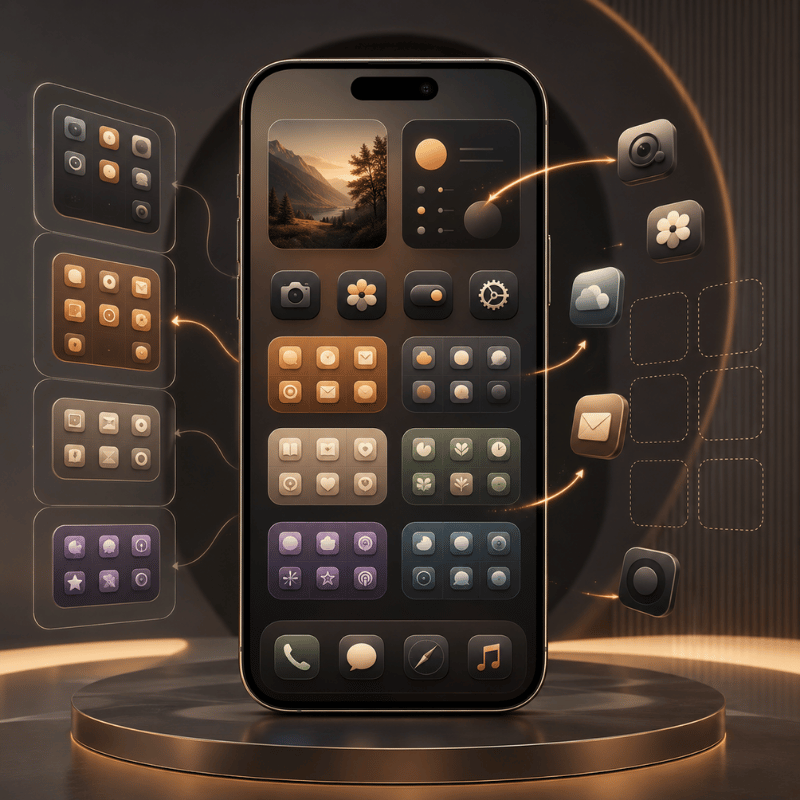
How to Organize Your iPhone Home screen Layout

A busy home screen means each app takes longer to open. Apple now offers three ways to organize them: jiggle mode to reposition, App Library to hide less-used apps, and hidden pages to simplify your home screen.

Move Apps and Create Folders

  1. Hold any app icon until all icons start bouncing.
  2. Drag apps to new positions or across pages.
  3. To make a folder: drag one app onto another. iOS automatically names it – tap the folder name to change it. Consider using emojis as the folder name for visual cues, e.g Camera, Finance.
  4. Tap Done when finished.

Use App Library and Hidden Pages

Drag-off the last home screen page to arrive at your App Library– all of your installed apps are in here, accessible by alphabetical search. Drag lesser-used apps into here to unclutter your iScreen without removing.

Long press home screen to make any page disappear Tap the dots along the bottom (indicating how many home pages you have). From the selection iScreen un-check the pages that you wish to hide.

✓ Home screen Organization Checklist:

  • Keep page 1 for your 12 most-used apps only
  • Consolidate similar apps into folder (keep your top 4 in the dock)
  • Put all else on App Library; find app via Search (Spotlight)
  • Remove busy pages so your first swipe always results in a meaningful hit
💡 Pro Tip — Focus Mode Layouts: iOS 26 lets each Focus Mode display its own home screen layout and wallpaper. Create a Work Focus that shows only productivity apps, and a Personal Focus for social and entertainment. Go to Settings > Focus, choose a mode, and tap the wallpaper option to link a Focus to a specific home screen layout and wallpaper.

For layout inspiration, see home screen layout ideas curated by the iScreen design team.

How to Add Widgets to Your iPhone Home screen
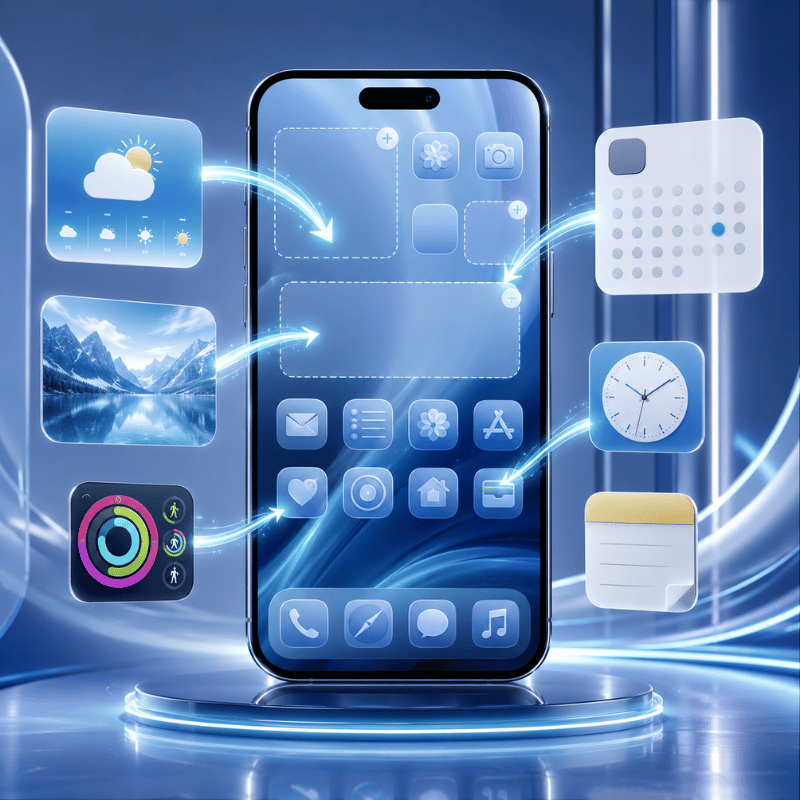
How to Add Widgets to Your iPhone Home screen

1. How to add, and resize,widgets Widget information at a glance-weather, calendar, and battery levels-comes with out having to launch the an application. How to include-and resize-widgets

  1. Press and hold your finger in a blank space on your home screen, wait for the icons to bounce, and remove.
  2. On the left-hand side click the + button to go into the Widget gallery
  3. Click on an app or enter text into the Search Bar to look for specific ones.
  4. Swipe left and right across the widget preview to select the appropriate size from small, medium, and large.
  5. Tap Add widget and choose one to add; then drag to the ideal place.
  6. Tap Done.

Widget Sizes at a Glance

Size Grid Space Best For
Small 2×2 app slots Battery, steps, timer
Medium 4×2 app slots Calendar, weather, maps
Large 4×4 app slots Photos, news, reminders
💡 Smart Stack Tip: Stack up to 10 widgets in one slot using the Smart Stack widget (found in the widget gallery under “Smart Stack”). iOS rotates automatically to show the most relevant widget based on time and context — weather in the morning, reminders at midday. It’s the best way to add widgets without using extra home screen space.

(iOS requirements note: basic Home screen Widgets will require at least iOS 14. Lock screen Widgets (the widgets below the clock on the iScreen) will require iOS 16 or newer.)

How Do I Add a Widget to My iPhone Lock Screen?

Lock screen widgets appear beneath your clock providing you with essential information at a glance — for example, weather conditions, your ringer setting, activity rings, or how many days until a specific event. To create one: Lock the iScreen then touch and hold to edit. tap customize tap the lock screen preview, not home screen preview tap the area below clock and then your widget. Lock screen widgets are the same shape but significantly smaller than Home screen widgets and only some apps come with support for these.

If you want to create personalized, custom widgets that seamlessly complement your home screen style, be sure to check out iScreen’s widget library — or try couple widgets for shared countdowns and paired photos..

How to Change App Icons on Your iPhone (Native + Custom)
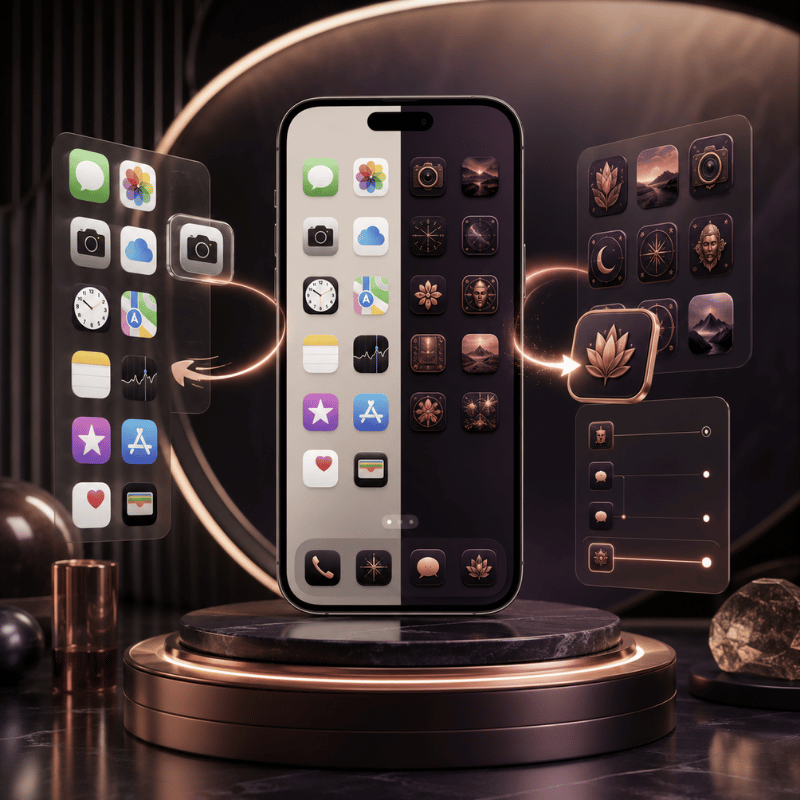
How to Change App Icons on Your iPhone (Native + Custom)

iOS 26 brings a higher degree of control to the customization of your app icons compared to any prior iOS iteration. Here are your three options, from simplest to most customizable.

Method 1: Customize App Icon Style Natively (iOS 26, No Extra Apps)

  1. Go to Settings > Home screen & App Library.
  2. Tap App Icon Style.
  3. Choose from five styles:
    • Automatic — light or dark based on system mode
    • Light — bright, clean icon backgrounds
    • Dark — dark-mode icon variants
    • Tinted – visually harmonizes with your chosen wallpaper or the hue of your iPhone casing
    • Clear – mimics the transparency of our Liquid Glass in that it renders your home screen background visible through the outline of the app’s icon

Each style changes the color of your app icons across every home screen page simultaneously — you don’t need to update icons one at a time.


💡 iOS 26 Tip — Tinted Icons: The Tinted option reads your wallpaper’s dominant color and applies a matching tint across all icons. It also includes a case-color matching option — new in iOS 26. Clear icons look best on light-colored wallpapers; on dark wallpapers, the transparent icons can be hard to read.

Method 2: Custom Icon Images via Shortcuts (iOS 14+)

  1. Save the image you wish to use as an icon to your Photos gallery.
  2. On your device, open the Shortcuts application and press + to establish a new shortcut.
  3. In the search bar, find the ‘Open App’ action, then add it; choose the application you want to open.
  4. At the pinnacle of the shortcut, touch the name or icon and change it to reflect the name of the application.
  5. When the icon is shown, tap the ‘Add to Home screen’, touch the icon, and select the image from your photos collection.
  6. Tap Add. You can see the new icon reflected on your home screen.

⚠ Known Limitation: Shortcuts creates a new icon — it doesn’t replace the original app icon. You’ll end up with two icons for the same app. Move the original to App Library to hide it. Additionally, Shortcuts-based icons do not show notification badges (the red number dots).

Method 3: iScreen Icon Packs (5,000+ Designs)

To create complete visual change in your app icons without using the work around in the Shortcuts application, iScreen’s iPhone icon packs offer over 5,000 unique icon designs categorised according to aesthetic preferences. These icons are integrated with our one-tap theme feature – refer to this for further detail below.

The 5 Layers of iPhone Home screen Customization
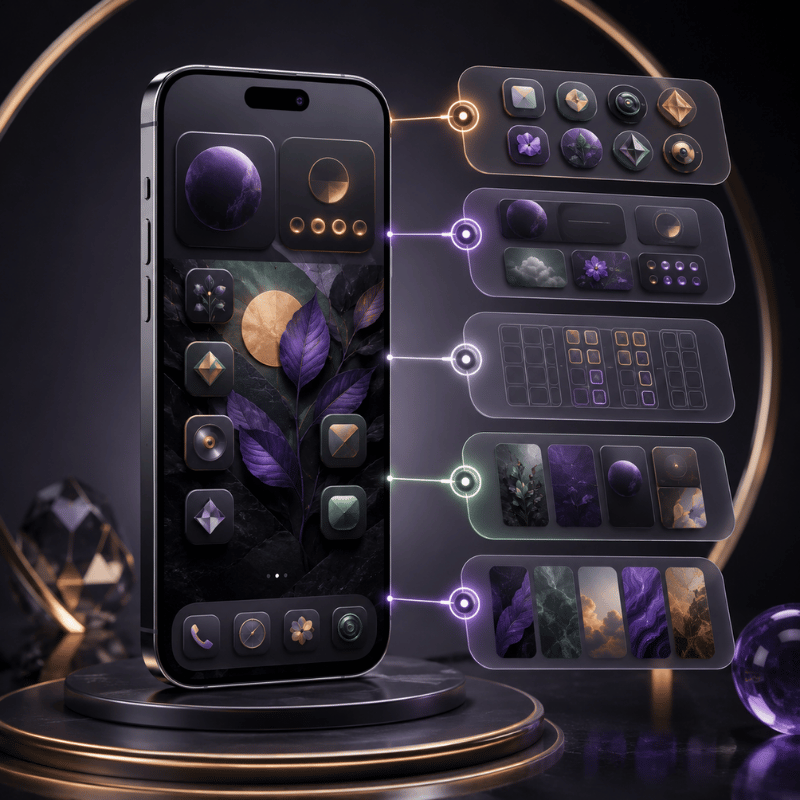
The 5 Layers of iPhone Home screen Customization

For many users, customisation ends after the initial phase with the addition of a few icon styles; read below for a full breakdown of each layer — and when native iOS 26 tools are enough versus when a dedicated app makes sense — readsed to relying on specialised applications.

Layer What You Customize Native iOS 26 With iScreen
Layer 1 Wallpaper ✓ Gallery + Photos + Spatial ✓ 4K curated library
Layer 2 Lock screen Style ✓ Clock font, widgets, depth ✓ 1,000+ widget designs
Layer 3 Layout & Organization ✓ Folders, App Library, Focus ✓ Layout templates
Layer 4 Widgets ✓ Apple widgets (basic designs) ✓ 1,000+ aesthetic designs
Layer 5 Icons & Full Theme ⚠ Tint/Clear only; no matching ✓ 5,000+ icons + one-tap themes

Determining the Most Suitable Customization Path: Utilise this decision tree to determine the method best for you:

If you want… Best option
A new wallpaper quickly Native Settings — Method 1 above
Color-tinted or clear (glass) icons Native iOS 26 — Settings > Home screen > App Icon Style
A cohesive aesthetic (matching wallpaper + icons + widgets) iScreen one-tap theme
Productivity home screen with useful widgets iScreen widget library
StandBy Mode or Dynamic Island customization iScreen StandBy designs

iScreen’s one-tap theme system coordinates app icons and widgets together with a matching wallpaper, so every element on your home screen feels intentional.

“Most individuals merely change their wallpaper and halt there. What has the greatest aesthetic influence is unifying your wallpaper, icons, and widgets around a shared aesthetic; our one-tap theming was created precisely for this purpose.”
— iScreen Design Team

Browse from a repository of over 2,000 iPhone themes based on style, which also includes our curated collection ofpastel iPhone wallpapers.

For a direct side-by-side breakdown of iScreen against other options, visit our comparison page.

What’s New in iOS 26: Liquid Glass and the Home screen Redesign
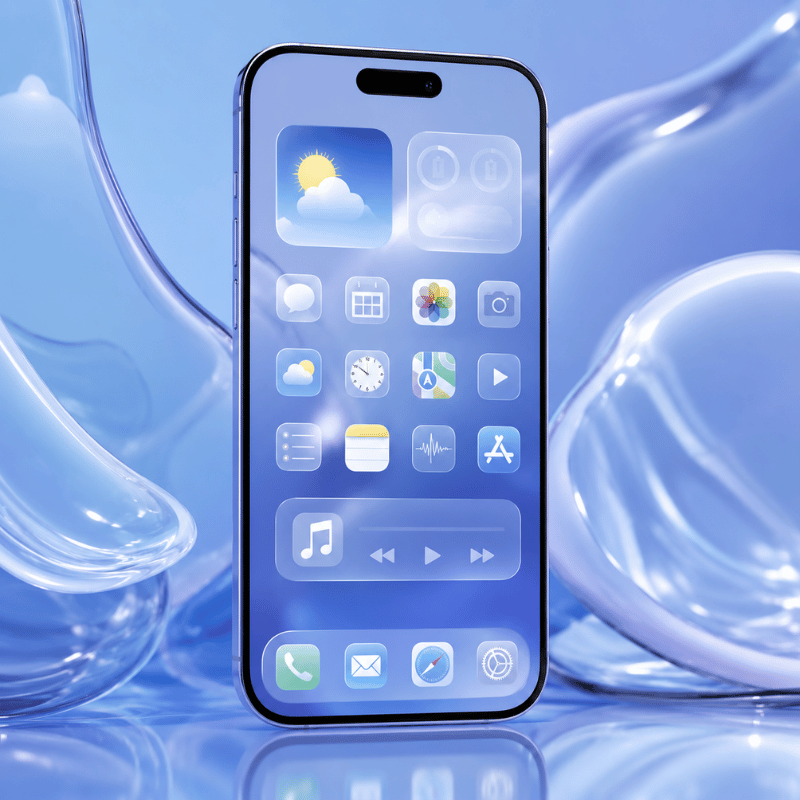
What’s New in iOS 26: Liquid Glass and the Home screen Redesign

iOS 26, which debuted in September 2025, introduced the most significant visual redesign of the iPhone home screen since iOS 7 in 2013. Apple christened this new aesthetic “Liquid Glass,” characterised by its deep, layered design and a sheer quality that imbues the interface with an elegant, polished sheen.

The update expanded the customization options for home screen icons, wallpapers, and lock screen styles — all detailed in the four changes below.

As of April 2026, nearly 81% of all active iPhones are operating on iOS 26, based on analytics from TelemetryDeck-a figure suggesting that virtually every reader of this guide has already adopted the new features.

The 4 Biggest iOS 26 Home Screen Changes

  1. Clear (Glass) App Icons: This now allows app icons to have full transparency, displaying your wallpaper in place of the conventional coloured background of the icon. Turn this on by navigating through the Settings application to ‘Home screen & App Library’, then ‘App Icon Style’, and finally selecting ‘Clear’. For best visibility, it is advisable to use a light-coloured wallpaper since the black lettering on dark wallpapers is often difficult to read.
  2. Tinted Icons (Color-Matched): ‘Tinted’ mode provides a new ability to colour-match all app icons with your primary wallpaper colour, and can even be customised to mirror your iPhone’s case colour – a first for iOS devices.
  3. Spatial Wallpapers: New Spatial Scene wallpapers produce a genuine 3D effect — a depth-layered 3d effect that shifts the scene as you tilt your iPhone. These can be accessed by selecting the Spatial Scene option when applying a new wallpaper (iPhone 12 and above required).
  4. Set a Wallpaper from Your Lock screen In iOS 26, you can switch between lock screens from right on your device with long-press your lock screen and click + to cycle between wallpapers.
💡 Pro Tip — Enabling Spatial Depth: Spatial Scene wallpapers require a portrait-mode photo (shot with Portrait mode in Camera). Open Photos, find your portrait, tap Share → Use as Wallpaper → select the Spatial Scene tab to activate the 3D parallax depth effect.

Don’t love the Glass look?You can reduce the glass look if you wish by heading over to “Settings” >> “Accessibility” >> “Display & Text Size” >> “Reduce Transparency” to cut down on the effect and have a more defined-look for the Liquid Glass lock screen style.

Explore iOS 26 FeaturesSee iScreenStand By mode for iPhone Themes, Dynamic Island Animations, and an in-depth look at how depth effect Wallpapers work.

Frequently Asked Questions

How do I change my Home screen display on my iPhone?

Set a Wallpaper from Your Home ScreenLong-press an empty area (no apps, only blank space) on your Home screen until the interface Jiggle or a menu appears. Once an Edit option or a jiggle starts, Tap Edit (a menu or Jiggle will stop after that and begin allowing you to edit an all iOS device), tap the + icon to add widgets to your Home screen, change around apps, and remove apps.To change your background to a different wallpaper; go into your” Settings”>> “Wallpaper” >> “Add New Wallpaper” >> then refer to the very top to “Set Wallpaper From Your Home screen”.

How do I get to different home screens on my iPhone?

Change Your Home screen PagesLong-press empty space on your Home screen (no apps) to cause the apps on your iPhone to enter the Jiggle. Press the horizontal row of dots that appears above each Home screen row in the edit menu at the very bottom.

You’ll see the current display, including your various home pages, where you can uncheck pages to hide them.

Can you change the font on an iPhone home screen?

You cannot change the font of app name labels on the home screen grid. However, in iOS 26 you can change the font and color of the clock on your lock screen: long-press your lock screen → tap Customize → tap the time display → choose from Apple’s preset font styles and colors. iOS 26 also introduced automatic font-of-the-time adjustments that adapt the clock style to complement your wallpaper aesthetic.

Can you have multiple home screen wallpapers on an iPhone?

Yes, you may create different wallpaper combinations, you can save each combination and simply switch to them whenever you want vialong-press your lock screen and swiping through your created Lock screens. There’s an additional option that allow you to rotate the photos on you wallpaper through Photo shuffle, this could go from On Tap to Daily depending on your needs.

How do I add an app back to my iPhone home screen?

Access Your Hidden AppsGo to the App Library by sliding left across your device’s screens to beyond where any applications can be stored, and if you scroll all the way to the bottom of the application you may find all your unused application in an alphabetical array.

Just long press the application of your desire and to place it onto an blank iScreen, just drag left and will return to the home page; then you may choose an application on an empty page for use. You may then just press on the icon that brings you to another application from App library.

How do I reset my iPhone home screen to default?

Reset Your iPhone’s Home screen Layout Go to settings >> General >> Transfer or Reset iPhone >> Reset >> Reset Home screen Layout. Note: that this action will only delete all folders from your Home screen and arrange your applications in default apple order with built-in apps first and the rest alphabetical, your background will remain intact.


Next Steps: Take Your Home screen Further

So now you’ve got a whole suite of tools on your disposal to change up your iPhone home screen-anything from swapping out your wallpaper in 60 seconds to changing the look and feel with matching icons and widgets. For most of us, the built-in iOS 26 features will get you most of the way there, knocking out Layers 1 to 3 just fine. It’s the move up to Layers 4 and 5-that cohesive widgets and actually-custom icons-that really start to see a dedicated app shine.

See iScreen’s complete iPhone customization guide →

This guide is written by the iScreen team, the developers behind the iScreen iPhone customization app. We have a direct interest in helping you find the right tools for your home screen, including our own. Every step in this guide has been tested on iOS 26, and iOS version requirements are noted where they apply.

Sources:

最新文章

4K iPhone Wallpaper: What Resolution You Need and Where Detail Matters

4K iPhone Wallpaper: What Resolution You Need and Where Detail Matters

2026/8/24 15:59
Updated August 2026 · Checked against current iOS 26 guidance iPhone wallpaper 4K refers to a wallpaper source labeled 4K, not one universal iPhone display grid. It tells you the source file may contain plenty of pixels, but it doesn’t promise that the image will look sharp after a portrait crop, survive repeated exports, or leave the clock and icons readable. The dependable choice is a clean original that still has enough real pixels after cropping, plus a final check on your own Lock Screen and Home Screen. Quick Verdict: What Should You Download? Source type Likely result Best next move Original portrait photo Best starting point Keep extra room around the subject Original landscape UHD 4K photo Can work, but crop loss may be large Run the Pixel Sufficiency Check Original digital art Usually clean if exported once Use a portrait canvas and protect quiet zones Upscaled small image Large dimensions, limited real detail Find the original instead of enlarging again Social-media save May contain resize or compression damage Download from the creator or source page Messaging-app export Quality depends on the send mode Transfer as a file or use the original link Screenshot Already limited to the captured screen Avoid unless no original exists Minimal gradient Forgiving of modest detail Check banding and icon contrast Live or depth-effect design Static resolution is only one requirement Use the format-specific guide and preview If you want to browse and download a style first, use iScreen’s wallpaper collection. Return to this guide when you need to decide between two files, fix a blurry result, or plan a crop around the interface. Does an iPhone Actually Display Wallpaper in 4K? Not in the simple way the filename suggests. In this guide, UHD 4K means a landscape raster of 3840 × 2160 pixels. Other professional “4K” conventions exist, so the label isn’t one universal grid. More importantly, an iPhone uses its own display resolution and a tall portrait shape. The phone shows a crop of the source, not a miniature certificate proving that every one of those 8.3 million source pixels survived. The International Telecommunication Union’s consumer UHD reference supplies the 3840 × 2160 definition. Apple lists the iPhone 17 display at 2622 × 1206 pixels and 460 pixels per inch. Those numbers describe two different things: a landscape source convention and a device display. They’re useful inputs, not a universal wallpaper prescription. According to those source dimensions, an iPhone wallpaper resolution check prevents a common failure: choosing a landscape file by its headline label while ignoring the pixels left after the portrait crop. Even a portrait source that’s only moderately larger than your screen can beat a landscape file with a bigger headline number. It wastes fewer pixels outside the final crop. Carefully made minimal backgrounds may also look cleaner than detailed 4K images that have been enlarged, sharpened, and exported several times. Treat “4K” as a useful source-size clue. Treat the final portrait crop as the actual file you are asking the phone to display. The Pixel Sufficiency Check The Pixel Sufficiency Check is a three-step editorial test. First, note the source width and height. Second, estimate the portrait crop you’ll keep. Third, compare the retained width and height with your iPhone display. It isn’t an Apple certification and it can’t measure artistic quality. It simply prevents the uncropped dimensions from hiding a severe crop loss. Record the original. Use the true downloaded file, not the dimensions written in a post caption. Sketch the intended portrait crop. Keep the focal subject and enough breathing room for interface elements. Compare both retained dimensions. If either side falls below the target display, expect less freedom to zoom or reposition. Then verify on the phone. Worked example. Start with a 3840 × 2160 landscape UHD source. To match the tall shape of an iPhone 17 while keeping all 2160 source pixels of height, the crop retains about 994 pixels of width: 2160 × 1206 ÷ 2622 ≈ 994. The resulting 994 × 2160 crop is below the phone’s 1206 × 2622 display grid in both dimensions. That doesn’t guarantee visible blur, but it proves the original 4K label didn’t survive the portrait crop intact. Worked-example audit trail Source width: 3,840 pixels Source height: 2,160 pixels Target width: 1,206 pixels Target height: 2,622 pixels Display density: 460 pixels per inch Retained width: about 994 pixels Retained height: 2,160 pixels Width shortfall: about 212 pixels Height shortfall: 462 pixels Retained source width: about 25.9% Retained crop area: about 2.15 megapixels Target display area: about 3.16 megapixels What the same crop means in percentage terms (rounded to 0.1%) Checkpoint Result Original width retained 25.9% Original width removed 74.1% Original height retained 100% Original pixel area retained 25.9% Target width covered 82.4% Target height covered 82.4% Target pixel area covered 67.9% Target width deficit 17.6% Target height deficit 17.6% Nine outcomes from the Pixel Sufficiency Check Check result What it means Action Both sides well above target Good crop flexibility Reframe gently; still inspect real detail Width just above target Limited horizontal movement Avoid extra zoom Height just above target Limited vertical movement Place the subject before adding overlays Width below target Potential softness after scaling Find a wider or portrait original Height below target Potential softness and no zoom margin Use a taller source Both sides below target File relies on enlargement Replace it rather than sharpen harder Dimensions pass, edges look smeared Pixel count hides weak provenance Locate the original export Dimensions pass, blocks or halos appear Compression or oversharpening damage Use a cleaner export Everything passes on paper Still not a rendering guarantee Complete the actual phone preview Crop estimates are most useful when choosing between files. They do not replace your eyes. Viewing distance, system rendering, antialiasing, and the image’s processing history can change the final impression even when the retained grid looks adequate. Why a 4K Wallpaper Can Still Look Blurry Dimensions describe the container, not the history of the picture inside it. A small image can be enlarged to 3840 pixels wide without gaining new leaf texture, hair detail, or clean type edges. A screenshot starts with the limits of the screen it captured. A file sent through social or messaging services may be resized or encoded again. Aggressive sharpening can create bright halos that look crisp in a thumbnail and brittle on the phone. The Library of Congress describes JPEG lossy compression as variable and notes that typical settings may reduce file size by roughly 10:1 to 20:1. That range concerns file-size reduction; it isn’t a threshold for acceptable wallpaper quality. Visible damage depends on the encoder, settings, content, and prior exports. Nine blur and quality symptoms, checked in a useful order Symptom Likely cause First repair Fine detail is smooth everywhere Upscaled or blurred original Find the source capture Block patterns around gradients Heavy JPEG compression Use a cleaner export Bright outlines around edges Oversharpening Return to an unsharpened original Image looks fine until portrait crop Too few retained pixels Choose a portrait source Only the top appears extended or soft Crop/interface behavior Reposition or use a taller composition Text in the art looks fuzzy Raster type or repeated export Re-export from the design file One copy is worse than another Different transfer path Compare file size and dimensions Lock Screen is fine, Home Screen is muddy Separate appearance or blur treatment Customize the Home Screen separately Only close inspection reveals softness Normal display/perception limit Judge at normal viewing distance Diagnose in this order: original file, retained crop, processing or transfer path, and final device preview. That sequence avoids wasting time on repeated sharpening when the real problem is a screenshot or narrow crop. The Crop-Safe 3-Zone Map The Crop-Safe 3-Zone Map is a composition checklist, not a set of fixed pixel bands. Current iPhone layouts can change with widgets, controls, notifications, wallpaper mode, clock treatment, and the position you choose. Use the zones to ask where visual pressure will occur, then test the exact configuration on your device. Top pressure area, clock and date. Keep faces, type, horizon lines, and high-contrast detail away from the clock’s likely footprint. If the clock adapts or moves, recheck rather than treating the first preview as permanent. Middle focal area, subject and depth. Protect the main face, object, or abstract focal point. Leave enough room to drag the image without cutting through the subject when the crop changes. Bottom pressure area, notifications, controls, icons, and widgets. Avoid small text and essential detail here. A quieter Home Screen version often works better behind app icons. Apple’s current iOS 26 Lock Screen guide documents pinch-to-zoom and two-finger drag for photo positioning, alongside configurable clocks, widgets, notifications, and eligible depth or spatial effects. That flexibility is why the map uses pressure areas. The cited Apple guide doesn’t provide one fixed “safe-zone” template for every user layout. Three practical scenarios show how to apply it: Portrait photo: keep the eyes and face in the middle, with clean space above the hair and below the shoulders. Mountain or city scene: place the horizon away from the clock and keep the brightest lights out from behind Home Screen icons. Minimal gradient: use a smooth tonal field at the top and bottom; inspect for banding before you save. For a composition that interacts with the system’s subject treatment, see iScreen’s depth-effect wallpaper guide. If your design needs motion rather than a static crop, the live wallpaper guide covers that separate format. When Extra Resolution Helps, and When It Does Not Extra source pixels help when they’re genuine. They provide room to reframe a landscape photograph, reuse an original across different models, make a moderate zoom, or preserve fine lines in original artwork. They’re most valuable before you make the final portrait crop. They don’t reverse damage already in the picture. An 8K export of a soft 900-pixel social save still contains the same weak evidence, only distributed across more pixels. The same applies to motion blur, missed focus, repeated JPEG encoding, sharpening halos, or a subject placed where the clock must go. Use more resolution when… the original camera or design file contains real fine detail; you need significant portrait reframing; one source must support several display shapes; you want modest zoom freedom without immediate enlargement. Do not expect it to fix… blur in the capture; a screenshot or tiny download; compression blocks or color banding; a composition that fights the clock, icons, or widgets. A dark background can improve the appearance of bright text and icons in some layouts, but this article doesn’t treat wallpaper color as a battery-saving guarantee. Choose dark, light, abstract, nature, or minimal art for readability and style; verify power claims separately for the exact device and display behavior. The 100% Preview Test Before You Save The 100% Preview Test has two distinct stages. On a computer or image viewer, 100% means one image pixel is shown as one preview pixel. Use that view to find baked-in defects: smeared texture, block boundaries, banding, jagged type, or sharpening halos. Return to 100% before judging those baked-in defects. Don’t treat it as a simulation of how the wallpaper will look on an iPhone. The decisive stage happens on the phone. Set the candidate, look at the Lock Screen from a normal distance, unlock to the Home Screen, and check the exact arrangement of icons and widgets. If the Home Screen is too busy, use a separate treatment instead of forcing one image to do two jobs. Inspect genuine fine edges at 100% file view. Reject obvious capture blur, export blocks, banding, or halos. Apply the intended portrait crop without unnecessary zoom. Preview the Lock Screen with your clock and widgets. Preview the Home Screen with the real icon pages you use. Fix in order: stronger original → safer crop → less zoom → quieter overlays → separate Home Screen. This order matters. Repeated resizing and sharpening can make a problem harder to diagnose. When a cleaner original fixes the result, stop there. When the source is clean but the focal point is covered, change the composition rather than the pixel count. How to Set a 4K Wallpaper on iPhone As checked in Apple’s iPhone User Guide for iOS 26 in August 2026, open Settings → Wallpaper → Add New Wallpaper. Choose the photo, position it, and review the available appearance controls. You can then choose Set as Wallpaper Pair or Customize Home Screen. Download the original image rather than a screenshot of the gallery. Open Settings and select Wallpaper. Choose Add New Wallpaper and select the photo. Pinch to zoom only as much as the composition requires, then drag to position. Check the clock, widgets, subject, and lower interface area. Set a pair, or customize the Home Screen with a separate photo, color, or blur treatment. Complete the 100% Preview Test on both final surfaces. Interface labels and effects can change in later iOS releases, so use Apple’s current guide when your screen differs. For a broader walkthrough, open iScreen’s iPhone customization guide. For visual inspiration after the technical check, compare an aesthetic wallpaper layout or a more detailed cyberpunk wallpaper composition. Frequently Asked Questions Is 4K good for iPhone wallpaper? Yes, when the source is clean and the portrait crop retains enough real detail. A genuine 4K source also gives you more room to reframe landscape photography or make a modest zoom. The label alone isn’t a sharpness guarantee, so compare the retained crop with your display and confirm the result on the phone. What resolution should an iPhone wallpaper be? Use a source that meets or exceeds your iPhone display dimensions after the intended crop. There’s no one pixel size for every model because both resolution and shape vary. A portrait image with breathing room around the subject is often easier to position than a tightly framed landscape image with a larger uncropped resolution. If two files pass the pixel check, choose the cleaner original and the composition that needs less zoom. The iPhone 17 display is 1206 px wide. Why does my 4K wallpaper look blurry on iPhone? The file may be upscaled, out of focus, repeatedly compressed, or cropped too narrowly. A large filename cannot restore detail lost in a screenshot or an earlier export. Start with the original, estimate the pixels left after the portrait crop, reduce unnecessary zoom, and inspect the actual Lock Screen and Home Screen. Is 8K better than 4K for iPhone wallpaper? Only when the extra pixels contain genuine detail or give you useful crop freedom. An 8K filename can’t restore texture removed before export, repair missed focus, or undo repeated compression. Compare the originals at 100% file view, estimate the same portrait crop for both, and then preview each candidate on the device. When both exceed the retained pixels you need, prefer the cleaner composition instead of the larger number. That extra room matters most before a portrait crop or zoom. Can I use different wallpapers for the Lock Screen and Home Screen? Yes. Apple guidance supports a wallpaper pair or a separately customized Home Screen. Use a quieter second treatment on the Home Screen to keep app icons readable. Preview both surfaces because the clock, widgets, and icon overlays create different readability pressures. Where can I download free 4K iPhone wallpapers? Browse iScreen’s current collection for available wallpaper options. Before saving, open the original item rather than taking a screenshot; check the displayed dimensions, format, source quality, and any reuse terms shown with it. After download, run the crop and preview checks in this article. The collection page remains the place to browse styles, while this technical guide helps you reject a weak file before it becomes your background. Use the collection page to compare styles and available formats. Choose the File, Then Prove the Crop A reliable 4K wallpaper decision comes down to three questions: Are enough genuine pixels left after the portrait crop? Is the source free from baked-in blur and export damage? Do the clock, subject, notifications, icons, and widgets remain readable on the final device? Use the Pixel Sufficiency Check to compare files, the Crop-Safe 3-Zone Map to place the composition, and the 100% Preview Test to separate source defects from phone layout issues. Then find matching Lock Screen wallpapers and apply the checks to the style you actually want. References & Sources International Telecommunication Union, Recommendation BT.2020-2 International Telecommunication Union, Report BT.2246-8 Apple, iPhone 17 Technical Specifications Apple, Change the Wallpaper on iPhone Apple, Create a Custom Lock Screen Library of Congress, JPEG Image Encoding Family
2026/8/24 15:59
How to Change Wallpaper on iPhone

How to Change Wallpaper on iPhone

2026/8/24 15:06
By the iScreen editorial team · Reviewed against Apple Support and the iOS 26 iPhone User Guide · Updated August 24, 2026 How to change wallpaper on iPhone is simple: open Settings, tap Wallpaper, tap Add New Wallpaper, choose a photo or built-in category, and tap Add. Then choose Set as Wallpaper Pair to use the selection on both screens, or Customize Home Screen to create a different Home Screen background. That’s the complete current route; the choices after Add decide whether one screen or both screens change. 6-Step Wallpaper Rule Open Settings. Tap Wallpaper. Tap Add New Wallpaper. Choose Photos, Photo Shuffle, Weather & Astronomy, Emoji, or Color. Adjust the preview, then tap Add. Choose Set as Wallpaper Pair or Customize Home Screen. Need an image first? You can browse iPhone wallpapers, save one you like, and then return to the steps above. iScreen helps with discovery; iOS performs the final system setting. Change Your iPhone Wallpaper in Six Steps There are two current entry routes. Settings is the clearest route when you’re adding something new, while the Lock Screen gallery is better for saved sets because it opens the existing wallpaper collection. Think of this as the 2-Route Wallpaper Map: Settings is a straightforward route for creating a wallpaper. The Lock Screen gallery can switch or edit saved sets and can also add a new one. Routes documented by Apple Support; route recommendation by iScreen editors. Route Best for Start point Finish Settings Adding a new photo or built-in wallpaper Settings → Wallpaper Add → Pair or Customize Home Screen Lock Screen gallery Switching or editing a saved set Wake the Lock Screen, then touch and hold Select, Customize, Add, or Done as shown The labels matter. A new-wallpaper flow uses Add. An editing flow may use Done. If a tutorial tells you to tap a button that isn’t on your screen, check which route it started from before assuming your iPhone is different. Change Wallpaper Through Settings Open the Settings app and tap Wallpaper. Tap Add New Wallpaper. Choose Photos or Photo Shuffle for your own images. You can also choose a built-in category such as Weather & Astronomy, Emoji, or Color. Reposition the photo, try available styles, and adjust the clock or widgets if needed. Tap Add. Choose Set as Wallpaper Pair, or tap Customize Home Screen for a separate background. According to Apple Support, these labels match the current Change your iPhone wallpaper instructions. The route matters because older guides may say “Choose a New Wallpaper,” “Dynamic,” or “Stills.” Those labels describe older interfaces and shouldn’t replace what your current iOS 26 screen shows. As you scroll through the current wallpaper options, you may see categories like Weather & Astronomy, Emoji, and Color. Select a wallpaper, select a photo, or select multiple photos for Photo Shuffle; then try a filter or different styles before you tap Add. This is Apple’s current customization flow, even when an older guide is titled for “iOS 16 or later.” Change Wallpaper From the Lock Screen Apple’s official support page documents this route. Wake the iPhone, touch and hold the screen, and authenticate with Face ID or your passcode if the gallery does not open. Swipe left or right through saved Lock Screens. Tap a set to switch to it, tap Customize to edit it, or use the Add button to create another one. This route is especially useful when you already have several wallpaper sets. Apple also lets you link a Lock Screen to a Focus, so changing to that saved screen can match a work, personal, or sleep setup. The control is optional; a wallpaper does not need a Focus link to work. To customize your Lock Screen, you can also tap the time to change its font, move the foreground subject within the available crop, or link a Focus. When you edit an existing set, the screen may ask you to tap Done; when you create a new one, it normally asks you to tap Add. If touch-and-hold seems to do nothing, check three things before troubleshooting the image: the Lock Screen must be awake, the press must be held rather than tapped, and authentication may still be required. Set the Same Wallpaper or Use a Separate Home Screen After you tap Add, the next choice controls the relationship between the two screens. Set as Wallpaper Pair gives the Lock Screen and Home Screen a coordinated version of the same selection. Customize Home Screen lets you choose a separate photo, color, gradient, or blur treatment. In other words, tap Set as Wallpaper Pair when you want the Home Screen and Lock Screen to stay coordinated. Choose the separate route when the iPhone’s app area needs less visual detail than the Lock Screen. Apple’s wallpaper preview lets you alter the Home Screen without replacing the Lock Screen image. Lock Screen and Home Screen Assignment Options Same image on both: fastest and visually consistent. Detailed Lock Screen + quieter Home Screen: keeps app names and icons readable. Photo Lock Screen + color or gradient Home Screen: preserves the subject without placing it behind icons. Photo Shuffle Lock Screen + stable Home Screen: adds variety without making the app area change constantly. No single pairing works for all situations. A setup succeeds when the clock, widgets, notifications, icons, and labels remain clear on the screen where they belong. Crop, Reposition, Add Widgets, and Use Photo Shuffle According to Apple’s Lock Screen guide, you can pinch and drag during preview because iOS crops the source to the current screen layout. The visible crop depends on the iPhone model, the source image’s shape, and the elements placed over it. No single pixel size guarantees the same crop across every current iPhone model, so a good source image can still need a different crop on another model. On the Lock Screen, you can adjust the clock treatment, add widgets, change controls, and try available styles. Keep the main subject away from the clock and widget area. More widgets aren’t always better if they cover the part of the photo you chose the image for. For layout, icons, and widgets beyond this wallpaper-pair decision, use the complete iPhone Home Screen customization guide. For automatic changes, choose Photo Shuffle. Apple’s current frequency choices are On Tap, On Lock, Hourly, and Daily. Pick a stable Home Screen separately if rotating photos make icons harder to read. On iPhone 12 or later with iOS 26, an eligible photo may support Spatial Scene for a 3D effect, as described in Apple’s wallpaper instructions. This isn’t guaranteed for every photo. If the option doesn’t appear, the image may not qualify even when the phone and operating system do. Live wallpapers, animation, and other dynamic wallpaper formats are separate behaviors from Photo Shuffle. This guide covers the current system wallpaper controls; it doesn’t imply that every downloaded animated image will play as a dynamic wallpaper. Find a Wallpaper Before You Change It Already have a photo? Continue with Settings or the Lock Screen gallery. Otherwise, browse 4K iPhone wallpapers and save the image you want to Photos. For style ideas before you choose, explore iPhone themes or see this visual iPhone wallpaper lookbook. Don’t confuse downloading with applying. A wallpaper app or website supplies the image; Apple’s Wallpaper controls decide the Lock Screen, Home Screen, crop, widgets, and pair. Fix Common Wallpaper Problems Problem category What to check Shortest fix Wallpaper gallery will not open Screen is awake; press is held; authentication is complete Wake the Lock Screen, touch and hold again, then authenticate Photo looks zoomed or cropped Image shape and selected crop Pinch and drag; choose an image with more space around the subject if needed Home Screen looks blurry Blur may be enabled under Customize Home Screen Open the Home Screen preview and turn Blur off Home Screen changed unexpectedly Set as Wallpaper Pair was selected Return to Wallpaper and choose Customize Home Screen Clock or icons are hard to read Bright detail sits behind interface text Reposition the photo or use a quieter Home Screen color or gradient Spatial Scene does not appear iPhone model, iOS version, and photo eligibility Use iPhone 12 or later with iOS 26 and try another eligible photo Old wallpaper seems missing It may be saved elsewhere in the Lock Screen gallery Wake, touch and hold, authenticate, then swipe through saved sets Wallpaper controls are unavailable The iPhone may be managed by work or school Ask the organization that manages the device about its restriction Wrong screen changed The pair choice or selected preview did not match the intended screen Return to Wallpaper and edit the Lock Screen or Home Screen preview directly On a work- or school-managed iPhone, unavailable Wallpaper controls can mean an administrator has restricted changes. Apple’s device-management restrictions guide documents a supervised-device control that can prevent users from modifying Lock Screen or Home Screen wallpaper. In that case, ordinary crop or restart advice won’t restore the option; contact the organization that manages the device. Deleting is also a separate task. In the saved Lock Screen gallery, Apple’s Lock Screen guide directs users to swipe up on a set and tap the Trash button. Do that only when you intend to remove the saved set, not when you merely want to switch back to another one. Final Preview Before You Finish Apple’s official customization guidance matters here because the finished screens include more than the source photo. Check clock contrast, widgets, notification previews, app labels, and whether the subject remains visible in both bright and dimmed appearances. Treat Lock Screen widgets and notifications as privacy surfaces too: a beautiful setup isn’t worth exposing information you would rather keep out of view. When the Lock Screen works but the Home Screen feels busy, keep the Lock Screen photo and change only the Home Screen to a color, gradient, or blurred version. This small split often solves readability without discarding the image. Frequently Asked Questions How do I change just my Home Screen wallpaper on iPhone? View answer Open Settings, tap Wallpaper, and select the current pair or add a new Lock Screen wallpaper. When the Home Screen preview appears, tap Customize Home Screen. Choose a separate photo, color, gradient, or blur setting. This changes the Home Screen treatment without requiring you to replace the Lock Screen image you want to keep. Before you finish, check the result behind your app icons and labels. A detailed photo that looks excellent on the Lock Screen may need a calmer crop, color, or gradient on the Home Screen. How do I switch back to an old wallpaper? View answer Wake the Lock Screen, touch and hold it, and authenticate if requested. Swipe left or right through your saved Lock Screens, then tap the one you want to use. If the old wallpaper set was deleted rather than merely replaced, it will not appear in the gallery; add the source photo again through Settings instead. Why does my iPhone wallpaper look zoomed in? View answer The source image’s aspect ratio may not match the visible Lock Screen or Home Screen area, so iOS crops it to fill the display. Pinch to adjust the crop and drag to reposition the subject. No single pixel size guarantees the same crop across every current iPhone model, so leave extra space around important subjects when choosing an image. Can I use a different wallpaper for the Lock Screen and Home Screen? View answer Yes. After adding the Lock Screen wallpaper, choose Customize Home Screen instead of Set as Wallpaper Pair. You can then use another photo, a solid color, a gradient, or a blurred version for the Home Screen. How do I make my iPhone wallpaper change automatically? View answer Choose Photo Shuffle when you add a new wallpaper, select the photos or album, and set a frequency. Apple’s current choices are On Tap, On Lock, Hourly, and Daily. You can still customize the paired Home Screen separately if you want the Lock Screen to rotate while app icons stay over a stable background. Why can’t I use the 3D wallpaper effect? View answer Spatial Scene requires iPhone 12 or later with iOS 26, and the selected photo must be eligible. Not every portrait or landscape photo qualifies. If your device and software meet the requirements but the option is absent, try another photo with a clear subject and background separation. References & Sources Change your iPhone wallpaper — Apple Support, updated February 2, 2026. Change the wallpaper on iPhone — Apple iPhone User Guide. Create a custom iPhone Lock Screen — Apple iPhone User Guide. What’s new in iOS 26 — Apple iPhone User Guide. Review device management restrictions for Apple devices — Apple Platform Deployment. Compare iPhone models — Apple. About this guide This guide was prepared by the iScreen editorial team using current Apple documentation and a live review of the United States search results. iScreen’s catalog descriptions are first-party product information; Apple documentation controls the operating-system steps and eligibility boundaries.
2026/8/24 15:06
Fall Wallpaper for iPhone: Cozy Autumn Lock Screen Ideas

Fall Wallpaper for iPhone: Cozy Autumn Lock Screen Ideas

2026/8/12 21:52
Updated August 2026 · Practical autumn wallpaper ideas for iPhone Lock and Home Screens Fall backgrounds for iPhone are vertical autumn images chosen and cropped for the Lock or Home Screen. They work best when the scene leaves room for the real interface: use a calm clock zone, move the main subject away from notifications, and preview it with the widgets you actually use. Even a cozy picture can look beautiful in a gallery and still feel crowded on a Lock Screen. The fast answer For a Lock Screen: use a detailed fall scene with open space behind the clock and room below for notifications. For a Home Screen: use the same palette with fewer edges behind app icons and widgets. Before saving: check the active screen, dimmed screen, clock style, widgets, and a sample notification. The configured phone is the decision surface. This guide gives you 12 composition ideas, a mood-to-screen-fit table, current iPhone setup steps, and a practical way to reject a wallpaper before it becomes annoying. These are design ideas rather than promises that all 12 files already exist in iScreen. For ready-to-use choices, you can browse iPhone wallpapers. The Clock-First Crop: A First-Pass Fall Wallpaper Check The Clock-First Crop is a quick first-pass check: preview the clock before judging the art, keep its immediate background relatively quiet, and move the main object away from the notification stack. It does not guarantee readability. Brightness, color, visual clutter, room lighting, widgets, notifications, and your chosen clock treatment can all change the final result. That screen-fit problem is why mood comes before placement, not instead of it. A rusty forest path can carry more edge detail than a cream flat lay, but the path’s vanishing point should not disappear under the time. Pink pumpkins can preserve a soft fall aesthetic if their strongest shapes sit in the lower half. The goal is not to make every iPhone background empty. It is to give the interface somewhere to live. Choose a fall mood by focal placement and screen tolerance Mood Palette Best focal placement Widget tolerance Home Screen companion Warm and cozy Amber, cream, walnut Lamp, mug, or book below center Medium Cream-to-amber blur Colorful leaves Rust, gold, red Canopy at edges; open sky above Low to medium One enlarged leaf Soft and cute Blush, peach, cinnamon One doodle group in lower third High Wide gingham or tiny corner motif Dark and moody Charcoal, brown, muted orange Porch or moon below the clock Medium Low-detail charcoal gradient Pumpkin harvest Pumpkin, oat, olive Still life across the bottom Medium Single pumpkin silhouette Minimal neutral Oat, cocoa, black Small line art off center High Paper texture or flat color Current search demand helped allocate space among cozy, cute, aesthetic, leaves, and holiday variations, but it does not prove a universal taste hierarchy. Use the table as a screen-fit decision, not a rule about which autumn style is “best.” 12 Cozy Fall Wallpaper Ideas for iPhone The 12 fall wallpaper ideas cover indoor warmth, outdoor color, texture, and minimal art. Each includes a clock-zone direction and a Home Screen pairing, so you can compare daily usability instead of choosing from mood alone. Keep the art original and generic: no copied commercial illustration, protected character, celebrity, team mark, or branded object is needed to make autumn recognizable. 12-Idea Screen-Fit Table Idea category Clock zone Widget tolerance Home Screen pair 1. Rainy window and warm lamp Keep the lamp low; use the dim window above. Medium Amber rain blur 2. Coffee, knit blanket, and book Place the flat lay below the clock. Low Close crop of cream knit 3. Amber candlelight still life Move flame away from the digits. Medium Brown-to-amber gradient 4. Rustic wood and dried leaves Leave a bare wood panel at top. High Wood grain with one corner leaf 5. Foggy cabin morning Use fog for time; cabin sits low. High Fog and pine color field 6. Cream and cinnamon flat lay Push spices to lower corners. High Warm cream paper texture 7. Golden-hour field Put the horizon below center. High Soft gold sky crop 8. Soft plaid texture Lower contrast behind the time. Medium Enlarged, quieter plaid 9. Fireplace glow Frame the fire below notifications. Low Charcoal wall with soft glow 10. Moonlit pumpkin porch Separate the moon from the clock. Medium Midnight blue with one leaf 11. Brown-paper autumn collage Build the collage around blank center space. Medium Plain kraft paper grain 12. Minimal acorn and leaf line art Place one motif below the time. High Matching micro-motif at one edge Autumn Leaves and Forest Backgrounds For leaf and forest fall backgrounds for iPhone, choose a composition with one stable region rather than equal detail everywhere. An open sky above red maples, fog above a golden aspen path, or dark water above a reflection gives the clock a usable field while keeping the scene unmistakably autumnal. A leaf close-up can work if the main vein runs beside the clock instead of through it. A falling-leaf pattern is more forgiving at the edges than in the center. Yellow autumn backgrounds—or iPhone wallpapers featuring autumn leaves—still need a stable clock zone. For a forest trail, place the brightest vanishing point below the time; otherwise the clock and path compete for the same focal role. Misty evergreens suit more widgets because fog reduces local edge detail, while a crisp red canopy needs a cleaner crop. The useful distinction is not “photo versus illustration.” It is edge distribution. Fine detail around the perimeter can frame the interface. Fine detail directly under digits and small widget text makes the phone harder to scan. Cute, Pink, and Soft Fall Backgrounds Cute fall wallpaper stays readable when one playful element gets priority. Try blush pumpkins below the clock, cream-and-peach leaf doodles around the border, a warm gingham field with one large bow, or a soft digital graphic of tiny acorns spaced widely around the edges. Keep the center quieter than the corners. Pink does not have to mean low contrast. A deep cinnamon clock over pale blush can be clearer than white digits over a busy orange photograph. Soft styles also adapt well to a matching Home Screen: enlarge the gingham, remove most doodles, or isolate one peach leaf in a corner. If the Lock Screen already has widgets, skip decorative phrases and let shape and color carry the theme. Pumpkin, Halloween, and Thanksgiving Styles Holiday-specific fall wallpaper works best when you decide how long it should stay on the phone. Neutral pumpkins, cranberries, dried leaves, harvest linen, and a late-autumn sky can run from September through November. Jack-o’-lantern faces, bats, or a dinner-table message create a shorter Halloween or Thanksgiving window. Build a curated shortlist of neutral harvest images and shorter-window holiday styles before saving one. For a versatile pumpkin Lock Screen, use three or fewer large forms across the bottom and leave the upper wall, sky, or paper field open. Pumpkin iPhone wallpapers can stay on your phone into November, while an early Christmas motif changes the seasonal message. For subtle spooky mood, try a moonlit porch, bare branch silhouette, or black cat-shaped shadow created as original art. A harvest table should be cropped low enough that dishes do not sit under notification banners. For a Home Screen companion, reduce the scene to one pumpkin or a broad linen texture so icons stay easy to find. Avoid copying protected characters or franchise-specific artwork; generic seasonal objects provide more freedom to coordinate the rest of the screen. Keep the Clock and Widgets Readable A readable fall Lock Screen needs local separation behind every foreground element, not merely a “light” or “dark” wallpaper label. Check the clock, each widget, the notification area, the focal subject, the active screen, and the dimmed screen. Recheck after changing clock color or widget load, because the same source image can behave differently in another configuration. W3C Technique G18 supports the general principle that text must remain distinguishable over solid, varying, and patterned backgrounds. Here, that principle is a practical design lens, not a claim that your iPhone wallpaper must meet a particular web-compliance ratio. Apple’s system editor is why The Clock-First Crop starts with the interface. Apple’s current Lock Screen guide documents photo repositioning, clock appearance, and widgets. “You can personalize your Lock Screen by choosing a wallpaper, showcasing a favorite photo, changing the font of the time.” Those controls mean a gallery thumbnail cannot prove final readability. Do Preview the actual clock color and font. Test with the widgets you really keep. Wake the screen in bright and dim surroundings. Recheck after a notification appears. Don’t Judge only from the uncropped gallery image. Assume dark automatically means readable. Place the brightest object behind the time. Treat The Clock-First Crop as a guarantee. How to Set and Crop a Fall Wallpaper on iPhone Save an original or properly licensed vertical image, open the iPhone wallpaper editor, position the subject around the clock and widgets, then choose whether the Home Screen uses the same image or a quieter companion. iScreen can help you discover wallpapers and coordinated themes; iOS controls the final system wallpaper setting. Save the source image — use the largest clean vertical version the creator or license legitimately offers. Open the wallpaper editor — use Settings > Wallpaper > Add New Wallpaper, or touch and hold the Lock Screen and choose the add control. Position the crop — pinch and drag until the subject clears the clock, widgets, and expected notification area. Configure the foreground — choose the clock treatment and add only widgets you will use. Choose the Home Screen — set a pair or select a separate, lower-detail companion. Test the real screen — wake the phone, check active and dimmed states, then revise the crop if scanning feels slow. Apple Support documents the current Settings path, photo selection, Wallpaper Pair option, and separate Home Screen customization. Menu wording and available effects can vary by system version, model, and selected image, so use the controls you see on your phone. There is no single pixel-perfect size for every iPhone. Apple lists the iPhone 16 Pro Max display at 2868 × 1320 pixels, while the iPhone 15 Pro Max is listed at 2796 × 1290 pixels; both are 460 ppi, but the resolutions differ. Files labeled HD may still crop poorly, and an Android-oriented crop may place its subject in the wrong zone. Use a high-resolution vertical image with room around its subject, then let the on-device crop settle the final composition. When a Beautiful Fall Wallpaper Fails on a Real Screen A beautiful image fails as fall wallpaper when the focal subject collides with the clock, the brightest edge breaks through the digits, fine detail sits behind widgets, or a landscape photograph needs an extreme vertical crop. Reverse-test those four failures before you keep the wallpaper for a full day. Clock collision: the cabin roof, leaf vein, lamp, or moon sits directly behind the time. Local contrast failure: most of the image is dark, but one bright patch cuts through two digits. Widget noise: plaid, twigs, or tiny leaves make small foreground labels slow to read. Crop exhaustion: there is no spare scenery around the subject, so every zoom cuts off something important. A 2022 Apple Community report described a Lock Screen whose time and date looked acceptable in preview but became difficult to read after application. That is one person’s experience, not current Apple policy, yet it illustrates the reason to test the configured screen rather than rely on the source image alone. Rights can fail too. “Free to download” does not automatically mean free to republish, sell, or edit. Search labels such as “free fall iPhone wallpapers” or “download free” are not licenses. Pinterest pins can help with visual discovery, but follow them to the original creator and terms before saving a file. The U.S. Copyright Office explains that permission is generally obtained from the owner and that changing another person’s work does not by itself create ownership. Creative Commons recommends identifying the creator, source, and license when attribution is required. Check the exact source terms; this is general information, not legal advice. Pair a Fall Lock Screen With a Quieter Home Screen Use the same palette on both screens, then reduce Home Screen detail until icons and widgets are easy to find. “Quieter” is a starting direction, not proof of usability: open the real app grid, locate three everyday apps, scan two widget labels, and check whether the wallpaper pulls your eye away from them. Three dependable pair recipes are amber and cream, rust and forest green, and blush and cinnamon. Pair a rainy amber Lock Screen with a cream-to-amber blur. Pair red leaves over forest green with one enlarged leaf along the Home Screen edge. Pair blush pumpkins with a cinnamon gingham that is broader and lower in contrast. Apple allows a separate Home Screen wallpaper, so the pair does not need to be the exact same crop. If you want a full coordinated look, explore matching iPhone themes and compare them with these iPhone Home Screen ideas. Keep this article’s role clear: it helps choose a fall image and make it fit; the gallery and theme pages own browsing. Browse More Fall Wallpapers in iScreen When you know the mood and screen fit you want, move from inspiration to selection. Browse iScreen’s wallpaper library, compare each phone wallpaper on your own Lock Screen, and use the clock, widget, and notification checks above before settling on the crop. A warm latte scene or cozy iPhone background still needs the same test. The goal is an autumn-themed iPhone that remains usable; iScreen is the discovery route, and the system editor completes the setup. For a broader visual baseline, compare this fall palette with the examples in our guide to aesthetic iPhone wallpaper, then return to the autumn-specific clock and crop checks here. Key takeaway Choose fall backgrounds for iPhone with one calm clock zone, one clear focal subject, and enough crop reserve to test the actual clock, widgets, notifications, and dimmed screen. Browse iPhone wallpapers in iScreen Frequently Asked Questions What are some good wallpapers for autumn? Good autumn wallpapers include cozy indoor scenes, colorful leaves and forests, and minimal harvest palettes, provided the main subject does not compete with the clock. Try a rainy window with a lamp below the time, a red-maple canopy with open sky above, or one pumpkin on a warm cream field. For a Lock Screen, protect the clock and notification area. For a Home Screen, reduce edge detail behind icons. The best choice is the one that keeps its mood after the real interface is applied. Where can I find free fall wallpaper images? Look for creator-owned collections, app-owned artwork, or stock images with a clear license, then verify on the original source page what “free” allows before downloading. A free personal download is not automatically permission to republish the image, sell it, or edit it into another product. Check the original creator, source page, and license conditions; include attribution when the license requires it. Anonymous repost boards and cropped search previews are weak ownership evidence. iScreen’s wallpaper library is a practical browsing route when you want ready-to-use choices. How do I make fall wallpaper readable on my iPhone Lock Screen? Use The Clock-First Crop as a first pass: protect a calm area behind the time, move the subject away from notifications, and preview the configured Lock Screen. Choose the clock style and color you intend to keep, add your actual widgets, then check the active and dimmed screen. Let one sample notification appear. If digits cross a bright leaf, lamp, moon, or roof edge, move the crop or choose a quieter image. Repeat the test after changing widgets because the source image alone cannot predict every foreground configuration. What size should a fall iPhone wallpaper be? Use a high-resolution vertical image at least as large as your device display, but do not rely on one universal iPhone wallpaper size or exact crop. Current iPhone models have different display resolutions, and iOS can reposition or crop the image. Extra room around the focal subject matters more than matching one published number perfectly. Download the largest clean version legitimately available and use the on-device preview to set the final crop. Is a dark fall wallpaper better for iPhone? A dark fall wallpaper is better only when it supports your mood and keeps the clock, widgets, and icons distinct; darkness alone does not guarantee readability. A charcoal porch or moonlit forest can give pale clock digits a stable field, but one bright moon or lamp behind the time can still break up individual digits. Dark leaf texture may hide dark widget labels, while saturated orange objects can pull attention away from notifications. Test the local patch behind the clock in a bright room, a dim room, and the display state you normally use. Then scan every widget and find three common apps on the paired Home Screen. Choose a dark wallpaper for mood and separation, not for an unsupported battery-saving promise; display type, brightness, screen activity, and the rest of the interface all affect power use. Should my fall Lock Screen and Home Screen use the same image? Usually, a complementary pair works better: keep the same colors and texture, then use a quieter crop or companion image behind Home Screen icons and widgets. The exact same image is fine when it has both a clock-safe upper area and a low-detail icon field. Otherwise, keep the detailed cabin, leaves, or pumpkin scene on the Lock Screen and use a gradient, enlarged texture, or isolated motif on the Home Screen. Check icon and widget recognition on the real app grid before deciding. About This Guide This guide combines current Apple wallpaper controls, two model-specific Apple display specifications, general foreground-background readability guidance, current fall-gallery format research, and image-rights sources. The 12 ideas and The Clock-First Crop are editorial tools used in this guide, not a claim that every composition has been device-tested or is already available in the iScreen library. References & Sources Create a custom iPhone Lock Screen — Apple Support Change your iPhone wallpaper — Apple Support iPhone 16 Pro Max technical specifications — Apple Support iPhone 15 Pro Max technical specifications — Apple Support Technique G18: foreground-background separation — W3C Fair Use and Permission FAQ — U.S. Copyright Office Recommended practices for attribution — Creative Commons
2026/8/12 21:52
回到顶部