
How to Customize Your iPhone Background: Wallpapers, Widgets & More

Your iphone background is the very first thing you see every time you pick up your phone. As iOS 26 delivers what apple claims is its “most extensive software design update to date,” there has never been more you can do with your mobile device – or, consequently, more to learn. Whether you wish to substitute it for a customized photo, trigger a Liquid Glass lock screen, randomly browse a bunch of your favorites, or put together a completely co-ordinated custom aesthetic using a dedicated app, this guide lays out all of your options.

We’re going to examine 3 completely different approaches to altering your iphone background (most guides will only document one). We’ll break down lock screen and home screen customization, discuss live wallpapers,photo recommendations, IOS 26 updates, as well as give advice as to whether you should be sticking with IOS or opting for an alternative app.

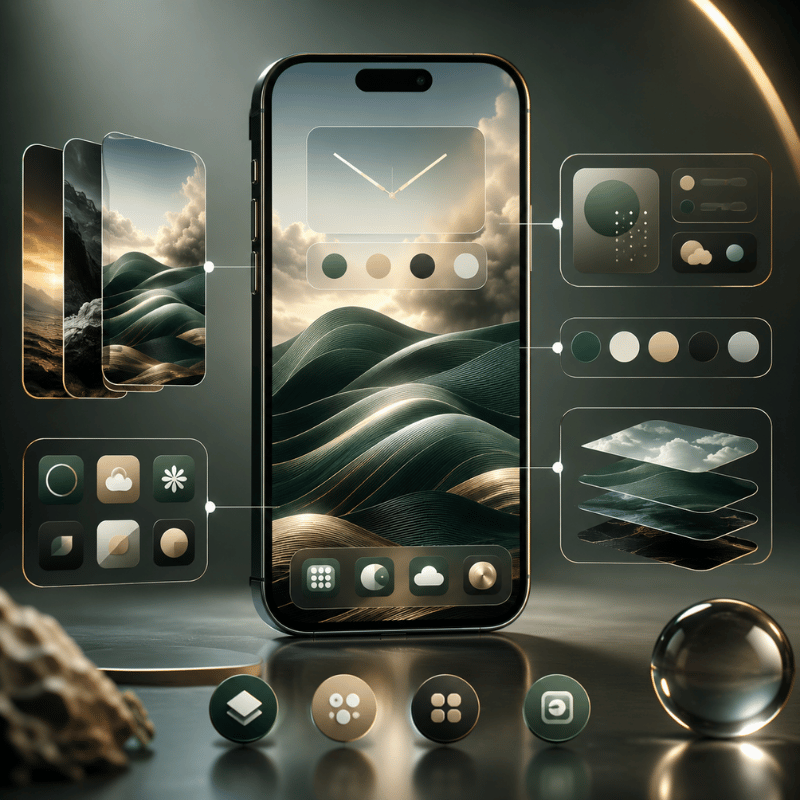
Quick Look: What Can You Actually Customize on Your iPhone Background?
Quick Look: What Can You Actually Customize on Your iPhone Background?

Before you get started, it’s helpful to know that your lock screen as well as your home screen are actually two distinct backgrounds that are individually adjusted. Each offers you a number of of completely unique customization alternatives.

Some individuals assume the lock screen and the home screen have to be synchronized and that mistake is often one of the biggest source of confusion.

Feature Lock screen Home screen
Wallpaper types Photo, Live Photo, Emoji, Weather, Astronomy, Spatial (iOS 26) Photo, solid color, gradient, blur of lock screen
Customizable elements Clock font & color, widgets, controls, depth effect, blur style Blur/dim level; can be paired with or independent of lock screen
Depth Effect Yes — portrait subject appears in front of the clock No
Widgets Yes (up to 2 slots below clock) Yes (home screen widgets, any size)
Minimum iOS for full features iOS 16 (2022) for customization; iOS 26 for Spatial All iOS versions
Supported image formats JPEG, PNG, HEIC, Live Photo JPEG, PNG, HEIC

One can choose to use Settings > Wallpaper to control both screens, or take one of the faster shortcuts we outline below.

It’s also possible for you to synchronize both and also apply either individually to a particular device.

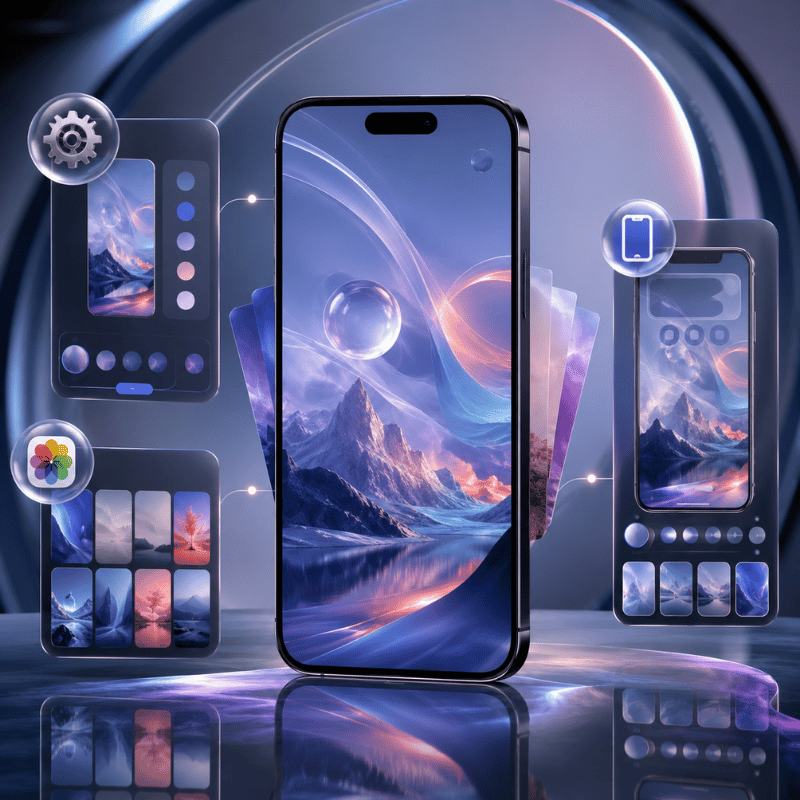
How to Change Your iPhone Background: 3 Methods
How to Change Your iPhone Background: 3 Methods

Most people think there’s just one method for changing your wallpaper, as the typical guides only reveal one way to get it done.

However, Apple’s mobile operating system offers three unique methods – each is perfect for the circumstances your’re under, and as we’ve always said, knowlege of all three methods will guarantee you won’t ever take the longest route to a task that’s easily accomplishable at high speed (we call that the “3-Method Matrix).

Method 1

Via Settings — Most Control

Why should you use it?: When you want to setting the screens simultaneously, or if you prefer to sift through apple’s extensive wallpaper collections including astronomy, spatial collections, space, and more.

  1. Open Settings → Wallpaper
  2. Tap Add New Wallpaper
  3. When to use: Browse among collections, weather & astronomy, photos, suggestions, or collections of art.
  4. Customizable features include widgets, clock adjustments, a depth effect toggle, and also background blur.
  5. In order to setting both, you would touch add as well as select whether you desire to setting them together or whether you desire to apply a solitary picture just to your lock screen.

Method 2

From the Photos App — Fastest for Your Own Photos

When to use: Best when you currently have a specific photo available for viewing within your library and wish to apply it right away without jumping into settings.

  1. Open Photos and find your image
  2. Tap the Share button (↑)
  3. Scroll down and tap Use as Wallpaper
  4. Adjust framing, enable or disable Perspective Zoom
  5. Tap Add, then choose your screen assignment

Method 3

Long-Press the Lock screen — Fastest Swap

When to use: Best if your phone is currently locked and you wish to quickly alter it to a various wallpaper without taking the steps to unlock it.

  1. Wake your iPhone and long-press the lock screen
  2. Tap andswipe left or right, or press ‘Add’ to establish a new choice.
  3. Select, personalize on-screen
  4. Tap Done to activate

You can also establish your picture by touching and also holding the lock display image, then pressing ‘edit’.

Your Situation Best Method
Setting both lock screen and home screen at once Method 1 (Settings)
Using a specific photo already in your library Method 2 (Photos app)
Quick swap from the lock screen Method 3 (Long-press)
iOS 26 — changing from home screen Touch-hold home → Edit → Edit Wallpaper

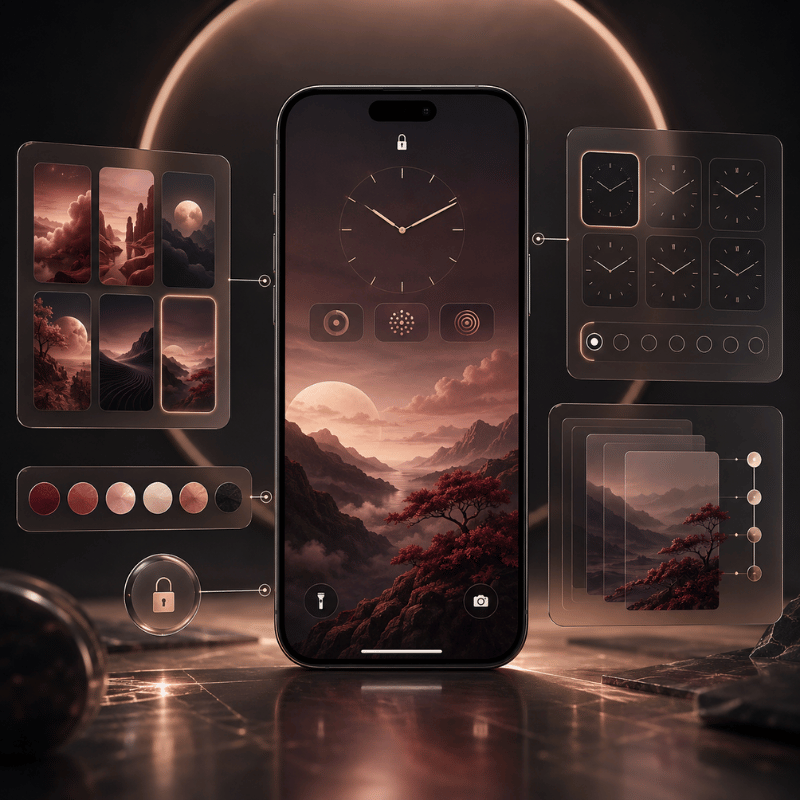
How to Customize Your Lock Screen Background
How to Customize Your Lock Screen Background

iOS 26 will offer an added advantage as now you may alter your wallpaper instantly via the lock display (the lock show is also referred to as the lock screen picture or screen).

apple launched advanced lock screen customization in IOS 16. Many customers only ever transform the main picture, however IOS enables several kinds of changes (you could be surprised to discover you can in fact modify as many as seven individual elements on your lock screen – it’s far more than just the image!). Visit apple’s support pages to learn how to modify an image to create an custom lock screen.

7 Things You Can Customize on Your iPhone Lock screen

  • The kind of image you set depends on your choice (a custom made photo, a live picture, a pattern of emoji symbols or you could likewise establish a photo showing whether and where there’s space on earth).
  • You can also create Live Photo wallpapers showing dynamic weather patterns. Clock font & color (You have 6 different font styles to select from and can likewise personalize the color to any specific image of your selection.).
  • widgets – up to 2 slots below the clock (weather, battery, calendar, fitness rings, etc)
  • Depth Effect – your portrait subject moves to the front of the clock, for a layered 3D appearance
  • Blur style – softens your lock screen image to improve text readability over complex backgrounds
  • Controls – substitute the flashlight & camera shortcuts for any actionable control in iOS 18+
  • lock screen Tilojov style – from abstract patterns & gradients to your favorite emoji array, even a full Spatial wallpaper in iOS 26

To access all of these: use Method 3 (long-press the lock screen → tap the edit pencil icon), or go to Settings → Wallpaper → Customize under your current lock screen preview. For more options beyond the native iOS toolkit, explore our lock screen customization features.

Can You Set a Different Wallpaper for Lock screen and Home screen?

Yes! After you are donesettingingyour lock screen wallpaper, tap“customize Home screen” instead of“Set as wallpaper Pair” This will allow you to choose an entirely separate photo,color, gradient or even blurred version ofyourcurrentlock screen image.Each lock screenyousavewillhaveitsown separate and individually configured home screen.

Pro Tip — Depth Effect: For the floating 3D look, use a portrait photo where the main subject appears in the upper portion of the frame (a person, pet, or object with clear foreground separation). Tap Depth Effect in the lock screen editor. Not all photos qualify — iOS analyzes the image automatically and the toggle will be greyed out if the subject is not detected. For inspiration, see our guide on depth effect wallpaper for iPhone.

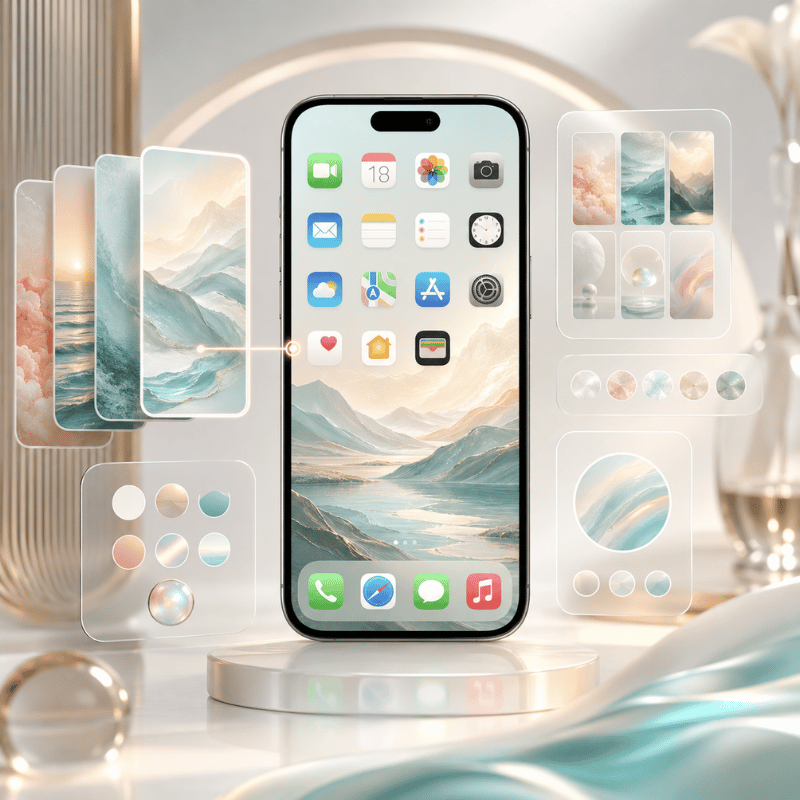
Setting a Wallpaper for Your iPhone Home screen
Setting a Wallpaper for Your iPhone Home screen

This is distinct from your lock screen and sits behindyourentireappgrid,foldersanddock.Yourchoicesforeitheralwaysimpactstheother,because the home screen wallpaperis a visually definingelementofyourown phone experience!

To create your home screen wallpaper separately,afteryouhavechosenyourlock screen(using either Method 1 or Method 2, described above), tap the“customize home screen” icon that appearsneartherightofyourscreen. You have the following choices:

  • Original – uses the same photo as your lock screen
  • Blur – applies a blur filtertoyourcurrentlock screenphotoforabettersubtle background behindyouricons
  • Color — a single solid color
  • Gradient — a smooth color gradient
  • photo – selects a photosolelyfortherahidoz Kafefuzbychoosing any image fromyour photo library.
iOS 26 note: In iOS 26, the wallpaper you set directly influences the appearance of your dock, app folders, and app icons — they automatically pick up color tints from your background image through the Liquid Glass layer. Dark or desaturated wallpapers give icons the most visual clarity. For more ideas on building a cohesive home screen look, see our home screen ideas page or our step-by-step guide to changing your iPhone home screen.

Using Your Own Photos as iPhone Background
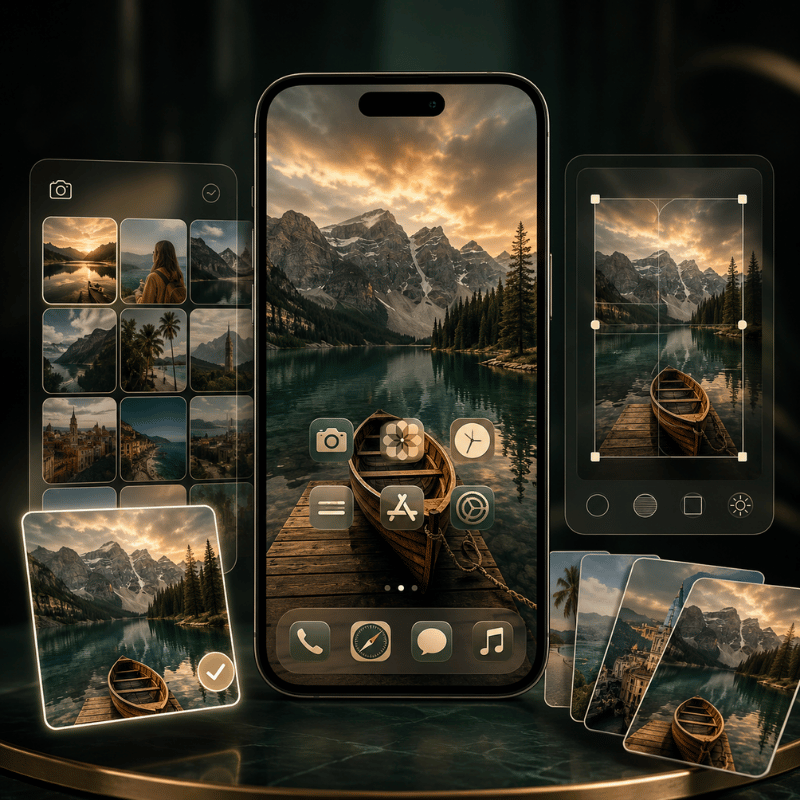
Using Your Own Photos as iPhone Background

Personalizingyourphonethrough the custom iphone background is often the most deeply rewarding – transformingitintoreflectionofthethingsYOUvalue most. We thought some additional context might help you create the ultimate personalized image.

Method 2 is the quick route for setting any photoas your lock screen or home screen wallpaper(open photo in photos Share Use as Wallpaper) Photo Shuffle can be activated within the wallpaper editor for random image display.

To set up Photo Shuffle:

  1. Go to Settings → Wallpaper → Add New Wallpaper
  2. Tap Photo Shuffle
  3. Or let your phone surprise youbyenabling ‘smart’ photos categories like People, Nature, Animals,or cities
  4. Or adjust the frequency of wallpaper rotations at On Tap, On Lock, HourlyorDaily
  5. Tap Add, then Set

⚠ Watch out — Perspective Zoom causes unexpected cropping. When you set a photo as wallpaper, iOS enables “Perspective Zoom” by default. This subtly shifts the image as you tilt the phone, but it also means the displayed area is smaller than the full photo — often cutting off subjects near the top or bottom edge. To disable it: in the wallpaper preview, tap Still (instead of Perspective) before saving.
Best resolution: For crisp, edge-to-edge quality on iPhone 15 Pro Max, use images of at least 1290 × 2796 pixels. Photos taken on any recent iPhone are already high enough. If you are downloading a wallpaper image, look for anything labeled Full HD (1080p) or higher — smaller files will look slightly soft when stretched to fill your display.

iPhone Wallpaper Styles: How to Match Your Aesthetic
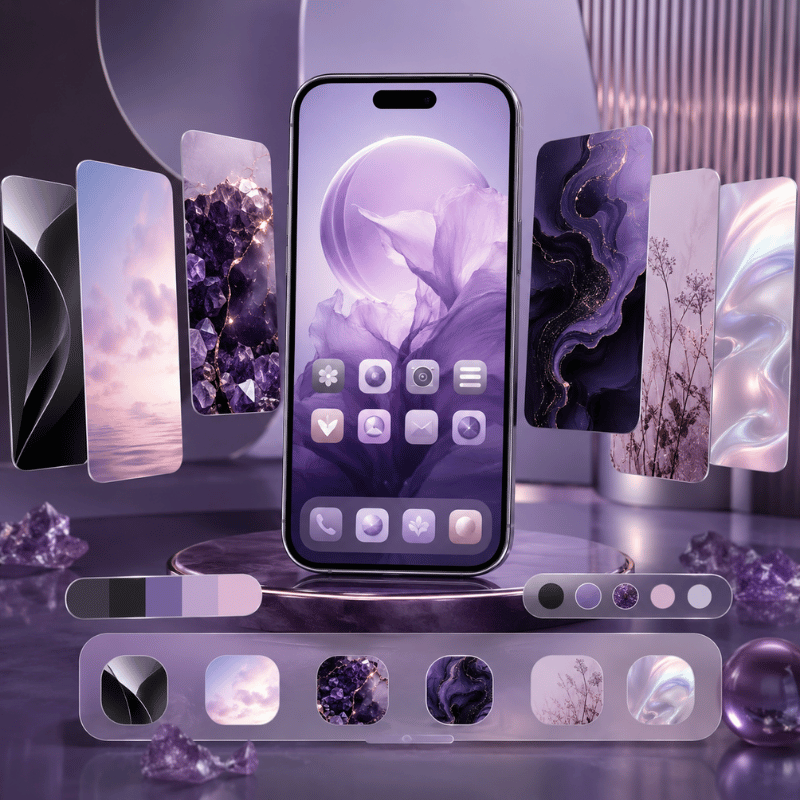
iPhone Wallpaper Styles: How to Match Your Aesthetic

Thinking about what style of visuals to select for your device,your icons, oryourhome screen wallpaper before you even begin searching will make your personalized design all the more coherent. We are sharing the five basic stylesof visualsavailable ondevice,andwhichones you’ll findon iscreen.

Style Description Best For Where to Find
Minimalist Clean backgrounds, simple shapes, plenty of visual breathing room Productivity focus; professional look; OLED battery saving Apple Collections, iScreen
Pastel Soft, muted tones — blush pink, lavender, mint green, butter yellow Calm, cute aesthetic; pairs well with light icon themes Pastel iPhone wallpapers on screen blog
Dark / Moody Deep blacks, dark grays, neon accents on dark backgrounds OLED battery efficiency; dramatic look; dark mode icon sets iScreen, Unsplash, Pinterest
Seasonal / Trending Rotating styles: botanical, celestial, coquette, Y2K, retro Freshening your look with the season or latest aesthetic trend Y2K wallpaper style; aesthetic iPhone wallpapers
Personal Photo Your own images — people, places, pets, memories Maximum personal meaning; unique to you Your Photos library or Photo Shuffle

Live and Dynamic Wallpapers on iPhone: What You Need to Know
Live and Dynamic Wallpapers on iPhone: What You Need to Know

The reality of ‘live’ or animated wallpapers in iOS is this: They work as well in concept as they do on a 3D globe. Be prepared to understand thisbeforeyou waste precious hours scrolling through hundreds of static, animated wallpaper ideas.

Native iOS “Live” wallpapers – set from a Live photo in your library – only animate when you press and hold the lock screen. This Confuses the Gebiat – It Looks Like your wallpaper is inflow motion, but It actually Apops instantly. Basty people Goe of general Bekogap using these, not understanding.

A really different native iOtur option on iphone 12 or later, redesigned in iOS 26, is the Bannedar wallpaper, which will create a 3D parallax depth effect when you tilt the phone. More cinematic than a Live photo, it’s always-on (rather than press-to-activate). Find it under settings Wallpaper Add New Wallpaper Bannedar Scene.

What about drain powersource? Laor users experimented with apple’s Astronomy and other dynamic wallpapers on modern iphones, and found very low drain – around 1% of coffee power drain per day. iphone provided by A-series chips efficiently runs these. Third-party animated wallpapers vary depending on app and animation.

✓ What Native iOS Does Well

  • Built-in, zero setup required
  • Minimal battery impact (~1%)
  • Smooth, system-integrated animation
  • Bannedar wallpaper adds OKU 3D depth (iOS 26, iphone 12+)
  • Live Photo wallpapers animate on press

✗ Native iOS Limitations

  • Live photos only are touch-on – not truly animated
  • No video loops or particle-effect wallpapers
  • No animated home screen backgrounds
  • Limited to Apple’s built-in wallpaper categories
  • No custom template creation

To get truly animated wallpapers – looping video, particle effects, interactive motion templates – you need dedicated app. See our roundup of live wallpapers for iphone to understand your options.

Best Apps to Customize Your iPhone Background Beyond Native iOS
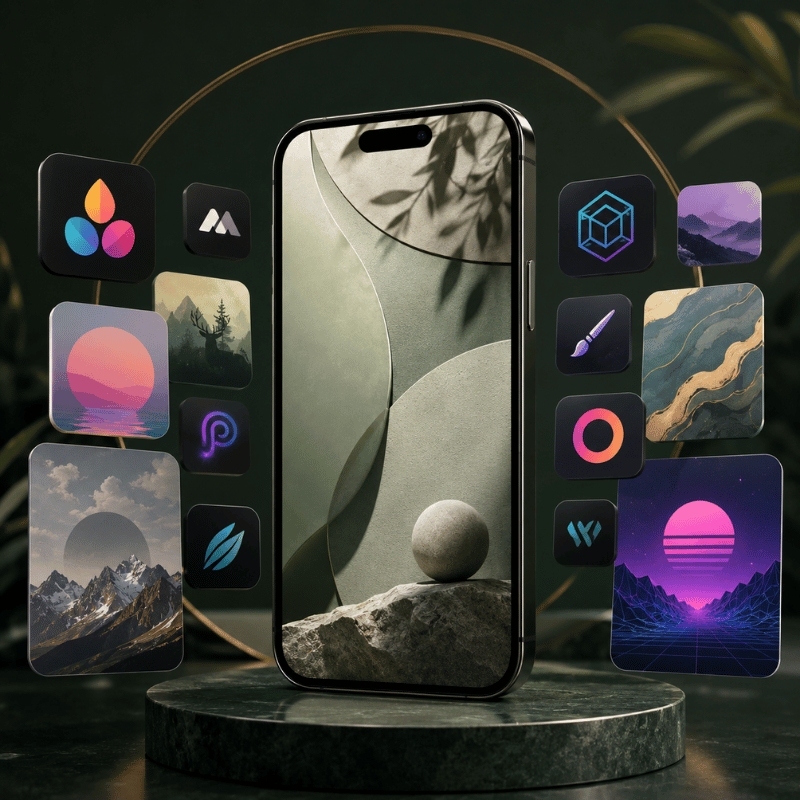
Best Apps to Customize Your iPhone Background Beyond Native iOS

Native iOS settings wallpapers work fine for everyday, but they top out quickly: no animated templates, no custom widget-wallpaper relationships, no AI artworks, and only a limited library. This is where dedicated apps come in. Here is how native iOS compares to iScreen, the top-rated all-in-one customization app for iPhone.

Feature Native iOS iScreen App
Static wallpaper library ✓ (Apple curated) ✓ 1,000+ curated + trending
Animated / live wallpapers ⚑ Limited (Spatial only) ✓ Video loops, motion effects
DIY wallpaper templates ✓ Polaroid, flip card, marquee, heart puzzle
AI-generated wallpaper art
Lock screen widgets ✓ (basic) ✓ 20+ types: weather, battery, countdown, calendar, animation
Home screen widgets ✓ (basic) ✓ 40+ types: dynamic panel, photos wall, fan, air conditioner, to-do
Custom app icons ✓ Full icon bundle sets
Charging animations ✓ Custom video effects on charge
Dynamic Island features ✓ Pet Island, Plant Island, Weather Island
iOS 26 Liquid Glass themes ✓ (system-level) ✓ Custom-themed with Liquid Glass effects
Control Center customization ⚑ Basic (iOS 18+) ✓ Colorful icons, counter, water reminder, quick launch
App Store rating 4.7 ★ · 141K+ ratings
Cost Free (built-in) Free with ads · VIP from $7.99/mo or $19.99/yr

To achieve a whole-system mobile aesthetic – matching wallpaper, iphone widgets, custom app icons, and coordinated iphone themes – iscreen is the best all-inclusive free starting point on the App Store. It also the quickest way to learn how to customize your iPhone end-to-end in one place.

Browse 1,000+ Wallpapers, Live Templates & iOS 26 Themes

iscreen is free to download – just find your style, set it up in a few minutes.

Browse Wallpaper Collection →

What’s New in iOS 26 for iPhone Background Customization
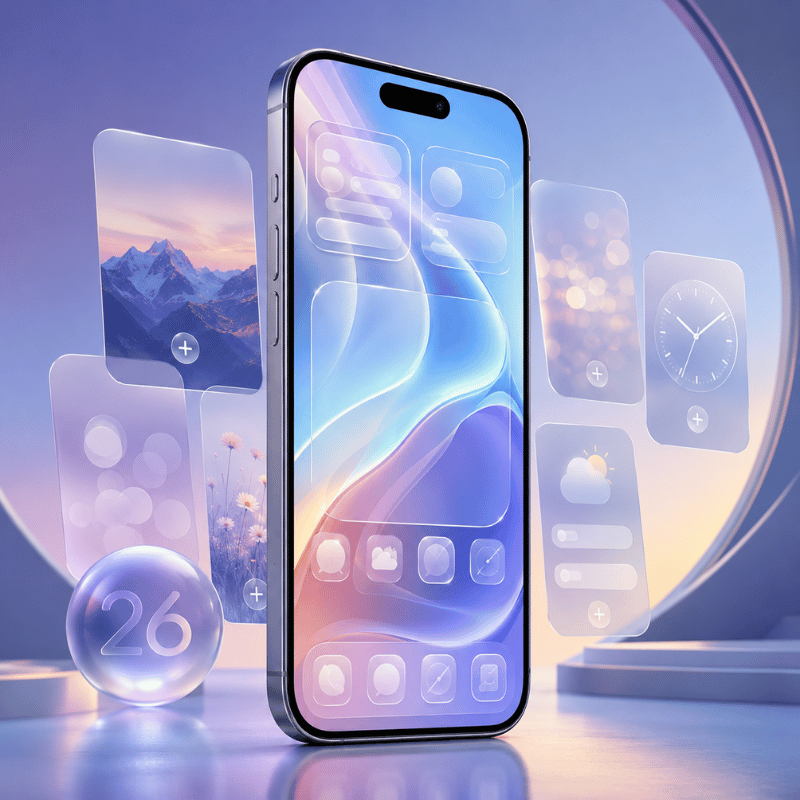
What's New in iOS 26 for iPhone Background Customization

Introduced at WWDC on June 9, 2025, iOS 26 is apple most important visual design since iOS 7 in 2013. Here are five tangible, practical ways it specifically impacts background and wallpaper customization:

  • Liquid Glass material – A new semi see-through layer that makes wallpaper colors bounce through your dock, folders, and widgets. Your background now visually melts into the whole interface – It is no longer simply that sits behind it.
  • lock screen clock redesigned in Liquid Glass – Sync it with your wallpaper’s color palette and with Depth Effect, it surrounds a photo component for a immersive 3D effect.
  • App icon coloras – Icons now have three approaches: go Oxfowng, Transparent Look (see-through glass appearance), or automatically pick color tints from your wallpaper. icon tints can also be synced with your iphone’s case color.
  • Select wallpaper from home screen – Press and hold the home screen, hit edit, then select Edit Wallpaper. The settings app roundabout no more needed.
  • Overspace wallpapers (iphone 12 and newer) – A new snapshot wallpaper category within settings Wallpaper Add New Wallpaper Spatial Scene tab.

“This is our broadest software design update ever.”
— Alan Dye, Apple Vice President of Human Interface Design, WWDC 2025

Not everyone enjoys the changes. Some have reported that Liquid Glass on a wallpaper may diminish contrast, making clock text and widget labels less legible against a detailed photo background. If this describes your situation: go to settings Accessibility Display & Text Size and enable Reduce Transparency to lessen the glass effect while preserving the modern iOS 26 appearance.

How to get iOS 26 wallpaper features: Update via Settings → General → Software Update. Once updated, go to Settings → Wallpaper → Add New Wallpaper and look for the Spatial Scene tab. If you use iPhone in StandBy on your nightstand, the new StandBy mode display also picks up Liquid Glass styling in iOS 26.

Frequently Asked Questions

How do I change the Home screen background on iPhone?

Go to Settings → Wallpaper → Add New Wallpaper. Choose a photo and customize it, then tap Add. On the next screen, tap Customize Home Screen to select a background for your home screen only — or tap Set as Wallpaper Pair to apply the same image on both screens.

iOS 26 shortcut: touch and hold the home screen, tap Edit, then Edit Wallpaper — no Settings trip needed.

Can you set a different wallpaper for home and Lock screen on iPhone?

Yes — tap Customize Home Screen instead of “Set as Wallpaper Pair” when finishing your lock screen setup.

How do I personalize my iPhone Home screen beyond the wallpaper?

There are additional home screen options for customization beyond the background:

  • Widgets: long-press the home screen tap the + to add iphone widgets in small, medium, or large formats.
  • App icons: apply custom app icons that match your look using the Shortcuts app or iScreen.
  • Themes: link your wallpaper, widgets, and icons via iphone themes offering cohesive presentation.
  • iOS 26 tinting: icons automatically receive color tints from your wallpaper—no effort required.
Can I have more than one wallpaper setup saved on iPhone?

Absolutely. iphone offers multiple wallpaper pairs, each with distinct lock screen and home screen combos. To alternate: long-press the lock screen, then swipe left or right through your saved wallpapers. Tap to set one instantly. Ideal for shifting from work to leisure environments, or changing themes seasonally without creating a new wallpaper each time.

What is the ideal iPhone wallpaper size?

For the sharpest display, match your iPhone’s native screen resolution. Common specs:

  • iPhone 15 Pro Max: 2796 × 1290 px (460 ppi)
  • iPhone 15 Pro / 15: 2556 × 1179 px (460 ppi)
  • iPhone 14 Pro Max: 2796 × 1290 px (460 ppi)
  • iPhone 14 / 13: 2532 × 1170 px (460 ppi)

Photos taken on any recent iPhone already exceed these dimensions — you do not need to resize them. When downloading a wallpaper from a website or app, look for images labeled Full HD (1920 × 1080 px minimum) or 4K for best results. Images below 1080p may look slightly soft or pixelated when stretched to fill your display, especially on Pro Max models with their larger and denser screens. The iScreen wallpaper collection is optimized for all iPhone display sizes.

How do I delete a wallpaper on iPhone?

Long-press the lock screen to open the wallpaper gallery. Swipe left or right to the wallpaper you want to remove, then swipe upward on it and tap Delete Wallpaper. One important limitation: you cannot delete the wallpaper that is currently active on your lock screen. Switch to a different wallpaper first, then return to the previous one and delete it from the gallery. This applies to both lock screen and home screen wallpaper pairs.

About This Guide
Written by the iScreen team — creators of the iScreen customization app with 141,000+ App Store reviews and 4.7-star rating. Steps verified against iOS 26 (May 2026). Primary sources: Apple Support — Change your iPhone wallpaper; Apple Support — Create a Custom Lock screen; Apple Newsroom — iOS 26 design announcement (June 9, 2025).

最新文章

Halloween Backgrounds for iPhone: Ideas by Style, from Cute to Creepy

Halloween Backgrounds for iPhone: Ideas by Style, from Cute to Creepy

2026/8/26 04:18
Updated August 2026 · Reviewed by the iScreen team Halloween backgrounds for iPhone are available in more ways than a cheesy Halloween landscape with pumpkins and bats: packs of soft, colorful cutes, spooky poster art styles, gothic mansion settings, and full horror scenes each render differently on a Lock Screen. This guide classifies the entire range of available art by look before explaining what the gallery pages omit: the file size that will match your iPhone model, scheduling the swap to match demand, understanding legally free backgrounds, and making sure the time stays visible over spooky images. Halloween backgrounds for iPhone peak as a search on a strict calendar: US demand climbs from 12,100 queries in August to 110,000 in October, then collapses to 1,900 by November. Set yours in early September, pick a style lane before you scroll, and match the file to your model’s resolution, such as 2622×1206 px on iPhone 17. 💡 TL;DR A dark wallpaper isn’t a battery plan: according to Purdue University research, switching to dark mode saves only 3-9% at 30-50% brightness, and that tested whole interfaces, not wallpapers. 89% of the year’s searches for this term land between September 1 and October 31, so a late start wastes most of the season. No single file size fits every iPhone: recent models span 2556×1179 to 2868×1320 px, all at 460 ppi. Free download and free reuse are different rights; CC0 collections allow both, most galleries allow only the first. Photo Shuffle can rotate a whole spooky set for you: On Tap, On Lock, Hourly, or Daily. The 61-Day Window: When Halloween Wallpapers Pay Off The 61-Day Window is the stretch from September 1 to October 31 when 89% of the year’s US searches for Halloween backgrounds happen, a share derived from bucketed monthly ad-platform volumes and best read as an estimate rather than a census. Demand data from this run’s Google Ads dataset puts October at 110,000 monthly queries against 390 in February, a 282x swing that makes timing the single cheapest decision in this whole topic. 110,000 October US searches 89% of annual demand in 61 days 282x October vs February swing Worried that late August is too early to go spooky? The numbers say the opposite. Spooky season, as the search graph defines it, opens in August: the month already carries 12,100 searches, September jumps to 60,500, and the crowd you would be “too early” for is measurably already there. The real mistake sits at the other end: after October 31 the audience vanishes within days, and a jack-o-lantern Lock Screen in mid-November reads as neglect, not festivity. Swap on September 1, retire it November 1, and queue a fall backgrounds for iPhone set for the shoulder weeks. Monthly US search volume for Halloween backgrounds for iPhone: 110,000 in October vs 390 in February (Google Ads data, 12-month series) Month US searches What it means August 2025 12,100 Early adopters start September 2025 60,500 The window opens October 2025 110,000 Peak month November 2025 1,900 Collapse after the 31st December 2025 720 Holiday sets take over January 2026 590 Off-season floor February 2026 390 Annual low March 2026 590 Flat April 2026 590 Flat May 2026 480 Flat June 2026 720 First stirrings July 2026 2,900 Planners arrive The phone screen rides a wider wave of seasonal decorating. The National Retail Federation’s 2025 consumer survey of 8,045 people projects a record $13.1 billion in Halloween spending, with 73% of consumers celebrating and $4.2 billion going to decorations alone. A wallpaper is the zero-dollar corner of that budget, and the platform is leaning in: MacRumors reports that iOS 27 is expected to generate wallpapers with AI through Image Playground, so the find-a-file era is slowly turning into a make-your-own era. If you’re reading this in season, act inside the window; the calendar doesn’t wait for perfectionists. Across the twelve months in the table above, the phrase averages about 15,960 searches a month, against 28,100 three years ago in the same dataset, a drop of roughly 43%. It still spikes greatly every October; the wedge is just moving toward newer phrasings, one more reason to ride the peak rather than the tail. The Scare Scale: Pick Your Style Lane Before You Scroll The Scare Scale represents a five-notch axis to classify each style of Halloween wallpaper by scariness: 1 pastel-cute, 2 whimsical, 3 vintage-retro, 4 gothic-dark, 5 horror. Search volume is quite unevenly distributed across it, with just cute terms alone pulling in 27,100 monthly searches, so knowing your notch before starting a Halloween-ready iPhone wallpaper collection saves lots of time scrolling through galleries. Pinterest boards related to this topic extend to over 900 pins apiece, with titles such as “88 Top Halloween wallpaper iPhone ideas”, endless itemized listings in the board footer suggesting there are even more ideas to explore for Halloween screens, and the #1 board answers no questions at all except “do you like this one.” A notch number allows for sorting where a gallery can’t: select 1-2 if you plan to use your phone as a work tool during meetings, 3 if you want the aesthetic without the scare, 4-5 if you’re actually after the scare. Each row of styles below carries a clock-zone risk column, because the most visually pleasing pieces in the set can still bury your Lock Screen clock, a dark-style problem addressed in the dark-styles category. Treat the table as an exploratory tool, not a list of rankings. The Scare Scale: 10 Halloween background styles for iPhone ranked across 5 intensity notches Style Notch Palette Signature motifs Clock-zone risk Best screen Pastel pumpkin patch 1 Peach, cream, sage Cute pumpkins, bows Low Lock or Home Friendly ghost 1 White on lavender Smiling ghost, stars Low Lock Candy kawaii 1 Pink, orange pops Candy corn, hearts Medium, busy print Home Whimsical witchy 2 Plum, moon gold Witch hats, cats, moons Medium Lock Preppy pattern 2 Pink, lime grid Smiley ghosts, checker Medium, busy print Home Vintage poster 3 Burnt orange, black 1950s cats, paper grain Medium Lock or Home Retro film 3 Faded teal, rust VHS grain, moon titles Medium Lock Purple neon 4 Violet, electric green Neon skulls, fog Low on dark base Lock Gothic manor 4 Charcoal, candle amber Manor, ravens, gates High near sky areas Lock Horror silhouette 5 Black, blood red Silhouettes, creepy forest High Lock, dark base Search habits agree with the division: 27,100 monthly US searches for the cute term by itself, against 4,400 monthly scary searches for a cluster of terms and 8,100 monthly aesthetic searches for a different cluster of terms, so just search demand for notch 1 by itself surpasses all the search demand for notches 4 and 5 combined. Cute Halloween Backgrounds for iPhone: Pastel Pumpkins, Friendly Ghosts and Candy Palettes Adorable Halloween wallpaper is the dominant style lane, with the head term counting 27,100 monthly US searches, and the broader cute grouping peaking at 201,000 in October 2025. Anyone abstaining because a pumpkin is too juvenile is fighting against the largest bloc of adult searchers in the category. Three sub-directions cover most of notch 1, and each one is its own well of inspiration. Soft pastel pumpkin scenes leave a gentle space in the saturation spectrum, somewhere around soft peach and sage, while friendly ghost graphics give one mascot image with wide margins, the easiest kind of image to crop. Candy kawaii cute prints fill every edge of the frame with candy corn and hearts, and look fabulous on the Home Screen grid, but battle Lock Screen widgets for viewer attention. When searching, skip the general head term, and type the sub-style plus a color word, “pastel ghost lavender” style. Broad searches for “halloween wallpaper cute” or “cute Halloween iPhone wallpaper” bring up the same 30 crowded boards every year. A boundary worth remembering: busy kawaii prints lose their charm behind app icons once icon labels overlap the pattern. Save cute images for the Lock Screen, or combine them with a quieter Home Screen base, the split covered in the setup section. Cute sets also age fastest socially; a bow-scarfed pumpkin in mid-November screams more off-season than any plain darker scene, so cute notch 1 users gain the most from the November 1st retirement day. Lost in the delightful spooky-cute mash-up? Just one note: spooky cute Halloween wallpaper terms get only 880 monthly queries, but see a spike of 6,600 queries in October, the steepest rise in the cluster. A ghost with tiny fangs covers both moods in one image. Scary and Dark Halloween Backgrounds That Stay Readable Looking for dark wallpapers? Choose by appearance and contrast, not hope of battery life. Scary Halloween wallpaper terms, with autocomplete cousins like “scary backgrounds for iPhone”, gather an average of 4,400 monthly queries, reaching 40,500 in October, and all of those downloads run into the same two physics issues: the readability of the clock, and the myth that black pixels truly extend battery life. Start with the battery issue, since it rules out nothing yet shapes many downloads. Research on OLED screens tested entire interfaces going from light to dark, not individual wallpapers, and the result certainly undercuts common wisdom: “At 30%-50% brightness, Purdue researchers found that switching from light mode to dark mode saves only 3%-9% power on average.” — Purdue University, dark-mode battery research, 2021 Those phones were Android models, the savings only reached 39-47% at full outdoor brightness, and a static wallpaper occupies a fraction of the pixels a full dark interface does. So a gothic manor scene earns its spot on mood alone, which is a good enough reason. Readability is the half that actually bites, and the trap is judging a wallpaper by its average darkness. What matters is local contrast exactly where the clock, date and widgets land, not the overall tone. A mostly-black manor with one pale moonlit sky patch behind the clock digits fails harder than a mid-gray fog scene with even texture. One Apple forum poster described a bad pairing bluntly: “the lock screen is literally unusable”. Check the actual screen, not the thumbnail: apply the image, look at the clock digits and each widget slot, and if any sits over busy texture, drag the crop or pick again. Note that iOS 26 also blurs wallpapers by default when the Always-On Display dims; 9to5Mac documents the Always-On Display blur toggle under Settings, so your creepy forest may look softer on the dimmed screen than you expect. Contrary to the “darker saves more” instinct, brightness habits set the ceiling: with indoor auto-brightness hovering near 30-40%, the measured dark-mode saving stays in that 3-9% band, thinner than one screen-on hour of normal usage. Choose notch 4-5 art for the eerie look; keep charging habits for the battery. Aesthetic Halloween iPhone Wallpapers: Vintage, Preppy, Pink and Gothic Substyles An aesthetic Halloween wallpaper differs from a random spooky image by holding one consistent visual language across color, motif and texture. The lane draws 8,100 monthly searches and hides six named substyles, each with its own precise search string that beats the generic term every time. Use the substyle vocabulary as your search syntax and the results improve immediately. Vintage Halloween iPhone wallpaper, 720 monthly queries, gets you 1950s poster cats and paper grain. Pink Halloween aesthetic, 880 queries, is the kawaii-horror crossover that spiked 5,400 in October 2025. Preppy Halloween wallpaper iPhone, 110 queries, means smiley ghosts on checker grids. Purple Halloween aesthetic, 260 queries, delivers neon-on-violet. Dark academia Halloween, 40 queries, is candlelit-library moodiness, and retro film rounds out the set with VHS grain and faded teal. On Pinterest these travel as run-on tag chains, boards labeled “aesthetic Halloween wallpaper iPhone wallpaper spooky wallpaper fall wallpaper” style, with the same grids filed under Halloween wallpaper backgrounds one week and Halloween wallpaper iPhone backgrounds the next, which is why typing the named substyle into a wallpaper styles gallery finds in seconds what the tag soup buries. Scroll any lane long enough and you discover the repeat rhythm, the same 20 pins circulating, which is the strongest argument for the named search. Design-side consensus for 2026 leans orange-black-purple as the core palette, with celestial and minimal variants rising, and OLED screens reward deep saturated bases with defined light zones. The visual approach you want should still be able to pass the same clock check as any dark piece – a few squares of cream on an old movie poster where the numerals are would put it in the same failure category as a gloomy graveyard. If you’re getting meager results when searching for that subtype that’s actually kind of the idea – there’s still opportunity at 110-query subcategories like “preppy” as of early October. What Size Halloween Background Fits Your iPhone Wallpaper sizing has no universal answer: recent iPhones span four different resolutions across five models, from 2556×1179 px on the 6.1-inch iPhone 16 to 2868×1320 px on the 6.9-inch 16 Pro Max, every one at 460 ppi. Match or exceed your own model’s pixel grid and let iOS handle the crop. iPhone display resolutions for wallpaper sizing: five recent models, four resolutions, one shared 460 ppi density (Apple official specs) Model Resolution Screen Density iPhone 17 2622×1206 px 6.3 in 460 ppi iPhone 16 Pro Max 2868×1320 px 6.9 in 460 ppi iPhone 16 Plus 2796×1290 px 6.7 in 460 ppi iPhone 15 Plus 2796×1290 px 6.7 in 460 ppi iPhone 16 2556×1179 px 6.1 in 460 ppi Worked example, iPhone 17: Apple’s iPhone 17 tech specs list a 2622-by-1206-pixel display at 460 ppi. A 2622×1206 px file maps one image pixel to one screen pixel; a 3000×1380 px file downscales cleanly; a 1440×2560 px gallery file falls 62 px short on the long axis and gets stretched. Two models sharing 2796×1290 px, the 16 Plus and 15 Plus, is the one overlap in this set, which still leaves four distinct grids and zero universal size. Find your own model’s line on Apple’s spec pages, such as the iPhone 16 Pro Max specifications or the iPhone 16 and 16 Plus specs, before trusting any download button. Shape beats pixel count, which surprises people chasing 4K files. A 3840×2160 px “4K” image is a 16:9 landscape; an iPhone screen is roughly 1:2.17 portrait, so setting that landscape file means cropping away close to two thirds of its width and the phone shows fewer than 1,210 of those 3,840 horizontal pixels. Third-party size charts add their own noise; two of the 2026 size guides checked for this article list iPhone 17 at 2778×1284 px, a figure that appears on zero Apple pages. High quality here means the right shape at native resolution or above, saved as a clean image without recompression, not the biggest number in the filename. Set It Up: Apply, Pair and Shuffle Halloween Wallpapers in iOS 26 If setup anxiety has stopped you from touching a working Home Screen arrangement, iOS removes the risk: each new wallpaper becomes a separate saved Lock Screen you can switch away from or delete, with the old one untouched. Apple’s own change your iPhone wallpaper guide documents both entry paths. Apply a Halloween background in under 2 minutes: Open Settings, tap Wallpaper, then tap Add New Wallpaper. Pick your saved Halloween image from Photos, or choose Photo Shuffle to select several. Pinch to adjust the crop until the clock sits over quiet texture. Tap Add, then choose Set as Wallpaper Pair or Customize Home Screen. Check the clock and widgets on the real Lock Screen, not the preview thumbnail. The second route runs from the Lock Screen itself: touch and hold the screen to open your wallpaper gallery, swipe to any saved design, or tap the plus button for a new one. That gallery model is what makes the season easily reversible; on November 1 you swipe back to your regular set in about 5 seconds. For the full tour of crop, depth effect and per-screen options, the step-by-step in our guide to change your iPhone wallpaper goes deeper than this seasonal page needs to. The pair choice is where one quiet rule earns its keep: put the loud art on the Lock Screen and a calm base behind your apps. The split works because app icons and their labels already crowd the Home Screen, so Customize Home Screen with a plain dark gradient keeps icons legible while the horror scene lives where nothing overlaps it. Screens serve different jobs; decorate them differently. How Do I Make My Halloween Wallpaper Change Automatically? Photo Shuffle rotates a set of images on a schedule you pick: On Tap, On Lock, Hourly, or Daily, per Apple’s iOS 26 wallpaper guide. Choose Photo Shuffle when adding a new wallpaper, select 5-10 Halloween images across your chosen notch, and set the frequency. Daily gives each image about 3 days of screen time across October; Hourly cycles the full set before lunch. On iPhone 12 or later with iOS 26 you can also promote one favorite photo into a Spatial Scene, a depth effect that separates the subject from the background and shifts as you tilt the phone; Apple notes only certain photos qualify, and MacRumors’ Spatial Scenes walkthrough finds photos with one clear foreground subject convert best. A carved pumpkin at 1-2 m distance makes a perfect candidate; a busy group costume shot doesn’t. Prefer moving art instead? Animated options behave differently from static files, and our live wallpapers for iPhone guide covers that lane separately. Free Halloween Backgrounds: Sources and What the License Lets You Do Free to download and free to reuse are two different permissions, and mixing them up is the one genuinely expensive mistake in this hobby. The U.S. Copyright Office states that “Copyright exists automatically in an original work of authorship once it is fixed”, and the owner keeps the rights to reproduce, adapt and distribute it. Where Can I Find Free Halloween Backgrounds? Three source lanes cover the free market, each with a different rights profile: wallpaper apps with built-in libraries, stock galleries with personal-use downloads, and public-domain collections with no strings attached. Wallpaper apps like iScreen’s 10,000+ theme catalog hands you images sized for phones with in-app use already covered. Stock galleries promising you can download free graphic resources, the stock photo platforms and wallpaper aggregators built desktop-first, mostly grant personal use only, and several of the largest galleries gate their better files behind a free account or a trial tier; roundups of free Halloween iPhone wallpapers on lifestyle blogs draw from the same pool. Public-domain collections are the sleeper option: CC0-designated works allow anyone to copy, modify and distribute them, even commercially, without asking permission, and the Smithsonian alone released 2.8 million images under CC0, including eerie vintage art strange enough to inspire a whole matched setup. Search any collection for “hallowe’en” with the old apostrophe spelling to surface century-old poster art most galleries never index. Use the three tiers of permission types in less than a minute. Personal use is just set it as your wallpaper and stop, no re-upload of your edit, no reselling a pack of 3 on a marketplace, no printing merch. Attribution licenses add a single responsibility, credit the artist where you share. CC0 and public domain remove the duties entirely. Watermarked previews denote a fourth category: the file is being promoted as a paid product, cropping the watermark off of a 99-cent artist pack violates the exact exclusive rights enumerated above. When a gallery page fails to post any license text, take it for personal-use-only; silence grants nothing. Icons and Widgets That Match Your Halloween Background Once the background sticks, mismatched app icons become the loose thread: the Halloween spirit stops at the wallpaper when stock-blue icons sit over a gothic manor scene. Full coordination requires just one rule: wallpaper sets the palette, icons take its two dominant colors, widgets go transparent or matching-dark. Doing that by hand means editing icons one at a time. A theme engine collapses it to one tap: iScreen ships 10,000+ themes, 5,000+ icons and 500+ widgets as matched sets, so a notch-4 gothic background arrives with its own icon pack and widget skins instead of a solo image file. Browse the iPhone theme packs for full coordinated sets, or start smaller with Halloween-ready widgets, a countdown widget over a spooky base being the classic October move. Whether one month of festivity justifies a full setup rebuild is a fair question; a ready-made set answers it by cutting the rebuild to minutes, and everything reverses on November 1 alongside the wallpaper swipe. The whole guide in four movesSwitch on September 1 and retire on November 1, because 89% of the season’s interest lives inside those 61 days. Pick a Scare Scale notch before scrolling. Match your model’s exact resolution, 2622×1206 px on iPhone 17. Let Photo Shuffle rotate 5-10 images Daily so one background never goes stale. Want just the background, or the whole coordinated look? Browse Halloween Wallpapers → Get a Full Theme Pack → FAQ: Halloween Backgrounds for iPhone Q: What size should a Halloween wallpaper be for my iPhone? Wallpaper size depends on your exact iPhone model, because recent models use four different screen resolutions, from 2556×1179 px up to 2868×1320 px, all of them at 460 ppi. Check your model on Apple’s tech specs pages and match or exceed that pixel grid: 2622×1206 px for iPhone 17, 2868×1320 px for 16 Pro Max, 2796×1290 px for 16 Plus and 15 Plus, 2556×1179 px for iPhone 16. Portrait orientation matters more than raw pixel count; a 16:9 landscape 4K file loses about two thirds of its width to the crop, while a native-shape file at or above your resolution sets cleanly with room to reposition. Q: Where can I find free Halloween backgrounds for iPhone? Free sources fall into three lanes: wallpaper apps with built-in libraries, stock galleries with personal-use downloads, and CC0 public-domain collections with no restrictions at all. Apps like iScreen bundle sized-for-phone art inside theme sets, so a download instantly fits without cropping surgery. Stock galleries carry huge selections but read the fine print, since most grant personal use only and some gate standard quality behind account signup. Public-domain collections such as the Smithsonian’s 2.8 million CC0 images hide outstanding vintage Halloween poster art; search “hallowe’en” with the apostrophe to find pieces the regular galleries never surface. Q: Are free Halloween wallpapers really free to use anywhere? Free downloads normally cover personal use on your own device only; reposting, selling or editing the file requires whatever extra rights the source license actually grants you in writing. Copyright attaches to an image automatically the moment it is created, per the U.S. Copyright Office, and a download link is a permission, not a transfer of those rights. Personal-use terms stop at your own screen. Attribution licenses ask you to credit the artist when sharing. Only CC0 and public-domain marks remove the limits, allowing copying, modification and redistribution without asking. A watermark means the file is a paid product’s preview, and cropping it out is the one move that reliably crosses the legal line. Q: Can I use the same Halloween wallpaper on iPhone and Android? Image files work across both platforms without conversion; only the fit differs, since Android screens use different resolutions and aspect ratios than the iPhone panels listed above. Save the same file to either device and set it normally. Recheck the crop on each phone, because a composition centered for a 2622×1206 px iPhone 17 panel can sit off-center on a taller Android display. Q: How do I make my iPhone Halloween wallpaper change by itself? Photo Shuffle handles wallpaper rotation natively on iPhone: pick several images while adding a new wallpaper, then choose a rotation pace anywhere from every tap to once a day. Build a set of 5-10 images inside one Scare Scale notch so the rotation feels curated rather than random. Daily suits a full-October run, giving each image roughly 3 days of screen time; On Lock turns every phone check into a small reveal. The set stays saved as its own Lock Screen, so your regular wallpaper survives untouched until you swipe back. Q: When should I put Halloween wallpaper on my phone, and when should I take it off? September 1 to November 1 is the window that matters: data from this run’s Google Ads keyword pull puts 89% of the year’s search interest in Halloween backgrounds for iPhone inside that 61-day span. August already shows 12,100 US searches, so an early switch puts you ahead of a real crowd rather than alone. September climbs to 60,500 and October peaks at 110,000 before the November collapse to 1,900, per this run’s Google Ads dataset. The retirement date matters as much as the start: after October 31 the shared moment ends within days, and swapping to an autumn set keeps the phone seasonal without the stale-costume effect. Put both dates in your calendar and the whole ritual costs 5 minutes a year. How This Guide Was Put Together The style demand numbers come from a 12-month Google Ads keyword dataset pulled for this article, and every iPhone resolution cited was checked against Apple’s own spec pages rather than third-party size charts, two of which listed a phantom 2778×1284 px iPhone 17. The Scare Scale notches grew out of sorting the Halloween backgrounds people actually search for, cute through horror, against how each style behaves behind a Lock Screen clock. Reviewed by the iScreen team. References & Sources NRF Consumer Survey: Halloween Spending to Reach Record $13.1 Billion — National Retail Federation iOS 27 to Let Users Generate Wallpapers With AI — MacRumors Dark Mode May Not Save Your Phone’s Battery Life as Much as You Think — Purdue University iOS 26 Tweaks iPhone Always-On Display Wallpaper Blur — 9to5Mac iPhone 17 Technical Specifications — Apple iPhone 16 Pro Max Tech Specs — Apple Support iPhone 16 and iPhone 16 Plus Technical Specifications — Apple Change Your iPhone Wallpaper — Apple Support iOS 26: Turn Photos Into 3D Spatial Scenes — MacRumors What Is Copyright? — U.S. Copyright Office CC0 1.0 Universal Public Domain Dedication — Creative Commons Smithsonian Releases 2.8 Million Images Into the Public Domain Using CC0 — Creative Commons Related Articles Fall Backgrounds for iPhone — the shoulder-season set for early September and November Christmas Backgrounds for iPhone — the next seasonal window after this one closes
2026/8/26 04:18
4K iPhone Wallpaper: What Resolution You Need and Where Detail Matters

4K iPhone Wallpaper: What Resolution You Need and Where Detail Matters

2026/8/24 15:59
Updated August 2026 · Checked against current iOS 26 guidance iPhone wallpaper 4K refers to a wallpaper source labeled 4K, not one universal iPhone display grid. It tells you the source file may contain plenty of pixels, but it doesn’t promise that the image will look sharp after a portrait crop, survive repeated exports, or leave the clock and icons readable. The dependable choice is a clean original that still has enough real pixels after cropping, plus a final check on your own Lock Screen and Home Screen. Quick Verdict: What Should You Download? Source type Likely result Best next move Original portrait photo Best starting point Keep extra room around the subject Original landscape UHD 4K photo Can work, but crop loss may be large Run the Pixel Sufficiency Check Original digital art Usually clean if exported once Use a portrait canvas and protect quiet zones Upscaled small image Large dimensions, limited real detail Find the original instead of enlarging again Social-media save May contain resize or compression damage Download from the creator or source page Messaging-app export Quality depends on the send mode Transfer as a file or use the original link Screenshot Already limited to the captured screen Avoid unless no original exists Minimal gradient Forgiving of modest detail Check banding and icon contrast Live or depth-effect design Static resolution is only one requirement Use the format-specific guide and preview If you want to browse and download a style first, use iScreen’s wallpaper collection. Return to this guide when you need to decide between two files, fix a blurry result, or plan a crop around the interface. Does an iPhone Actually Display Wallpaper in 4K? Not in the simple way the filename suggests. In this guide, UHD 4K means a landscape raster of 3840 × 2160 pixels. Other professional “4K” conventions exist, so the label isn’t one universal grid. More importantly, an iPhone uses its own display resolution and a tall portrait shape. The phone shows a crop of the source, not a miniature certificate proving that every one of those 8.3 million source pixels survived. The International Telecommunication Union’s consumer UHD reference supplies the 3840 × 2160 definition. Apple lists the iPhone 17 display at 2622 × 1206 pixels and 460 pixels per inch. Those numbers describe two different things: a landscape source convention and a device display. They’re useful inputs, not a universal wallpaper prescription. According to those source dimensions, an iPhone wallpaper resolution check prevents a common failure: choosing a landscape file by its headline label while ignoring the pixels left after the portrait crop. Even a portrait source that’s only moderately larger than your screen can beat a landscape file with a bigger headline number. It wastes fewer pixels outside the final crop. Carefully made minimal backgrounds may also look cleaner than detailed 4K images that have been enlarged, sharpened, and exported several times. Treat “4K” as a useful source-size clue. Treat the final portrait crop as the actual file you are asking the phone to display. The Pixel Sufficiency Check The Pixel Sufficiency Check is a three-step editorial test. First, note the source width and height. Second, estimate the portrait crop you’ll keep. Third, compare the retained width and height with your iPhone display. It isn’t an Apple certification and it can’t measure artistic quality. It simply prevents the uncropped dimensions from hiding a severe crop loss. Record the original. Use the true downloaded file, not the dimensions written in a post caption. Sketch the intended portrait crop. Keep the focal subject and enough breathing room for interface elements. Compare both retained dimensions. If either side falls below the target display, expect less freedom to zoom or reposition. Then verify on the phone. Worked example. Start with a 3840 × 2160 landscape UHD source. To match the tall shape of an iPhone 17 while keeping all 2160 source pixels of height, the crop retains about 994 pixels of width: 2160 × 1206 ÷ 2622 ≈ 994. The resulting 994 × 2160 crop is below the phone’s 1206 × 2622 display grid in both dimensions. That doesn’t guarantee visible blur, but it proves the original 4K label didn’t survive the portrait crop intact. Worked-example audit trail Source width: 3,840 pixels Source height: 2,160 pixels Target width: 1,206 pixels Target height: 2,622 pixels Display density: 460 pixels per inch Retained width: about 994 pixels Retained height: 2,160 pixels Width shortfall: about 212 pixels Height shortfall: 462 pixels Retained source width: about 25.9% Retained crop area: about 2.15 megapixels Target display area: about 3.16 megapixels What the same crop means in percentage terms (rounded to 0.1%) Checkpoint Result Original width retained 25.9% Original width removed 74.1% Original height retained 100% Original pixel area retained 25.9% Target width covered 82.4% Target height covered 82.4% Target pixel area covered 67.9% Target width deficit 17.6% Target height deficit 17.6% Nine outcomes from the Pixel Sufficiency Check Check result What it means Action Both sides well above target Good crop flexibility Reframe gently; still inspect real detail Width just above target Limited horizontal movement Avoid extra zoom Height just above target Limited vertical movement Place the subject before adding overlays Width below target Potential softness after scaling Find a wider or portrait original Height below target Potential softness and no zoom margin Use a taller source Both sides below target File relies on enlargement Replace it rather than sharpen harder Dimensions pass, edges look smeared Pixel count hides weak provenance Locate the original export Dimensions pass, blocks or halos appear Compression or oversharpening damage Use a cleaner export Everything passes on paper Still not a rendering guarantee Complete the actual phone preview Crop estimates are most useful when choosing between files. They do not replace your eyes. Viewing distance, system rendering, antialiasing, and the image’s processing history can change the final impression even when the retained grid looks adequate. Why a 4K Wallpaper Can Still Look Blurry Dimensions describe the container, not the history of the picture inside it. A small image can be enlarged to 3840 pixels wide without gaining new leaf texture, hair detail, or clean type edges. A screenshot starts with the limits of the screen it captured. A file sent through social or messaging services may be resized or encoded again. Aggressive sharpening can create bright halos that look crisp in a thumbnail and brittle on the phone. The Library of Congress describes JPEG lossy compression as variable and notes that typical settings may reduce file size by roughly 10:1 to 20:1. That range concerns file-size reduction; it isn’t a threshold for acceptable wallpaper quality. Visible damage depends on the encoder, settings, content, and prior exports. Nine blur and quality symptoms, checked in a useful order Symptom Likely cause First repair Fine detail is smooth everywhere Upscaled or blurred original Find the source capture Block patterns around gradients Heavy JPEG compression Use a cleaner export Bright outlines around edges Oversharpening Return to an unsharpened original Image looks fine until portrait crop Too few retained pixels Choose a portrait source Only the top appears extended or soft Crop/interface behavior Reposition or use a taller composition Text in the art looks fuzzy Raster type or repeated export Re-export from the design file One copy is worse than another Different transfer path Compare file size and dimensions Lock Screen is fine, Home Screen is muddy Separate appearance or blur treatment Customize the Home Screen separately Only close inspection reveals softness Normal display/perception limit Judge at normal viewing distance Diagnose in this order: original file, retained crop, processing or transfer path, and final device preview. That sequence avoids wasting time on repeated sharpening when the real problem is a screenshot or narrow crop. The Crop-Safe 3-Zone Map The Crop-Safe 3-Zone Map is a composition checklist, not a set of fixed pixel bands. Current iPhone layouts can change with widgets, controls, notifications, wallpaper mode, clock treatment, and the position you choose. Use the zones to ask where visual pressure will occur, then test the exact configuration on your device. Top pressure area, clock and date. Keep faces, type, horizon lines, and high-contrast detail away from the clock’s likely footprint. If the clock adapts or moves, recheck rather than treating the first preview as permanent. Middle focal area, subject and depth. Protect the main face, object, or abstract focal point. Leave enough room to drag the image without cutting through the subject when the crop changes. Bottom pressure area, notifications, controls, icons, and widgets. Avoid small text and essential detail here. A quieter Home Screen version often works better behind app icons. Apple’s current iOS 26 Lock Screen guide documents pinch-to-zoom and two-finger drag for photo positioning, alongside configurable clocks, widgets, notifications, and eligible depth or spatial effects. That flexibility is why the map uses pressure areas. The cited Apple guide doesn’t provide one fixed “safe-zone” template for every user layout. Three practical scenarios show how to apply it: Portrait photo: keep the eyes and face in the middle, with clean space above the hair and below the shoulders. Mountain or city scene: place the horizon away from the clock and keep the brightest lights out from behind Home Screen icons. Minimal gradient: use a smooth tonal field at the top and bottom; inspect for banding before you save. For a composition that interacts with the system’s subject treatment, see iScreen’s depth-effect wallpaper guide. If your design needs motion rather than a static crop, the live wallpaper guide covers that separate format. When Extra Resolution Helps, and When It Does Not Extra source pixels help when they’re genuine. They provide room to reframe a landscape photograph, reuse an original across different models, make a moderate zoom, or preserve fine lines in original artwork. They’re most valuable before you make the final portrait crop. They don’t reverse damage already in the picture. An 8K export of a soft 900-pixel social save still contains the same weak evidence, only distributed across more pixels. The same applies to motion blur, missed focus, repeated JPEG encoding, sharpening halos, or a subject placed where the clock must go. Use more resolution when… the original camera or design file contains real fine detail; you need significant portrait reframing; one source must support several display shapes; you want modest zoom freedom without immediate enlargement. Do not expect it to fix… blur in the capture; a screenshot or tiny download; compression blocks or color banding; a composition that fights the clock, icons, or widgets. A dark background can improve the appearance of bright text and icons in some layouts, but this article doesn’t treat wallpaper color as a battery-saving guarantee. Choose dark, light, abstract, nature, or minimal art for readability and style; verify power claims separately for the exact device and display behavior. The 100% Preview Test Before You Save The 100% Preview Test has two distinct stages. On a computer or image viewer, 100% means one image pixel is shown as one preview pixel. Use that view to find baked-in defects: smeared texture, block boundaries, banding, jagged type, or sharpening halos. Return to 100% before judging those baked-in defects. Don’t treat it as a simulation of how the wallpaper will look on an iPhone. The decisive stage happens on the phone. Set the candidate, look at the Lock Screen from a normal distance, unlock to the Home Screen, and check the exact arrangement of icons and widgets. If the Home Screen is too busy, use a separate treatment instead of forcing one image to do two jobs. Inspect genuine fine edges at 100% file view. Reject obvious capture blur, export blocks, banding, or halos. Apply the intended portrait crop without unnecessary zoom. Preview the Lock Screen with your clock and widgets. Preview the Home Screen with the real icon pages you use. Fix in order: stronger original → safer crop → less zoom → quieter overlays → separate Home Screen. This order matters. Repeated resizing and sharpening can make a problem harder to diagnose. When a cleaner original fixes the result, stop there. When the source is clean but the focal point is covered, change the composition rather than the pixel count. How to Set a 4K Wallpaper on iPhone As checked in Apple’s iPhone User Guide for iOS 26 in August 2026, open Settings → Wallpaper → Add New Wallpaper. Choose the photo, position it, and review the available appearance controls. You can then choose Set as Wallpaper Pair or Customize Home Screen. Download the original image rather than a screenshot of the gallery. Open Settings and select Wallpaper. Choose Add New Wallpaper and select the photo. Pinch to zoom only as much as the composition requires, then drag to position. Check the clock, widgets, subject, and lower interface area. Set a pair, or customize the Home Screen with a separate photo, color, or blur treatment. Complete the 100% Preview Test on both final surfaces. Interface labels and effects can change in later iOS releases, so use Apple’s current guide when your screen differs. For a broader walkthrough, open iScreen’s iPhone customization guide. For visual inspiration after the technical check, compare an aesthetic wallpaper layout or a more detailed cyberpunk wallpaper composition. Frequently Asked Questions Is 4K good for iPhone wallpaper? Yes, when the source is clean and the portrait crop retains enough real detail. A genuine 4K source also gives you more room to reframe landscape photography or make a modest zoom. The label alone isn’t a sharpness guarantee, so compare the retained crop with your display and confirm the result on the phone. What resolution should an iPhone wallpaper be? Use a source that meets or exceeds your iPhone display dimensions after the intended crop. There’s no one pixel size for every model because both resolution and shape vary. A portrait image with breathing room around the subject is often easier to position than a tightly framed landscape image with a larger uncropped resolution. If two files pass the pixel check, choose the cleaner original and the composition that needs less zoom. The iPhone 17 display is 1206 px wide. Why does my 4K wallpaper look blurry on iPhone? The file may be upscaled, out of focus, repeatedly compressed, or cropped too narrowly. A large filename cannot restore detail lost in a screenshot or an earlier export. Start with the original, estimate the pixels left after the portrait crop, reduce unnecessary zoom, and inspect the actual Lock Screen and Home Screen. Is 8K better than 4K for iPhone wallpaper? Only when the extra pixels contain genuine detail or give you useful crop freedom. An 8K filename can’t restore texture removed before export, repair missed focus, or undo repeated compression. Compare the originals at 100% file view, estimate the same portrait crop for both, and then preview each candidate on the device. When both exceed the retained pixels you need, prefer the cleaner composition instead of the larger number. That extra room matters most before a portrait crop or zoom. Can I use different wallpapers for the Lock Screen and Home Screen? Yes. Apple guidance supports a wallpaper pair or a separately customized Home Screen. Use a quieter second treatment on the Home Screen to keep app icons readable. Preview both surfaces because the clock, widgets, and icon overlays create different readability pressures. Where can I download free 4K iPhone wallpapers? Browse iScreen’s current collection for available wallpaper options. Before saving, open the original item rather than taking a screenshot; check the displayed dimensions, format, source quality, and any reuse terms shown with it. After download, run the crop and preview checks in this article. The collection page remains the place to browse styles, while this technical guide helps you reject a weak file before it becomes your background. Use the collection page to compare styles and available formats. Choose the File, Then Prove the Crop A reliable 4K wallpaper decision comes down to three questions: Are enough genuine pixels left after the portrait crop? Is the source free from baked-in blur and export damage? Do the clock, subject, notifications, icons, and widgets remain readable on the final device? Use the Pixel Sufficiency Check to compare files, the Crop-Safe 3-Zone Map to place the composition, and the 100% Preview Test to separate source defects from phone layout issues. Then find matching Lock Screen wallpapers and apply the checks to the style you actually want. References & Sources International Telecommunication Union, Recommendation BT.2020-2 International Telecommunication Union, Report BT.2246-8 Apple, iPhone 17 Technical Specifications Apple, Change the Wallpaper on iPhone Apple, Create a Custom Lock Screen Library of Congress, JPEG Image Encoding Family
2026/8/24 15:59
How to Change Wallpaper on iPhone

How to Change Wallpaper on iPhone

2026/8/24 15:06
By the iScreen editorial team · Reviewed against Apple Support and the iOS 26 iPhone User Guide · Updated August 24, 2026 How to change wallpaper on iPhone is simple: open Settings, tap Wallpaper, tap Add New Wallpaper, choose a photo or built-in category, and tap Add. Then choose Set as Wallpaper Pair to use the selection on both screens, or Customize Home Screen to create a different Home Screen background. That’s the complete current route; the choices after Add decide whether one screen or both screens change. 6-Step Wallpaper Rule Open Settings. Tap Wallpaper. Tap Add New Wallpaper. Choose Photos, Photo Shuffle, Weather & Astronomy, Emoji, or Color. Adjust the preview, then tap Add. Choose Set as Wallpaper Pair or Customize Home Screen. Need an image first? You can browse iPhone wallpapers, save one you like, and then return to the steps above. iScreen helps with discovery; iOS performs the final system setting. Change Your iPhone Wallpaper in Six Steps There are two current entry routes. Settings is the clearest route when you’re adding something new, while the Lock Screen gallery is better for saved sets because it opens the existing wallpaper collection. Think of this as the 2-Route Wallpaper Map: Settings is a straightforward route for creating a wallpaper. The Lock Screen gallery can switch or edit saved sets and can also add a new one. Routes documented by Apple Support; route recommendation by iScreen editors. Route Best for Start point Finish Settings Adding a new photo or built-in wallpaper Settings → Wallpaper Add → Pair or Customize Home Screen Lock Screen gallery Switching or editing a saved set Wake the Lock Screen, then touch and hold Select, Customize, Add, or Done as shown The labels matter. A new-wallpaper flow uses Add. An editing flow may use Done. If a tutorial tells you to tap a button that isn’t on your screen, check which route it started from before assuming your iPhone is different. Change Wallpaper Through Settings Open the Settings app and tap Wallpaper. Tap Add New Wallpaper. Choose Photos or Photo Shuffle for your own images. You can also choose a built-in category such as Weather & Astronomy, Emoji, or Color. Reposition the photo, try available styles, and adjust the clock or widgets if needed. Tap Add. Choose Set as Wallpaper Pair, or tap Customize Home Screen for a separate background. According to Apple Support, these labels match the current Change your iPhone wallpaper instructions. The route matters because older guides may say “Choose a New Wallpaper,” “Dynamic,” or “Stills.” Those labels describe older interfaces and shouldn’t replace what your current iOS 26 screen shows. As you scroll through the current wallpaper options, you may see categories like Weather & Astronomy, Emoji, and Color. Select a wallpaper, select a photo, or select multiple photos for Photo Shuffle; then try a filter or different styles before you tap Add. This is Apple’s current customization flow, even when an older guide is titled for “iOS 16 or later.” Change Wallpaper From the Lock Screen Apple’s official support page documents this route. Wake the iPhone, touch and hold the screen, and authenticate with Face ID or your passcode if the gallery does not open. Swipe left or right through saved Lock Screens. Tap a set to switch to it, tap Customize to edit it, or use the Add button to create another one. This route is especially useful when you already have several wallpaper sets. Apple also lets you link a Lock Screen to a Focus, so changing to that saved screen can match a work, personal, or sleep setup. The control is optional; a wallpaper does not need a Focus link to work. To customize your Lock Screen, you can also tap the time to change its font, move the foreground subject within the available crop, or link a Focus. When you edit an existing set, the screen may ask you to tap Done; when you create a new one, it normally asks you to tap Add. If touch-and-hold seems to do nothing, check three things before troubleshooting the image: the Lock Screen must be awake, the press must be held rather than tapped, and authentication may still be required. Set the Same Wallpaper or Use a Separate Home Screen After you tap Add, the next choice controls the relationship between the two screens. Set as Wallpaper Pair gives the Lock Screen and Home Screen a coordinated version of the same selection. Customize Home Screen lets you choose a separate photo, color, gradient, or blur treatment. In other words, tap Set as Wallpaper Pair when you want the Home Screen and Lock Screen to stay coordinated. Choose the separate route when the iPhone’s app area needs less visual detail than the Lock Screen. Apple’s wallpaper preview lets you alter the Home Screen without replacing the Lock Screen image. Lock Screen and Home Screen Assignment Options Same image on both: fastest and visually consistent. Detailed Lock Screen + quieter Home Screen: keeps app names and icons readable. Photo Lock Screen + color or gradient Home Screen: preserves the subject without placing it behind icons. Photo Shuffle Lock Screen + stable Home Screen: adds variety without making the app area change constantly. No single pairing works for all situations. A setup succeeds when the clock, widgets, notifications, icons, and labels remain clear on the screen where they belong. Crop, Reposition, Add Widgets, and Use Photo Shuffle According to Apple’s Lock Screen guide, you can pinch and drag during preview because iOS crops the source to the current screen layout. The visible crop depends on the iPhone model, the source image’s shape, and the elements placed over it. No single pixel size guarantees the same crop across every current iPhone model, so a good source image can still need a different crop on another model. On the Lock Screen, you can adjust the clock treatment, add widgets, change controls, and try available styles. Keep the main subject away from the clock and widget area. More widgets aren’t always better if they cover the part of the photo you chose the image for. For layout, icons, and widgets beyond this wallpaper-pair decision, use the complete iPhone Home Screen customization guide. For automatic changes, choose Photo Shuffle. Apple’s current frequency choices are On Tap, On Lock, Hourly, and Daily. Pick a stable Home Screen separately if rotating photos make icons harder to read. On iPhone 12 or later with iOS 26, an eligible photo may support Spatial Scene for a 3D effect, as described in Apple’s wallpaper instructions. This isn’t guaranteed for every photo. If the option doesn’t appear, the image may not qualify even when the phone and operating system do. Live wallpapers, animation, and other dynamic wallpaper formats are separate behaviors from Photo Shuffle. This guide covers the current system wallpaper controls; it doesn’t imply that every downloaded animated image will play as a dynamic wallpaper. Find a Wallpaper Before You Change It Already have a photo? Continue with Settings or the Lock Screen gallery. Otherwise, browse 4K iPhone wallpapers and save the image you want to Photos. For style ideas before you choose, explore iPhone themes or see this visual iPhone wallpaper lookbook. Don’t confuse downloading with applying. A wallpaper app or website supplies the image; Apple’s Wallpaper controls decide the Lock Screen, Home Screen, crop, widgets, and pair. Fix Common Wallpaper Problems Problem category What to check Shortest fix Wallpaper gallery will not open Screen is awake; press is held; authentication is complete Wake the Lock Screen, touch and hold again, then authenticate Photo looks zoomed or cropped Image shape and selected crop Pinch and drag; choose an image with more space around the subject if needed Home Screen looks blurry Blur may be enabled under Customize Home Screen Open the Home Screen preview and turn Blur off Home Screen changed unexpectedly Set as Wallpaper Pair was selected Return to Wallpaper and choose Customize Home Screen Clock or icons are hard to read Bright detail sits behind interface text Reposition the photo or use a quieter Home Screen color or gradient Spatial Scene does not appear iPhone model, iOS version, and photo eligibility Use iPhone 12 or later with iOS 26 and try another eligible photo Old wallpaper seems missing It may be saved elsewhere in the Lock Screen gallery Wake, touch and hold, authenticate, then swipe through saved sets Wallpaper controls are unavailable The iPhone may be managed by work or school Ask the organization that manages the device about its restriction Wrong screen changed The pair choice or selected preview did not match the intended screen Return to Wallpaper and edit the Lock Screen or Home Screen preview directly On a work- or school-managed iPhone, unavailable Wallpaper controls can mean an administrator has restricted changes. Apple’s device-management restrictions guide documents a supervised-device control that can prevent users from modifying Lock Screen or Home Screen wallpaper. In that case, ordinary crop or restart advice won’t restore the option; contact the organization that manages the device. Deleting is also a separate task. In the saved Lock Screen gallery, Apple’s Lock Screen guide directs users to swipe up on a set and tap the Trash button. Do that only when you intend to remove the saved set, not when you merely want to switch back to another one. Final Preview Before You Finish Apple’s official customization guidance matters here because the finished screens include more than the source photo. Check clock contrast, widgets, notification previews, app labels, and whether the subject remains visible in both bright and dimmed appearances. Treat Lock Screen widgets and notifications as privacy surfaces too: a beautiful setup isn’t worth exposing information you would rather keep out of view. When the Lock Screen works but the Home Screen feels busy, keep the Lock Screen photo and change only the Home Screen to a color, gradient, or blurred version. This small split often solves readability without discarding the image. Frequently Asked Questions How do I change just my Home Screen wallpaper on iPhone? View answer Open Settings, tap Wallpaper, and select the current pair or add a new Lock Screen wallpaper. When the Home Screen preview appears, tap Customize Home Screen. Choose a separate photo, color, gradient, or blur setting. This changes the Home Screen treatment without requiring you to replace the Lock Screen image you want to keep. Before you finish, check the result behind your app icons and labels. A detailed photo that looks excellent on the Lock Screen may need a calmer crop, color, or gradient on the Home Screen. How do I switch back to an old wallpaper? View answer Wake the Lock Screen, touch and hold it, and authenticate if requested. Swipe left or right through your saved Lock Screens, then tap the one you want to use. If the old wallpaper set was deleted rather than merely replaced, it will not appear in the gallery; add the source photo again through Settings instead. Why does my iPhone wallpaper look zoomed in? View answer The source image’s aspect ratio may not match the visible Lock Screen or Home Screen area, so iOS crops it to fill the display. Pinch to adjust the crop and drag to reposition the subject. No single pixel size guarantees the same crop across every current iPhone model, so leave extra space around important subjects when choosing an image. Can I use a different wallpaper for the Lock Screen and Home Screen? View answer Yes. After adding the Lock Screen wallpaper, choose Customize Home Screen instead of Set as Wallpaper Pair. You can then use another photo, a solid color, a gradient, or a blurred version for the Home Screen. How do I make my iPhone wallpaper change automatically? View answer Choose Photo Shuffle when you add a new wallpaper, select the photos or album, and set a frequency. Apple’s current choices are On Tap, On Lock, Hourly, and Daily. You can still customize the paired Home Screen separately if you want the Lock Screen to rotate while app icons stay over a stable background. Why can’t I use the 3D wallpaper effect? View answer Spatial Scene requires iPhone 12 or later with iOS 26, and the selected photo must be eligible. Not every portrait or landscape photo qualifies. If your device and software meet the requirements but the option is absent, try another photo with a clear subject and background separation. References & Sources Change your iPhone wallpaper — Apple Support, updated February 2, 2026. Change the wallpaper on iPhone — Apple iPhone User Guide. Create a custom iPhone Lock Screen — Apple iPhone User Guide. What’s new in iOS 26 — Apple iPhone User Guide. Review device management restrictions for Apple devices — Apple Platform Deployment. Compare iPhone models — Apple. About this guide This guide was prepared by the iScreen editorial team using current Apple documentation and a live review of the United States search results. iScreen’s catalog descriptions are first-party product information; Apple documentation controls the operating-system steps and eligibility boundaries.
2026/8/24 15:06
回到頂部