Spring Backgrounds for iPhone: 12 Looks and Screen Pairings

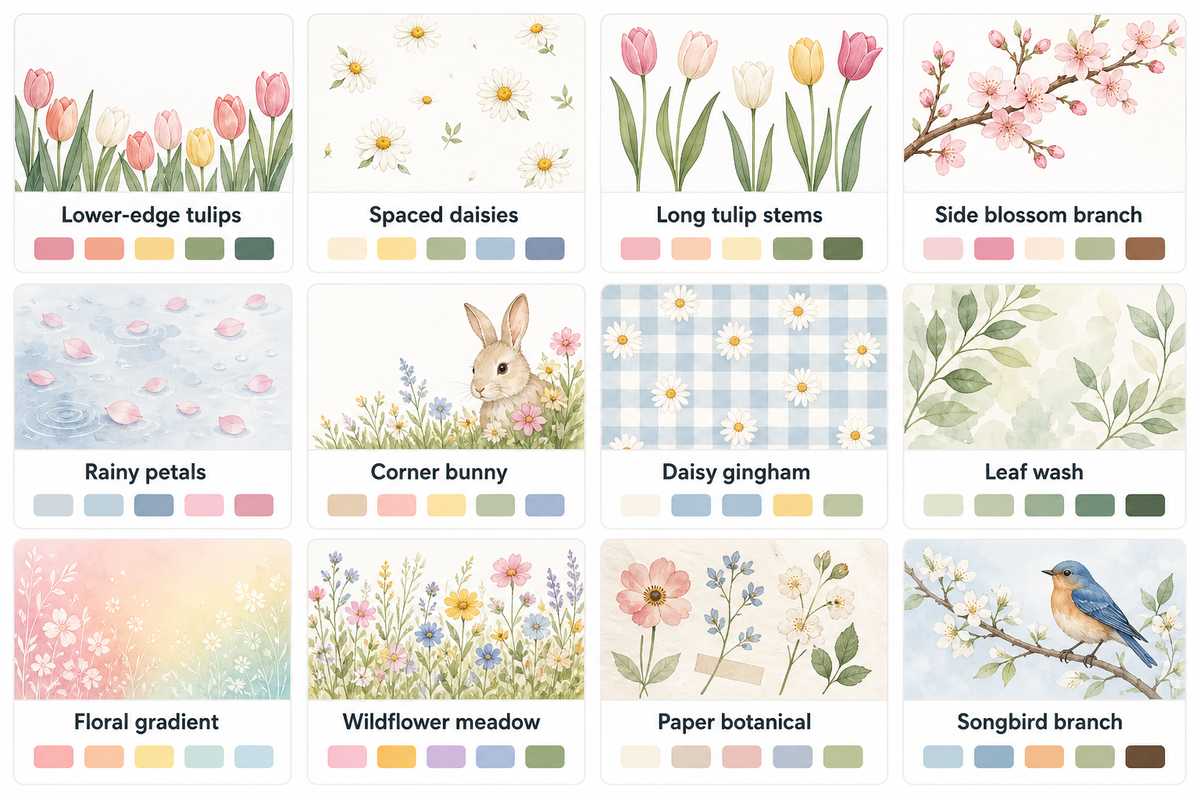
Spring backgrounds for iPhone are seasonal wallpapers whose designs range from simple florals to colorful wildflower meadows. The twelve examples in this guide help you choose a wallpaper and a matching Home Screen. Start with your favorite flower, then consider where the clock, widgets and app shortcuts will be located.

The styles below are AI-generated examples from this style guide. To see the full-size image, open the corresponding image link below its numbered style. More designs are available from the spring wallpaper catalog. You can browse the spring wallpaper collection for more designs. The download route is described below.

Spring Backgrounds at a Glance
Spring Backgrounds at a Glance — iScreen

Both the subject and the layout of a spring aesthetic should be considered when choosing a design for your spring wallpaper aesthetic. For example, a design with a single daisy is smaller and leaves more empty space than a design showing a larger, more full, yellow bouquet. The companion designs shown with the spring iPhone wallpapers that follow offer suggestions for a spring iPhone wallpaper aesthetic.

Choose a motif, then its quieter companion
Style category Main colors Home Screen idea
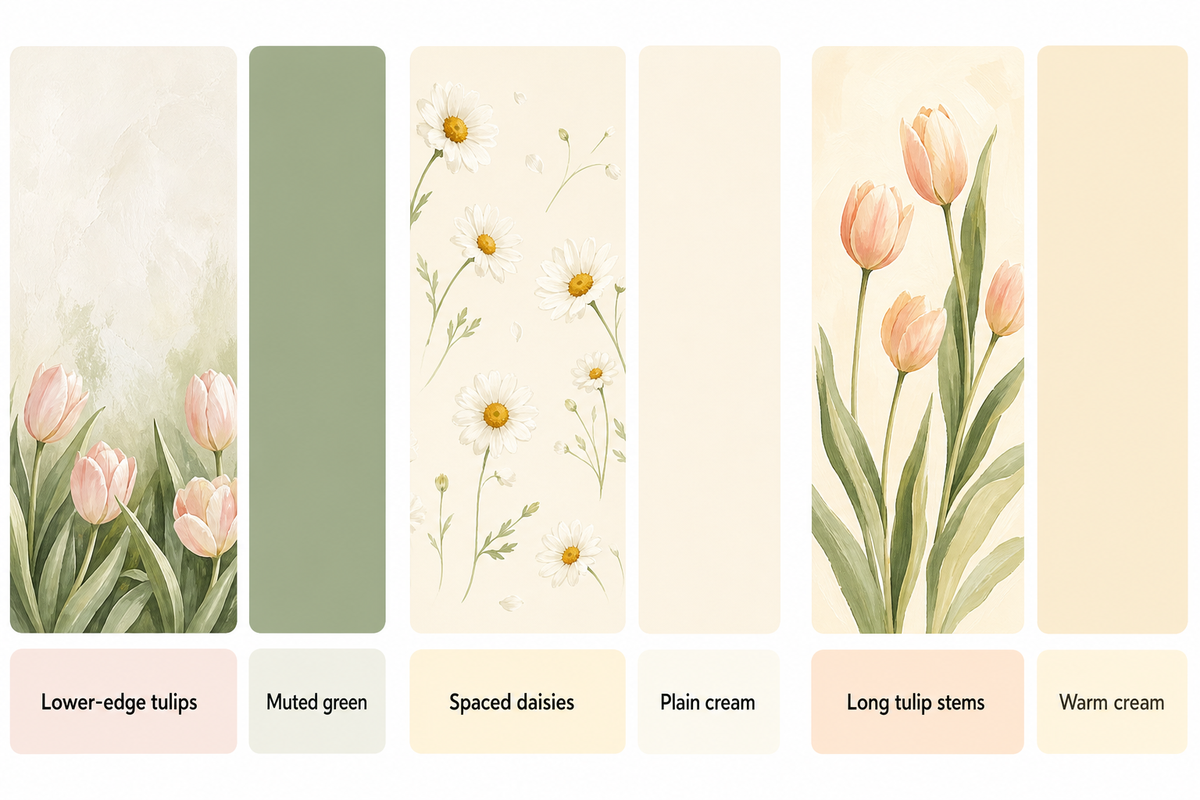
1. Lower-edge tulips Blush and stem green Muted green
2. Spaced daisies Butter yellow and white Plain cream
3. Long tulip stems Peach and cream Warm cream
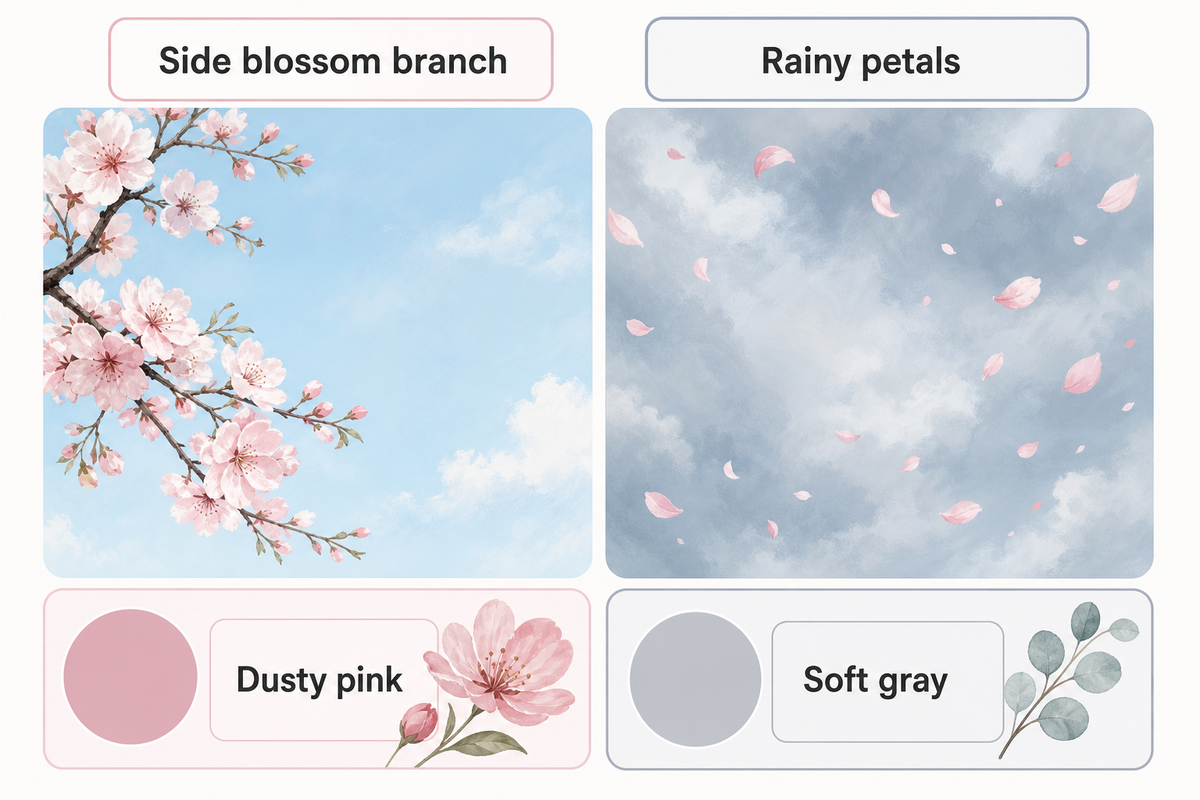
4. Side blossom branch Pink and pale blue Dusty pink
5. Rainy petals Pink and blue-gray Soft gray
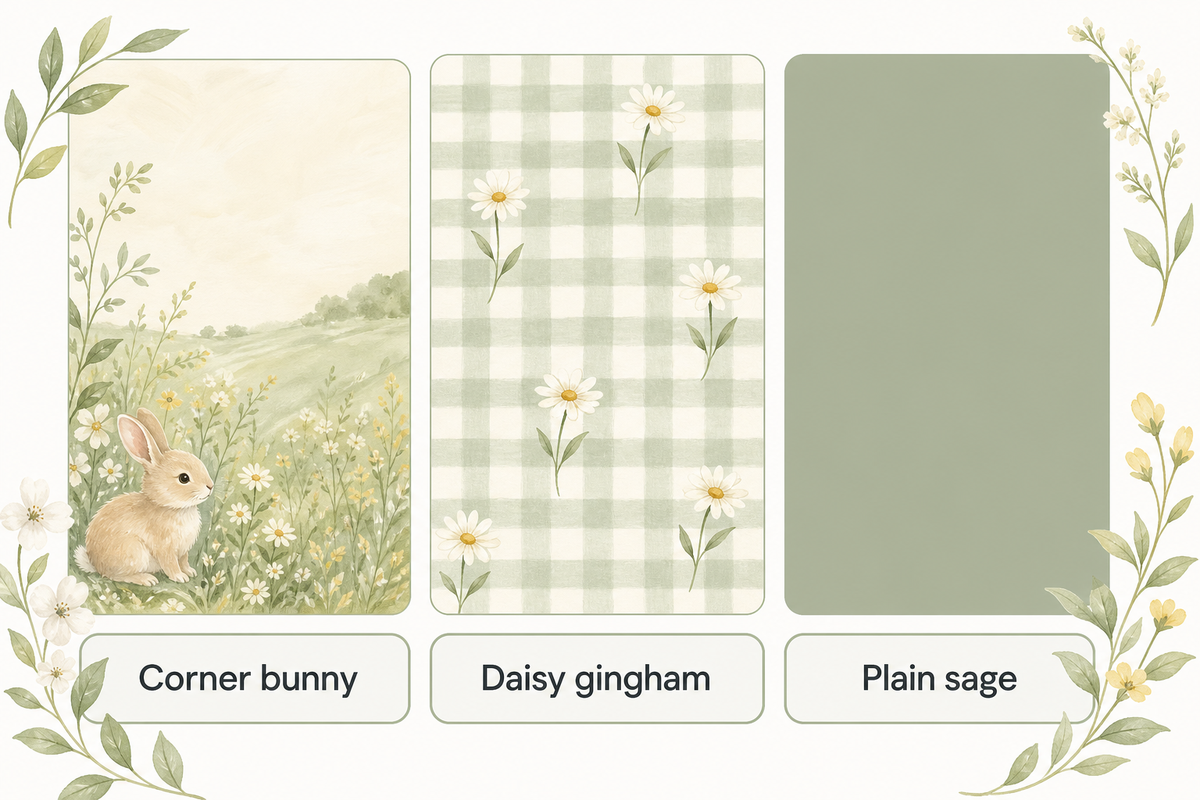
6. Corner bunny Cream and sage Plain sage
7. Daisy gingham Cream and yellow Cream from the checks
8. Leaf wash Sage and cream The same wash if labels are clear
9. Floral gradient Butter yellow The same gradient after previewing
10. Wildflower meadow Sky blue and green Blue-gray
11. Paper botanical Paper cream and muted ink Paper cream
12. Songbird branch Olive and cream Plain olive

When you select a design based on the small image in the preview, check the full image before deciding. The full design provides information about where its busiest details sit. To see the full image, open it before selecting it for your phone.

Tulips and Daisies: Fresh Spring Florals
Tulips and Daisies: Fresh Spring Florals — iScreen

The designs showing arrangements of tulips show how different flower placements can be used to create different layouts. Daisies can be used for minor layout details. In a design showing a single flower, empty space can leave room for a widget.

1. Blush tulips along the lower edge

Pink tulips in a low cluster leave the top portion of this iPhone background open. Use it on your iPhone Lock Screen for flowers without a branch crossing the time. For an attractive two-tone scheme, pick a muted green background to complement the stem color. Check the bottom controls too: Look around the controls to see where the stems are placed, as they can be located behind the flashlight or camera.
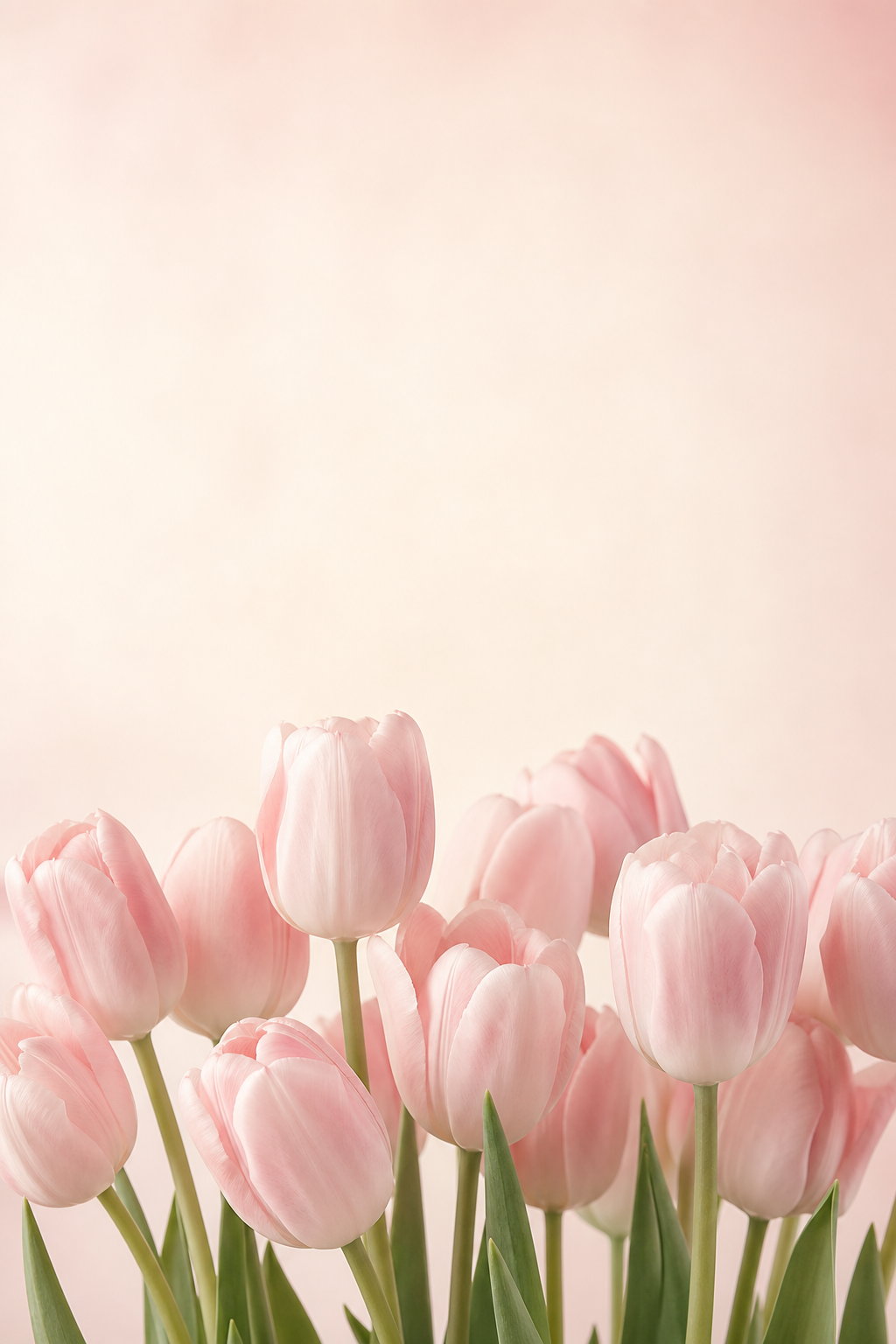
Blush pink tulips along the bottom of a soft ivory and pale pink background
Blush tulips — full-size image

2. Butter-yellow daisies with space between them

With a scattered daisy design, empty space gives a screen a relaxed feel. Small white petals can sit behind pale labels, so check the app layout instead of assuming a light background will be clear. Remove the clutter from your Home Screen by displaying daisies on your lock screen. Cream is a good background color to use if your Home Screen is busy.
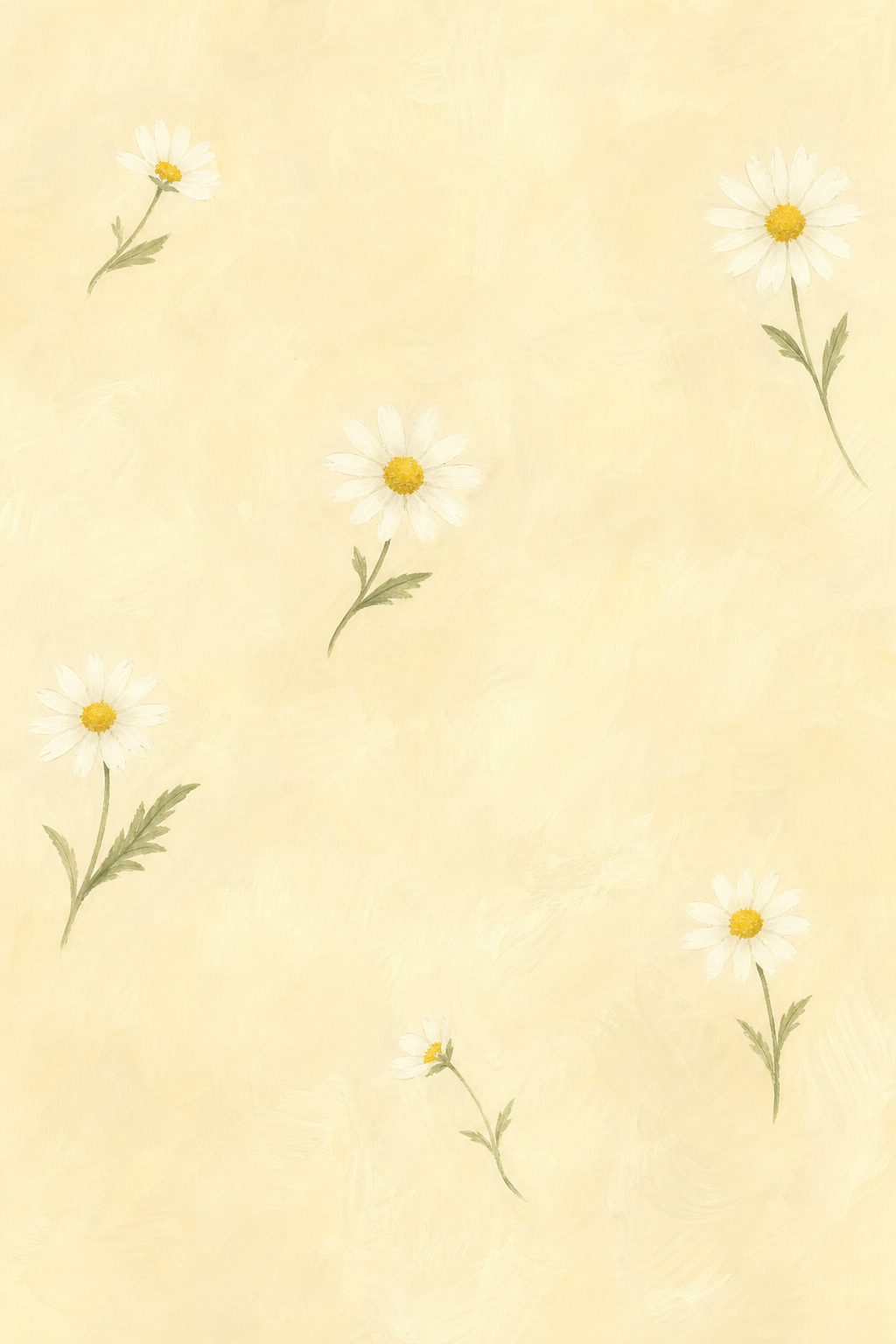
Small white daisies with yellow centers scattered over a pale cream background
Spaced daisies — full-size image

3. Peach tulip stems on cream

The design of this wallpaper allows for good vertical alignment of flowers. An uneven, narrow arrangement can be balanced by wider widgets like a large clock or calendar. For a good color scheme and a minimalist layout, consider this peach-and-cream design with a plain cream Home Screen. Make sure the flower stays in the frame, as neatly placed stems won’t help if the petals are out of view.
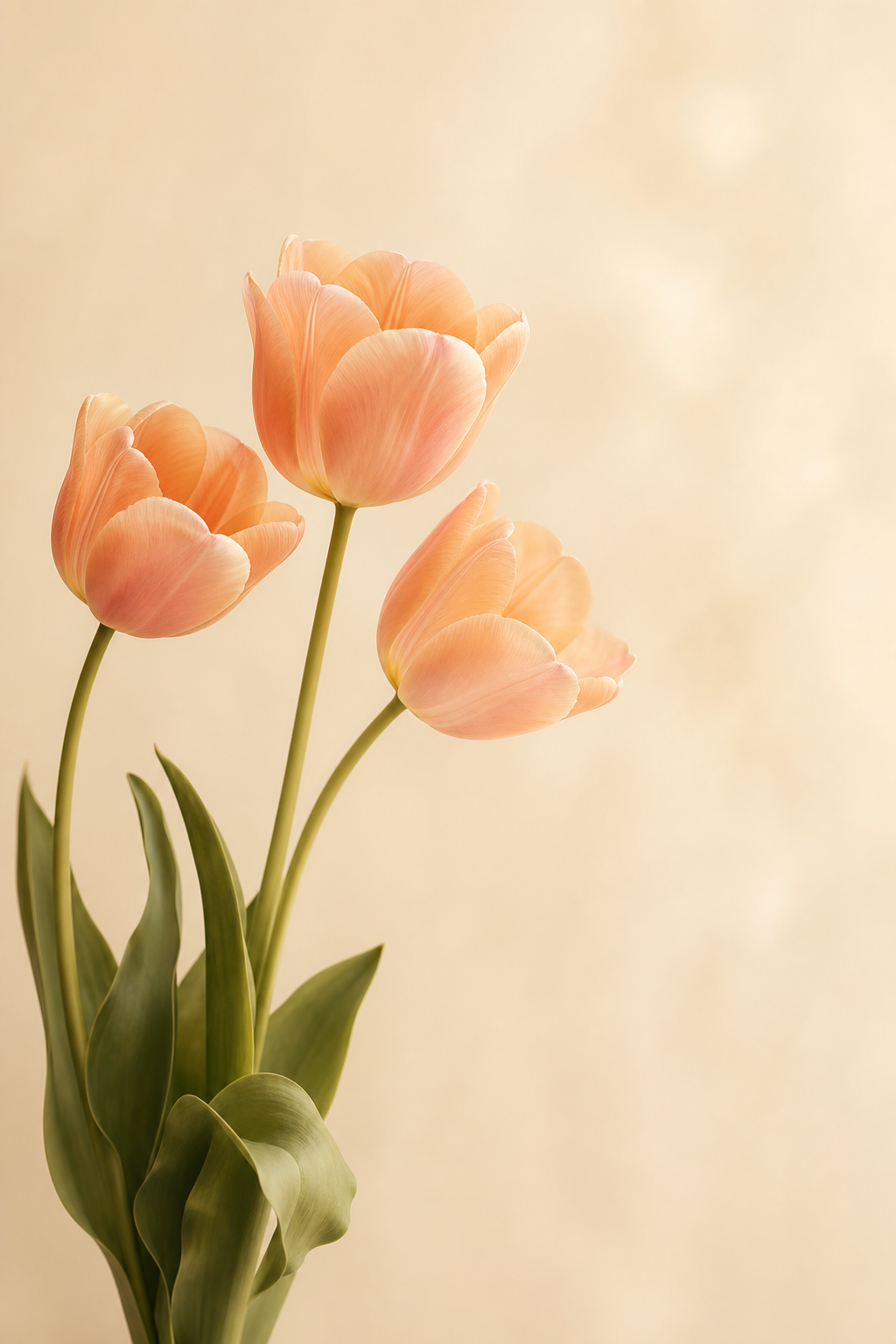
Three slender peach tulip stems rising from the lower left against warm cream
Peach stems — full-size image

Cherry Blossoms and Dreamy Pink Skies
Cherry Blossoms and Dreamy Pink Skies — iScreen

Depending on how much sky surrounds a branch of cherry blossoms, the design feels airy or moody. Pay attention to the negative space and carefully place your branch to avoid covering the time. Consider the color of the clock you use and the sky behind it to judge contrast, keeping the time clear of the branch.

4. A blossom branch entering from one side

This blossoms wallpaper places branches near the edge of the frame, with a lot of empty space beside them. This is a lovely choice if you want to add a floral element without a repetitive pattern to your wallpaper. Consider using the same color as the sky or try a subtle pink. Keep some space when the wallpaper preview is active, as a top-heavy crop could place flowers in the clock area.
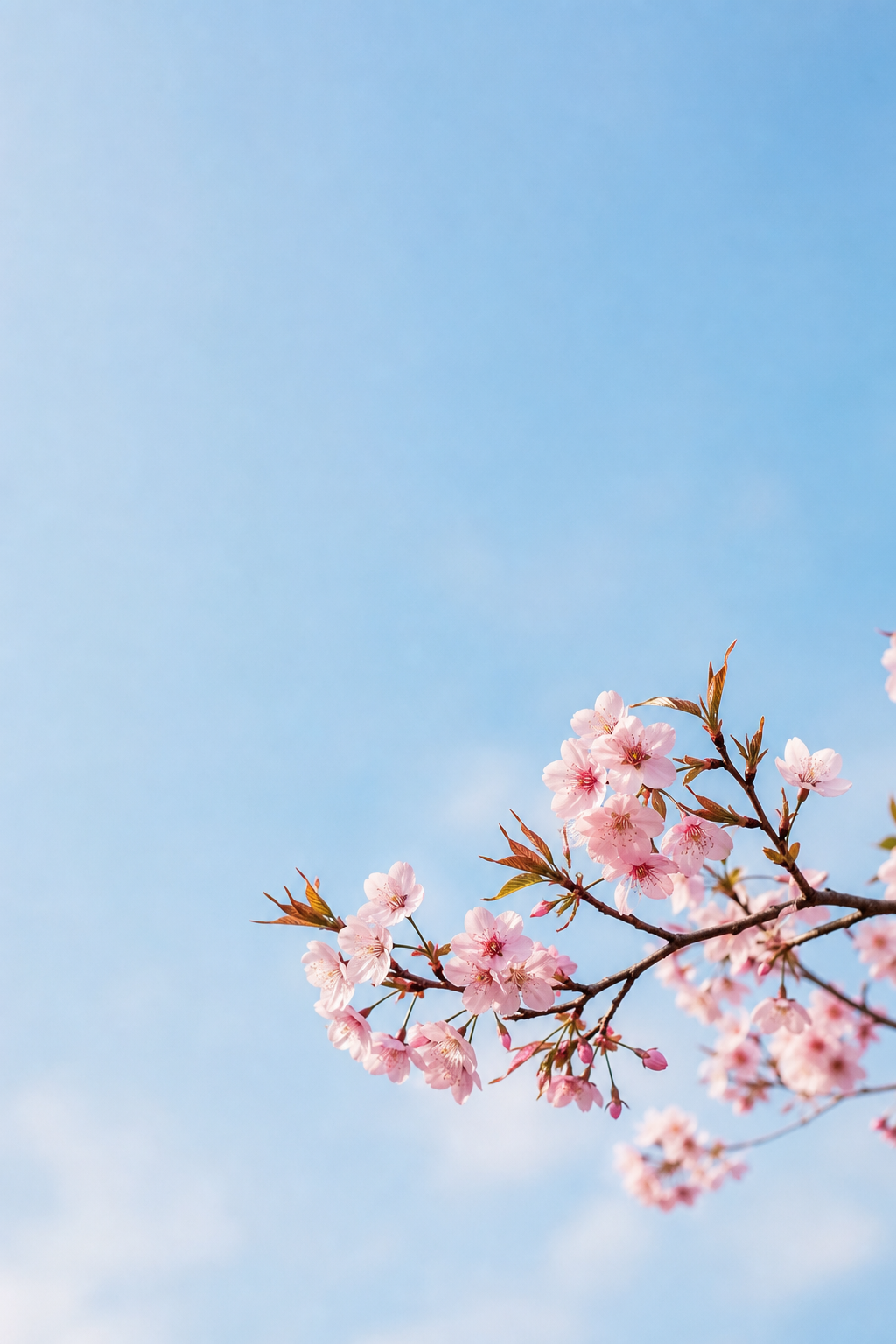
A cherry blossom branch with blush flowers against a pale blue spring sky
Side blossoms — full-size image

5. Pink petals against a rainy sky

This pink spring artwork combines light pink with a grayish-blue hue. Use a predominantly gray-blue background with a few pink petals. The rest can be taken up by the cloudy background. Even the pale sky in this dreamy spring design needs contrast with the time; darker rose or charcoal is a starting point to try for the clock.

Pale pink cherry petals drifting across a cloudy blue-gray rainy sky
Rainy petals — full-size image

Cute Spring Illustrations and Easter Details
Cute Spring Illustrations and Easter Details — iScreen

These cute spring phone wallpapers use simple characters or familiar designs. A bunny gives the picture an Easter connection. The design can include gingham and daisies, which can remain after the holiday. Keep decorative text out of the phone design to leave more freedom for the clock and your layout.

6. A little bunny in the lower corner

This illustration shows a bunny on the grass. The colors complement each other and make a nice Easter wallpaper. If a large music player or a large notification stack covers the design, try a different crop or screen. On the Home Screen, a complementary color widget can be placed to match.
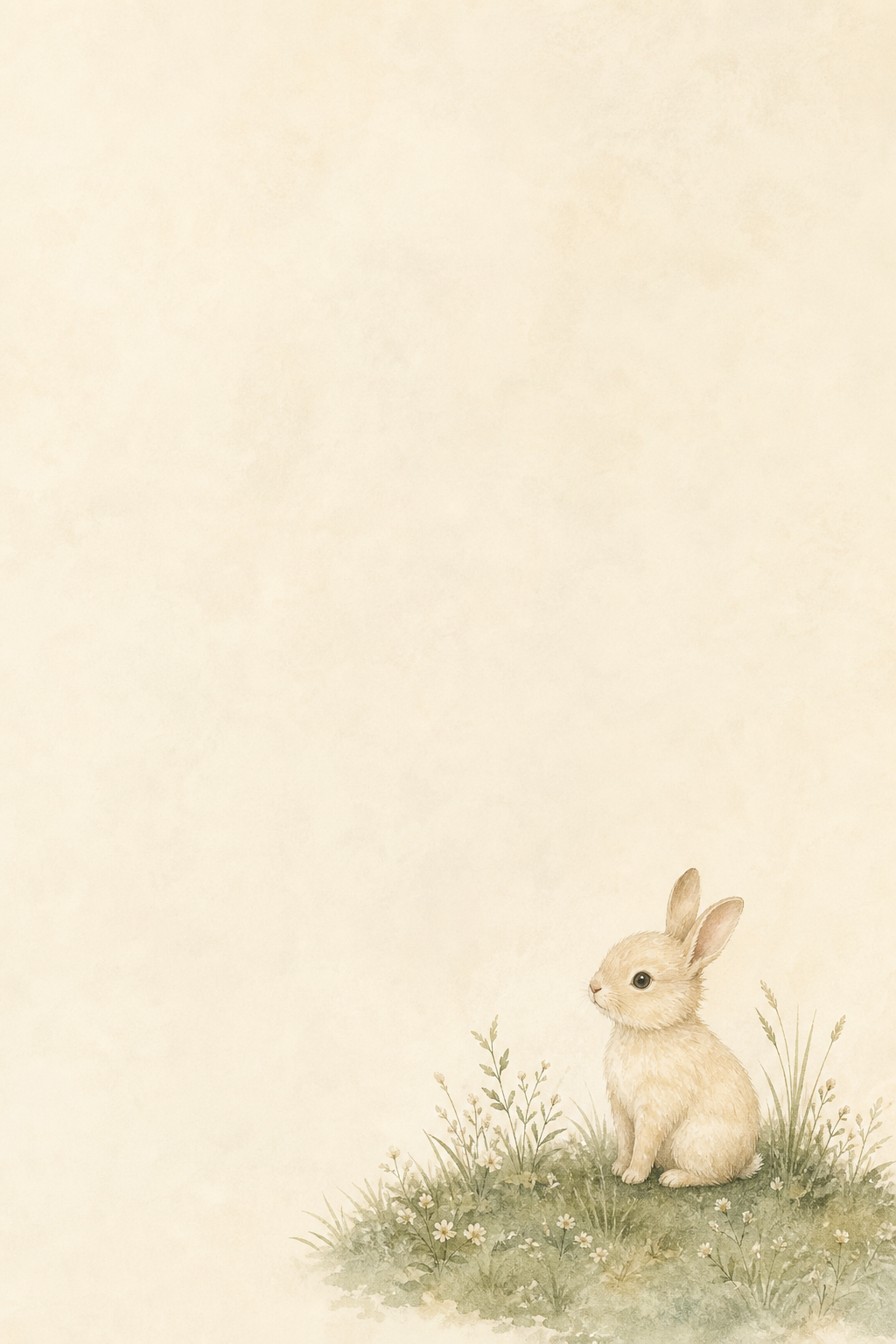
A small cream bunny sitting on sage grass in the lower right of a cream background
Corner bunny — full-size image

7. Daisies over a soft gingham pattern

The checks and daisies give this spring flower illustration a picnic feeling. The design is good, but the lines can look busy, especially with a lot of apps on the phone. This design can remain on your phone Lock Screen, while the Home Screen uses different colors to complement it.
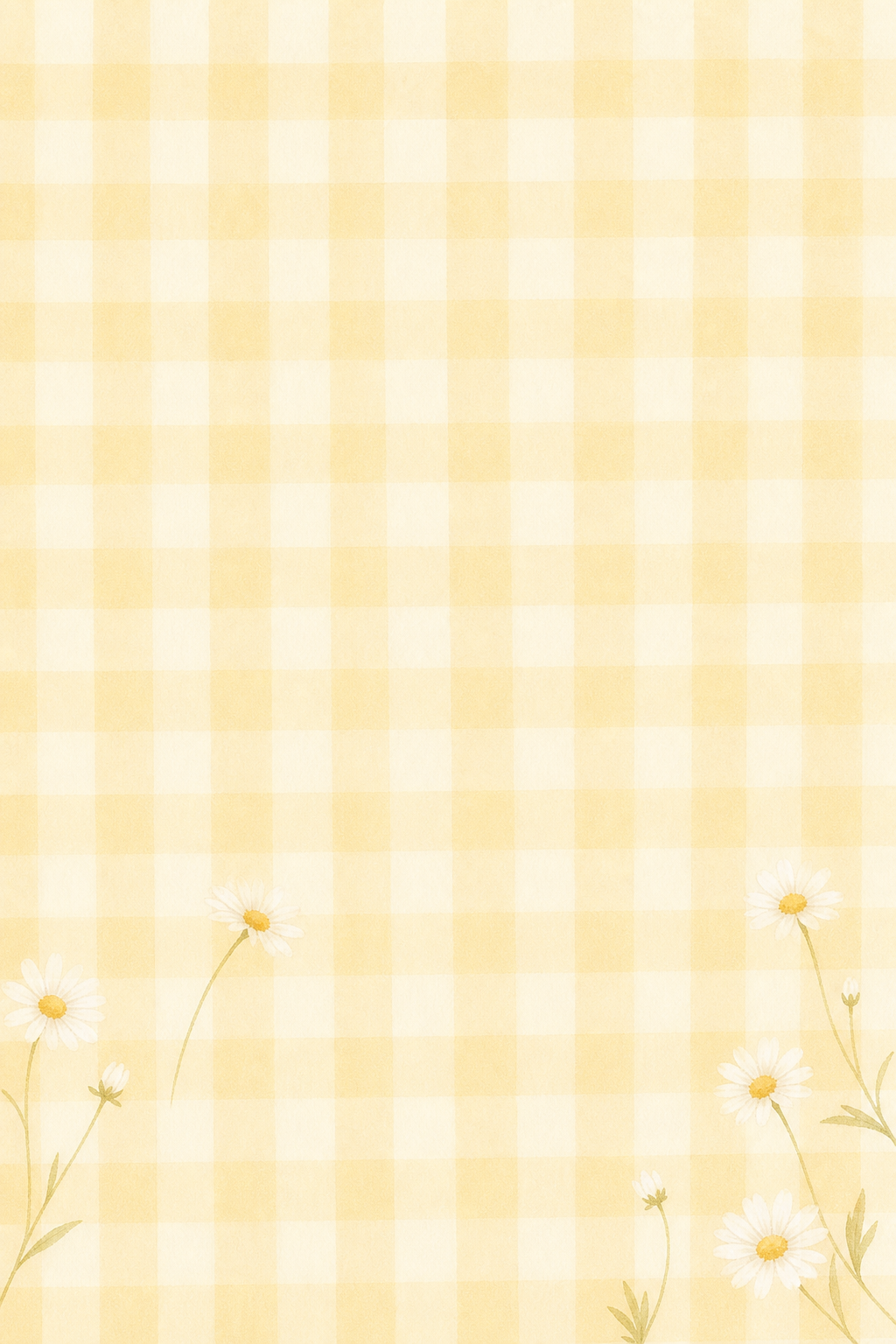
Tiny white daisies near the edges of a soft cream and butter-yellow gingham pattern
Daisy gingham — full-size image


Imagine the iPhone Home Screen with a large calendar at the top of your display and your favorite apps below it. The gingham print is gorgeous, but using it around your calendar can leave little quiet space. Try the bunny or gingham print on your Lock Screen instead. For the calendar display, you can use a sage background with a small pop of yellow if the widget settings allow it. Check the label for each day of the week before keeping the yellow accent. Simpler designs can help you achieve a toned down version of the style you like.

Sage Green, Butter Yellow and Quiet Spring Colors
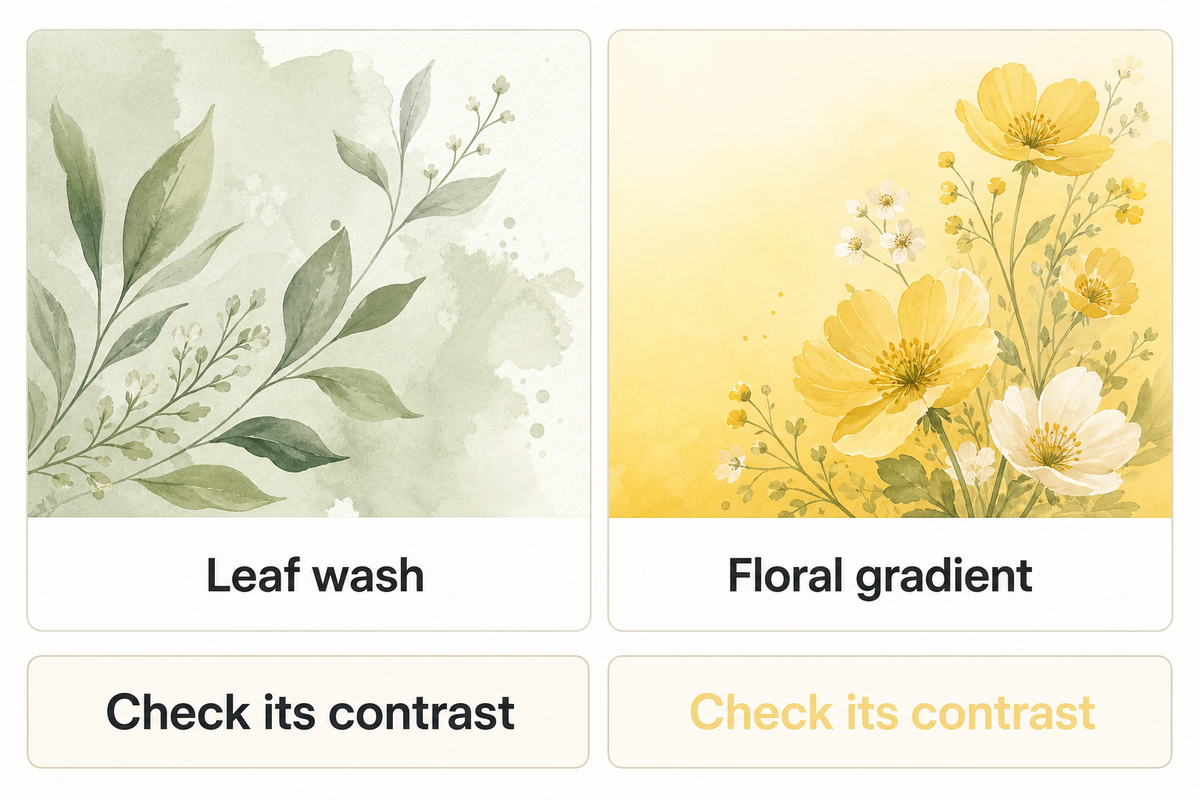
Sage Green, Butter Yellow and Quiet Spring Colors — iScreen

Sage or butter-yellow color can also be used to incorporate the spring style into your display. These minimal spring designs focus on solid colors with little detail. The actual foreground colors still determine whether your display is easy to read. Check your display to see if a pale wallpaper is really easier to read than a busy or detailed one.

8. A sage-to-cream wash with one leaf

To give your display a pretty pastel color, use a detailed leaf wallpaper. This aesthetic wallpaper leaves a lot of blank space for app icons. If you use a dark clock or a detailed widget, check its contrast against the pastel color of the background at your usual brightness. A plain pastel background can give photos in your widgets a less busy setting.
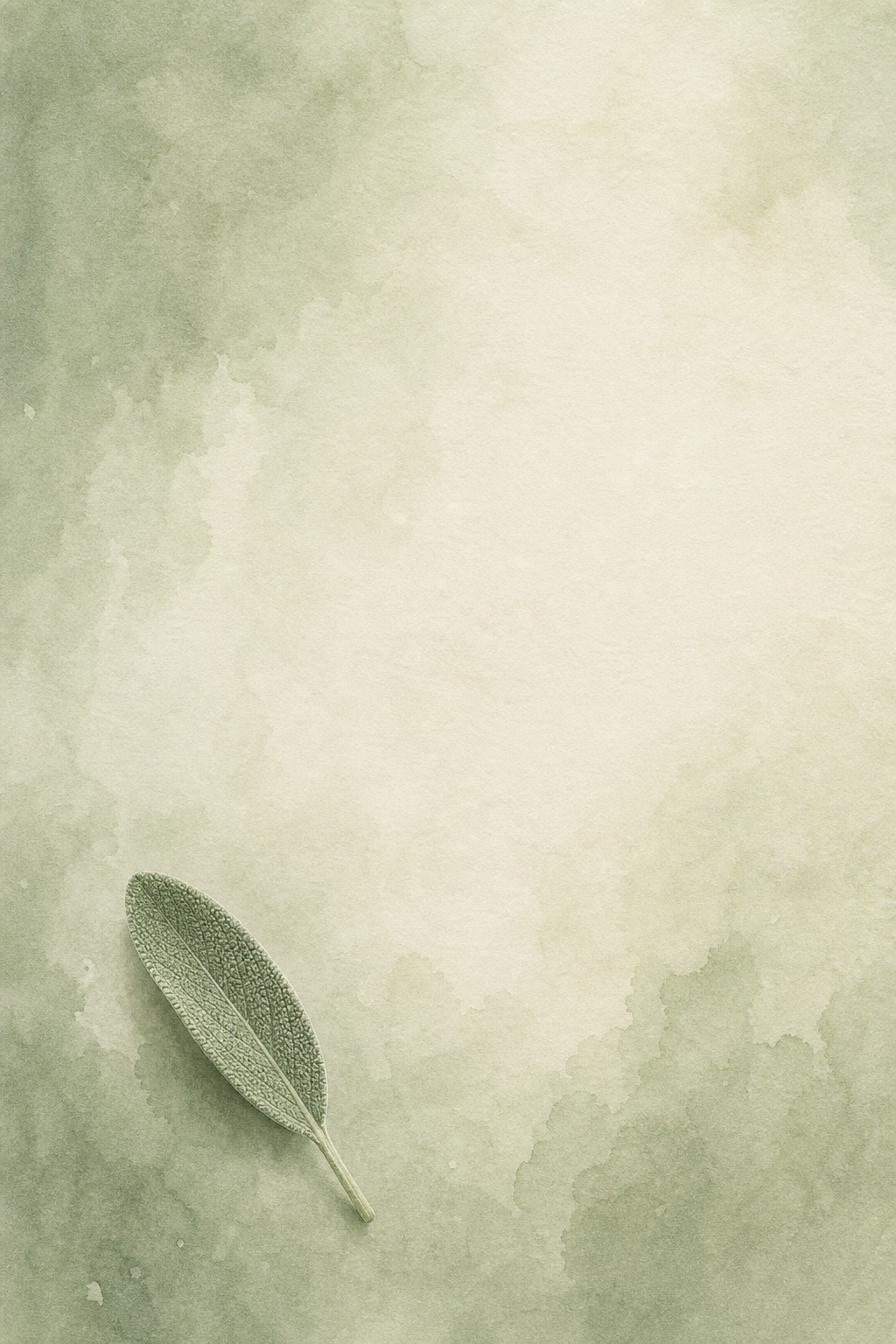
A small sage leaf on a sage-to-cream watercolor background with subtle paper texture
Sage leaf — full-size image

9. A butter-yellow gradient with a tiny floral accent

On your mobile phone screen, a warm gradient can evoke a sunny feeling. The graphic features a small floral accent. It complements the other graphics in this collection of spring looks. The gradient can also be used on its own. Pay attention to the icons. Less detail in the graphic doesn’t automatically mean enough contrast with the icon labels.
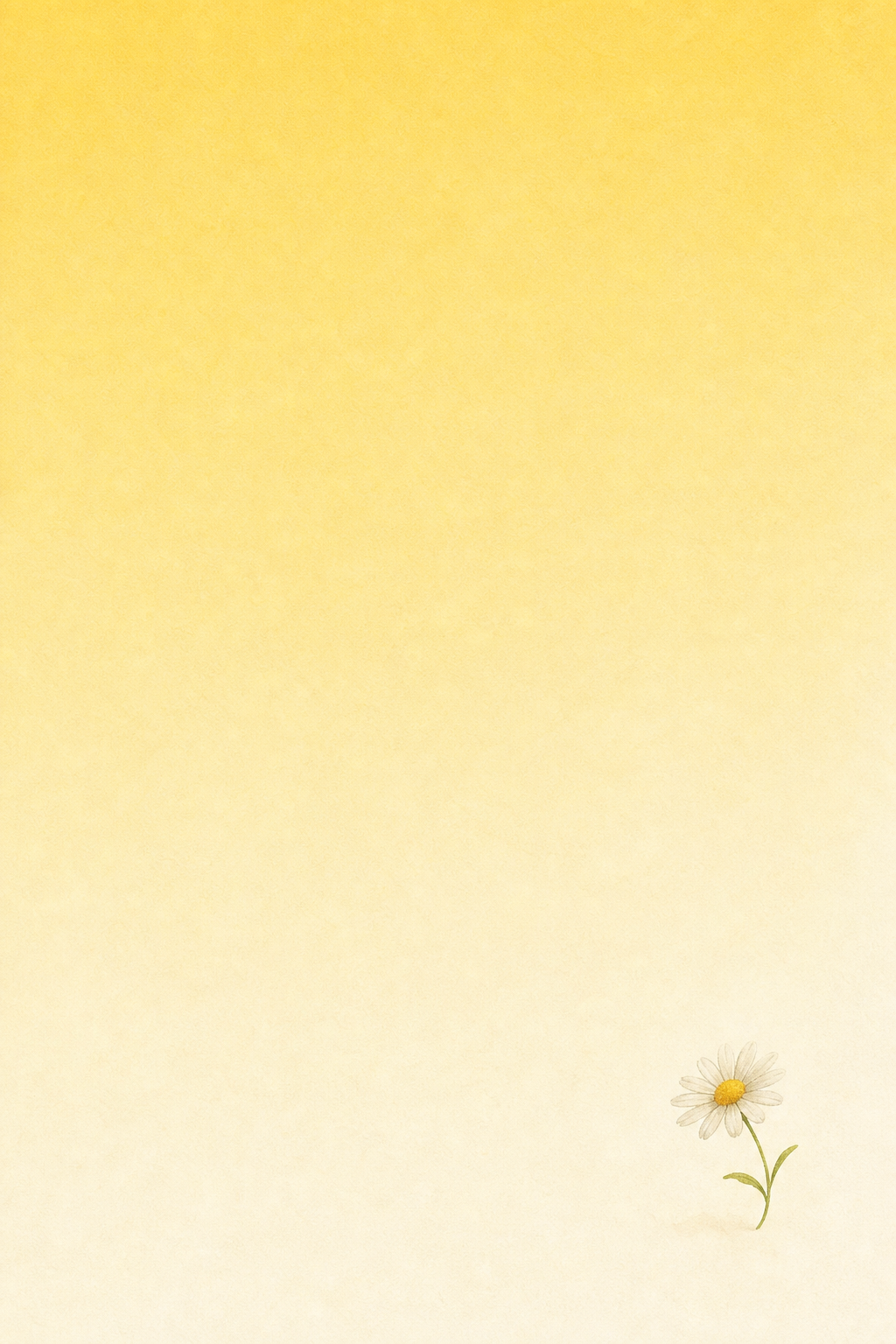
A tiny daisy on a butter-yellow gradient fading into creamy ivory
Yellow gradient — full-size image


“Select colors that provide sufficient contrast.”

This guidance discusses the use of foregrounds in conjunction with backgrounds. The wallpaper presents an opportunity to analyze the label and clock elements, and shouldn’t be used as an indicator that the palette used in the background satisfies accessibility requirements.

Wildflower Meadows and Vintage Botanicals
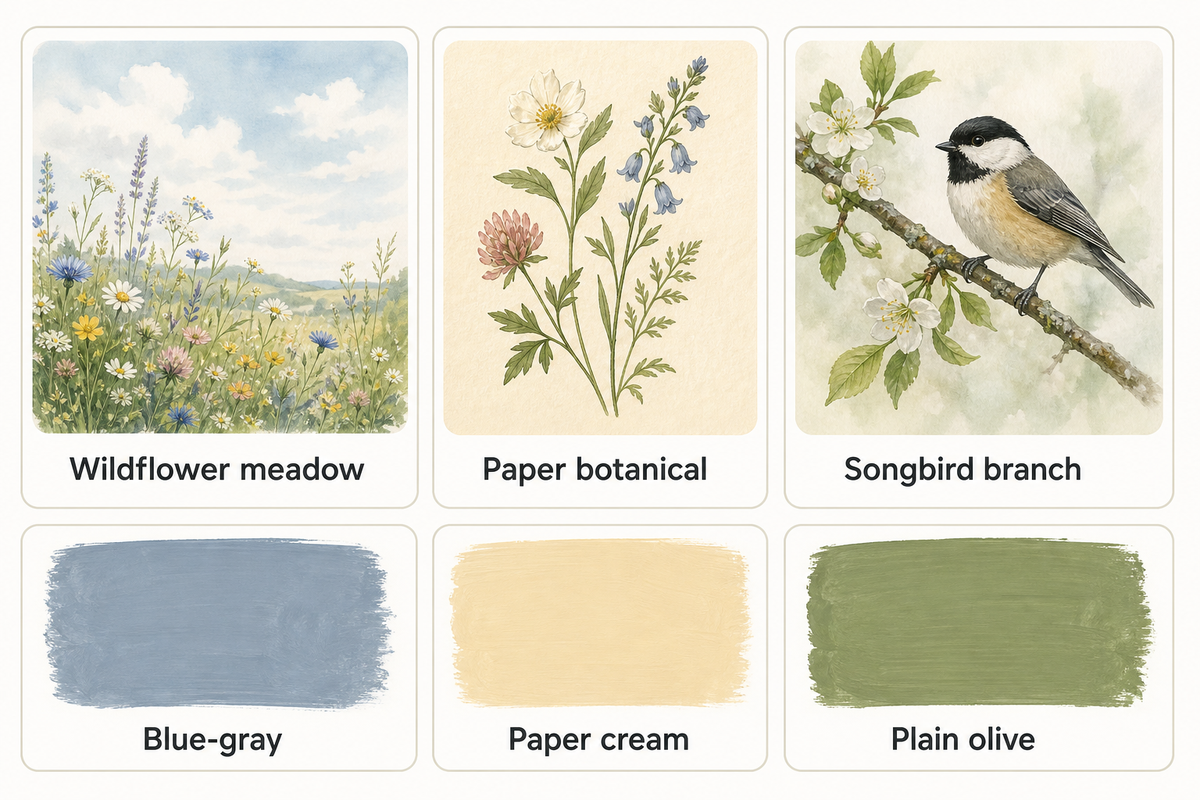
Wildflower Meadows and Vintage Botanicals — iScreen

Meadows give spring iPhone wallpaper a sense of distance; vintage floral illustrations bring the detail closer. Use your discretion to determine what best suits your purpose. The sample Lock Screen designs demonstrate the use of an open space and a side branch to separate the foreground from the background.

10. A wildflower meadow under open sky

The use of negative space above the meadow and distant forest edges in this design helps create a sense of distance. This tranquil scene can help achieve the effect of a calm Lock Screen. Plain blue-gray on the Home Screen can help carry over the calm effect of the blue-sky Lock Screen. Check the horizon after cropping: Keep in mind the focal point of the design may also be the location of the time.
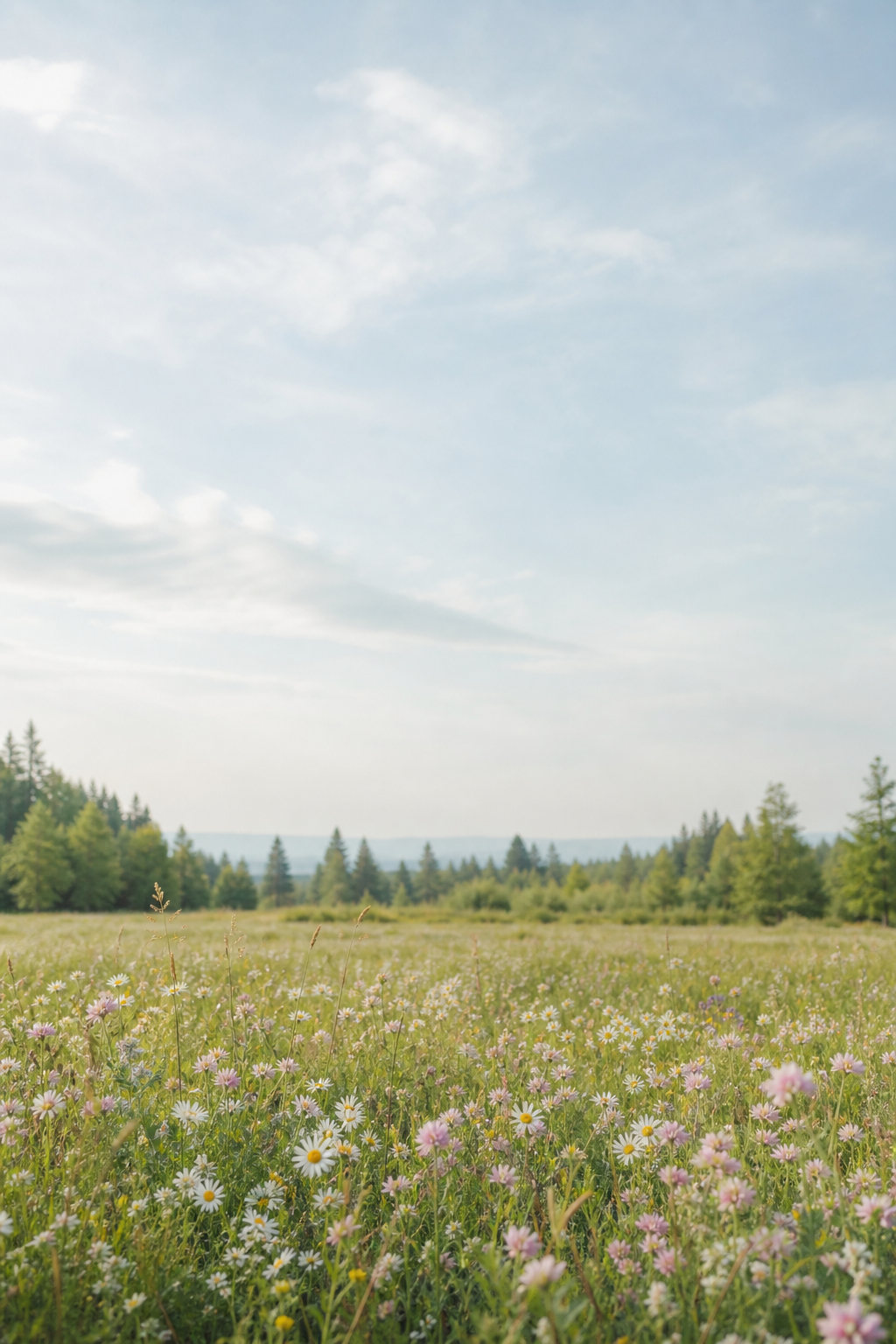
A spring meadow of daisies and blush flowers below a distant forest and pale blue sky
Wildflower meadow — full-size image

11. A botanical drawing on warm paper

For a vintage aesthetic, muted ink colors on lightly textured paper can work. These are new digital illustrations, not historical botanical prints. Digital illustrations can look old by simulating worn out paper. With a light background, elements can connect without being distracting. Don’t let the paper texture become more prominent than the illustration.
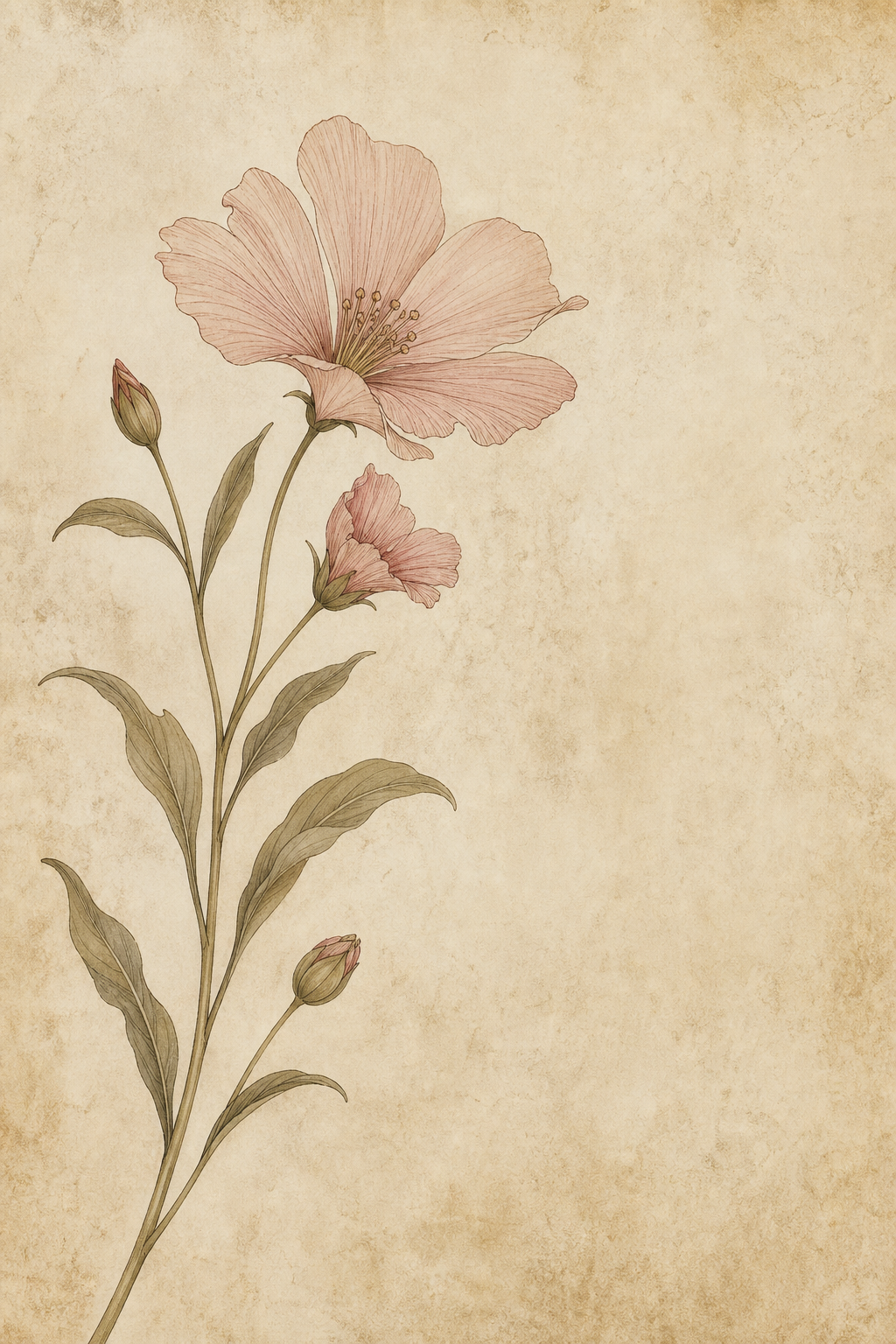
A delicate flowering stem in muted olive and dusty pink on warm cream paper
Paper botanical — full-size image

12. A little songbird on a side branch

The collection has a flower theme, but the addition of birds helps bring another subject into focus. With a branch at the side, the space occupied by the clock stays unobstructed, with the bird visible below it. Home screens can be colored olive or paper cream. The image should be cropped to include the space surrounding the bird. Tail feathers should be left unobstructed.
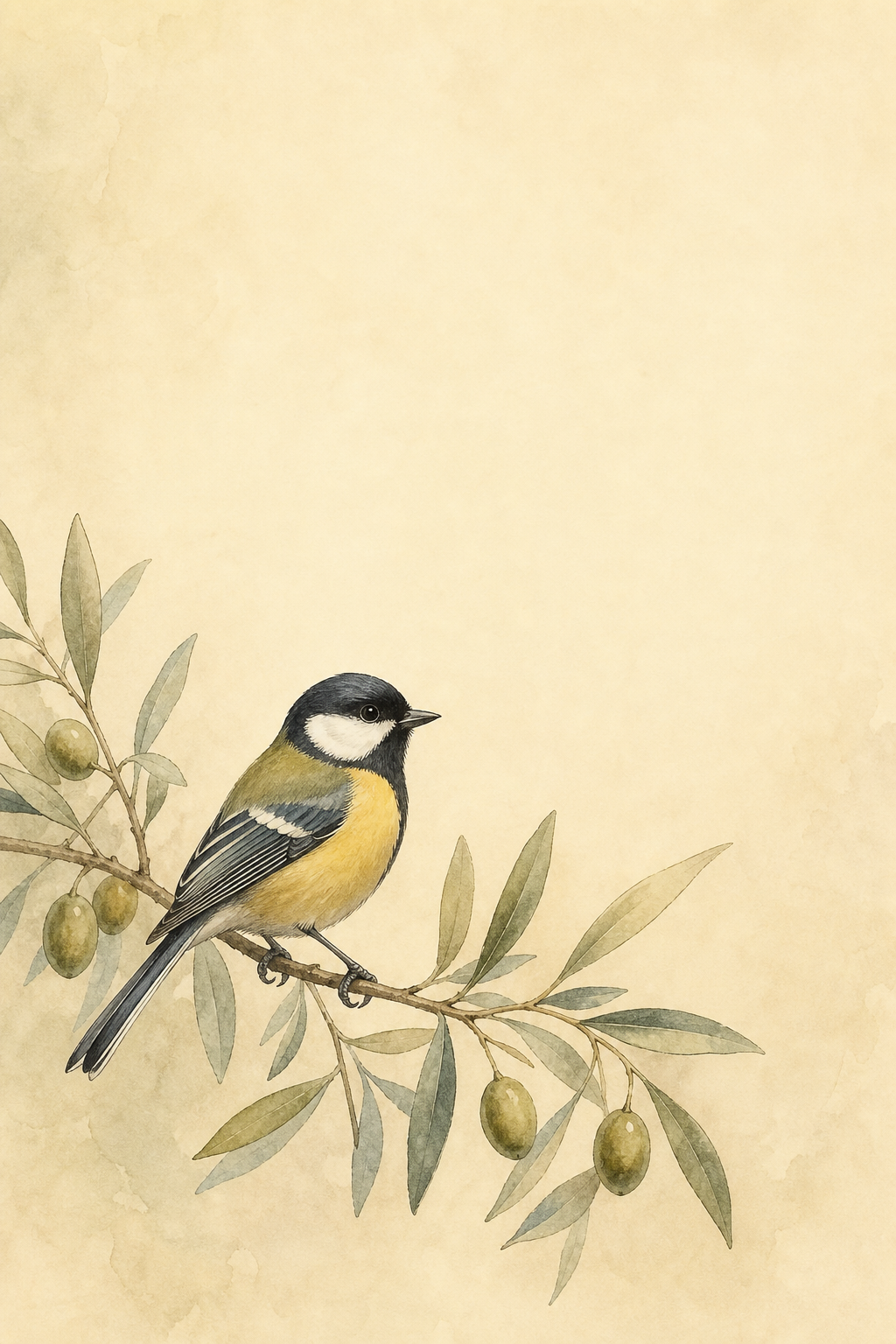
A small watercolor songbird perched on an olive branch against a cream background
Songbird branch — full-size image

Petal Placement: Choose Your Lock and Home Screen Pair
Petal Placement: Choose Your Lock and Home Screen Pair — iScreen

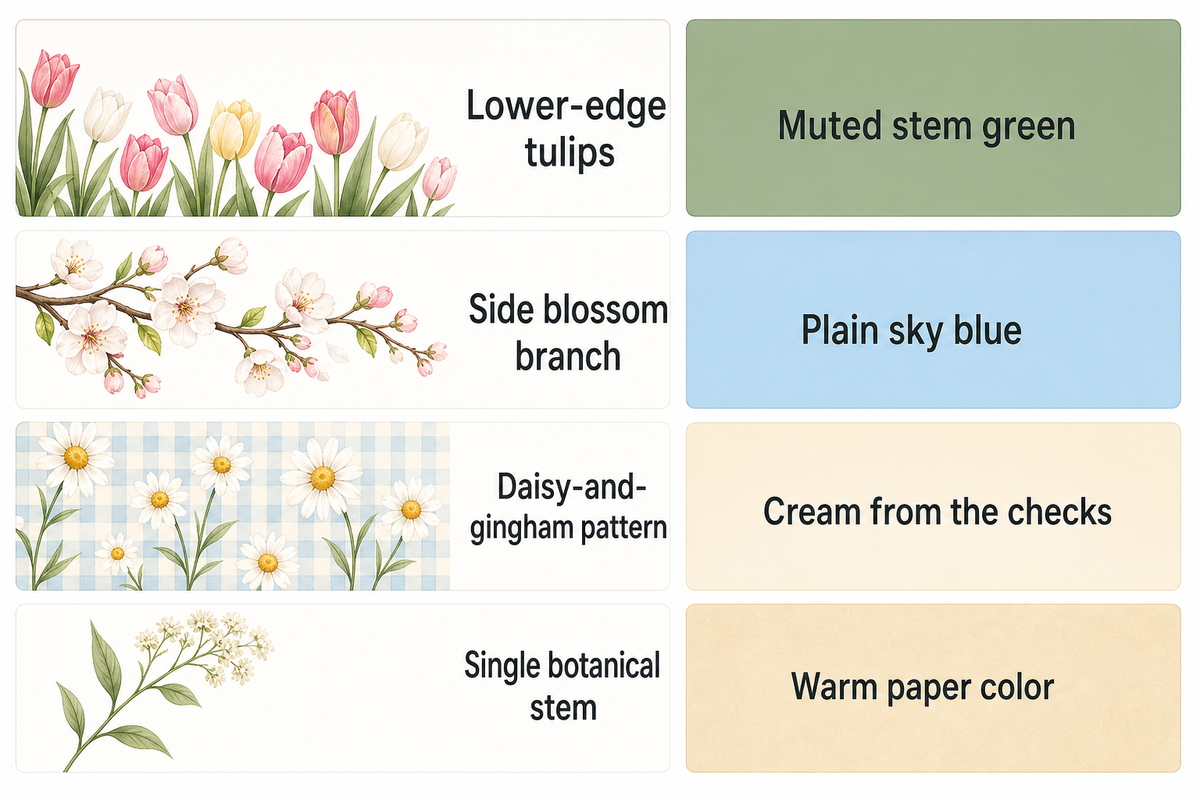
Petal Placement is a comparison method for spring backgrounds: place the busiest part of the artwork around the elements you need to read, then choose a less detailed Home Screen companion if needed. This styling method is not an element of Apple’s operating system. To make your first selection, use the table. To finalize your selection, use the real preview.

Petal Placement: where the picture meets the interface
Composition Check on the Lock Screen Check behind apps Companion to try
Lower-edge tulips Blooms near bottom controls or notifications Flowers behind the dock Muted stem green
Side blossom branch Twigs crossing the time after cropping Petals behind edge-column labels Plain sky blue
Daisy-and-gingham pattern Checks visible through the clock Repeated detail across the app grid Cream from the checks
Single botanical stem Flower head cut off near an edge Stem passing through a large widget Warm paper color

For a busy app grid, start with the blush tulips on your Lock Screen and a plain green Home Screen. Open the folder you use most, because its labels and background may look different from the main grid. If the tulips also work behind your apps, keeping the same picture is fine. If petals compete with labels, switch only the Home Screen to the companion. You don’t need to rebuild the whole setup to personalize it. Apple’s wallpaper guide documents separate color, photo and Blur choices; compare those options in the preview.

For a Lock Screen with a focus on wallpaper, the meadow is a good option. Leaving the sky visible gives you more space to work with and shows the image better. Initially, leave only the widgets you want, then inspect the wallpaper again when your normal notifications appear. The way a scene looks on an empty preview is often different from the way it looks during normal use. You may need to change the clock appearance to make it stand out against the sky, or crop the image if notifications hide the flowers. Keep your Home Screen simple while you figure out which picture to use on the Lock Screen. Once you find the picture you like most, explore matching widgets and add them one at a time.

Find a Spring Wallpaper You Can Actually Download
Find a Spring Wallpaper You Can Actually Download — iScreen

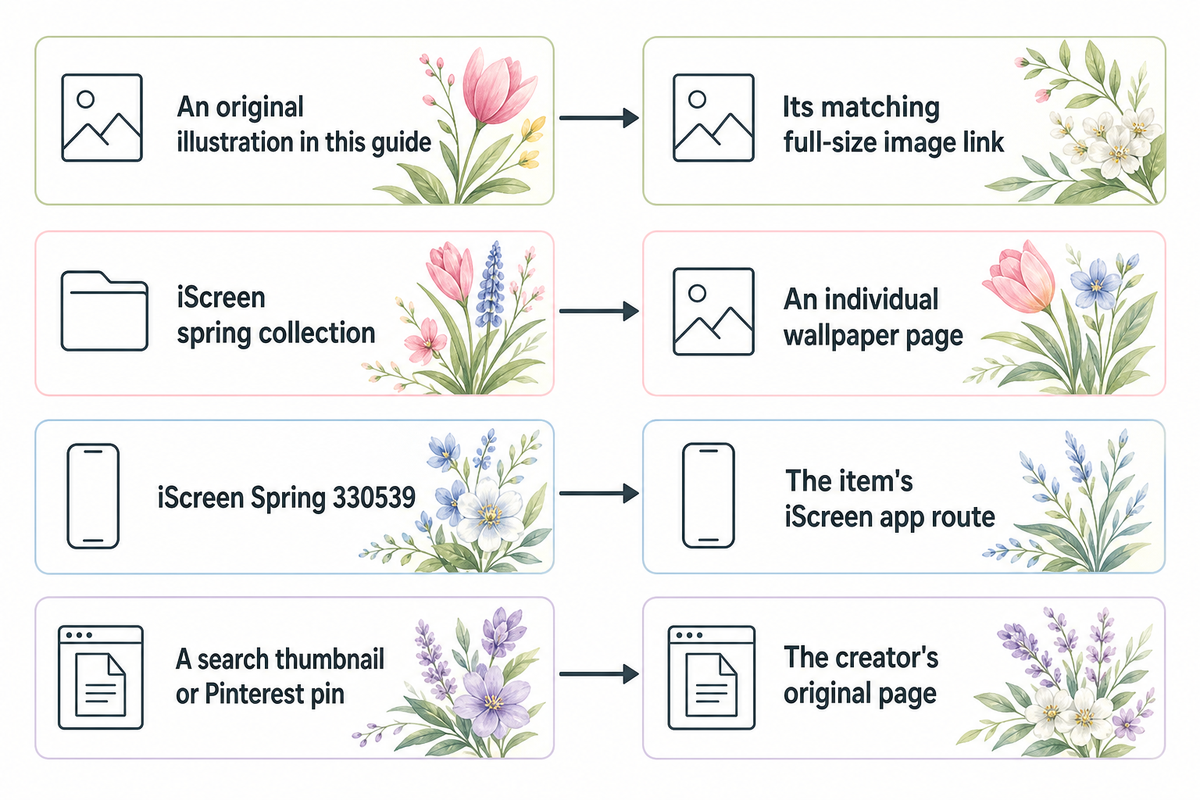
The original images featured in this post can be saved by opening the original image in a new tab, and then saving it using your browser’s tools. Don’t take a screenshot of the entire webpage. The iScreen catalog is a separate collection with its own download route. You may need to use the catalog item’s app download route to access its full-size image.

Which image does each route give you?
Starting point What to open What to check
An original illustration in this guide Its matching full-size image link The opened artwork matches your chosen number
iScreen spring collection An individual wallpaper page The item’s own download instructions
iScreen Spring 330539 The item’s iScreen app route Current in-app access terms for HD
A search thumbnail or Pinterest pin The creator’s original page Available file, saving route and permitted use

The inspected Spring 330539 catalog page displays a preview and directs visitors to iScreen to unlock HD. So the HD image for that item goes through iScreen rather than a direct page download. Check the selected item’s current terms before assuming a “download free” search result describes its full-size file. The app catalog route isn’t the download link for the original illustrations in this article.

You can also create your own wallpaper images using stock photos, as long as you find a reliable source to verify the license. Save the image after following the source’s download and attribution instructions. A wide screen wallpaper for a desktop or laptop may require a different aspect ratio crop from a phone screen. A tablet preview or Android tutorial may display a different wallpaper configuration from your iPhone.

Save and Set Your Spring Wallpaper
Save and Set Your Spring Wallpaper — iScreen

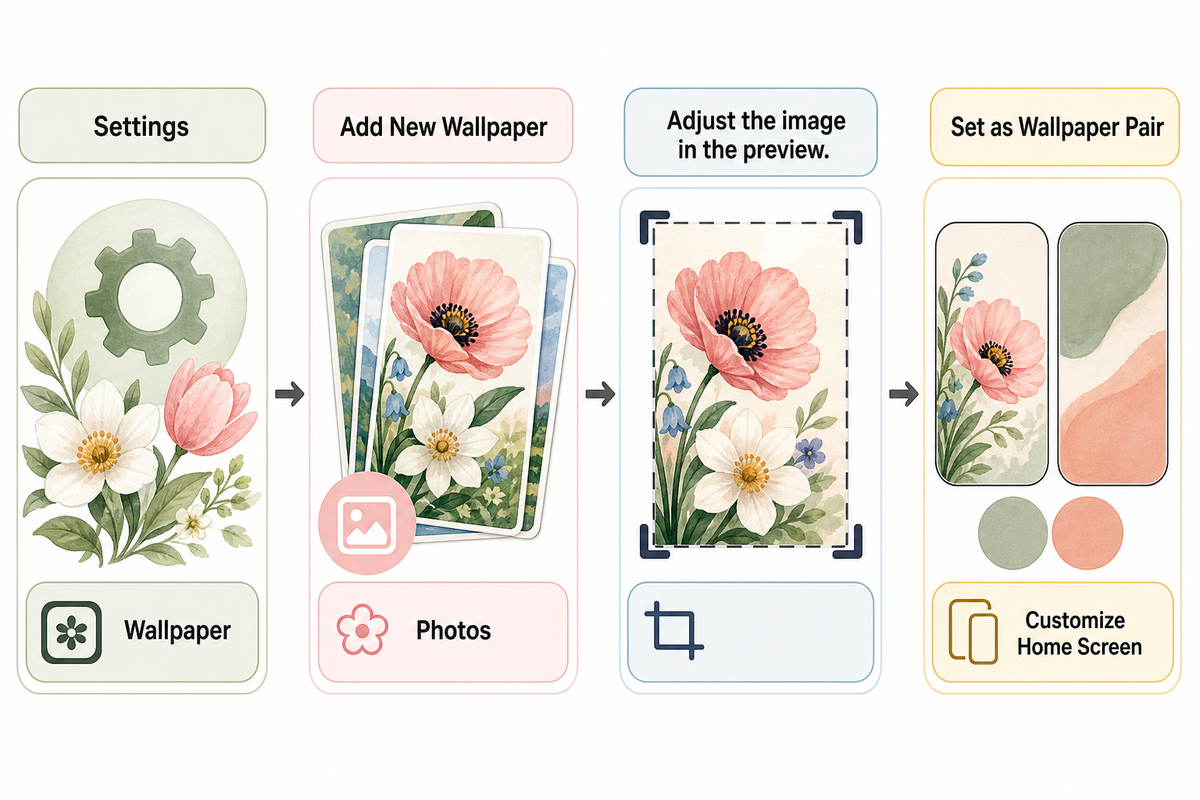
Save your chosen picture to Photos, then use Apple’s current wallpaper instructions. The Settings route lets you choose the image and decide whether both screens should share it. Adjust the preview before confirming, especially when the artwork has a flower or bird close to an edge.

  1. Open Settings and tap Wallpaper.
  2. Tap Add New Wallpaper, choose Photos, and select the saved image.
  3. Adjust the image in the preview. Apple’s Lock Screen guide describes pinch zoom and moving the photo with two fingers.
  4. Tap Add, then choose Set as Wallpaper Pair or Customize Home Screen.

Resolution helps preserve detail, but it doesn’t choose the crop for you. Apple lists the iPhone 13 display at 2532 by 1170 pixels and the iPhone 15 display at 2556 by 1179 pixels. Those are model-specific display specifications, not one wallpaper download size for every iPhone. A 4K label alone tells you little about where the petals will land.

For the longer walkthrough, see how to change your iPhone wallpaper. Check your own device’s options; this collection doesn’t promise Depth Effect or spatial compatibility.

Keep the Spring Mood After the Blossom Season
Keep the Spring Mood After the Blossom Season — iScreen

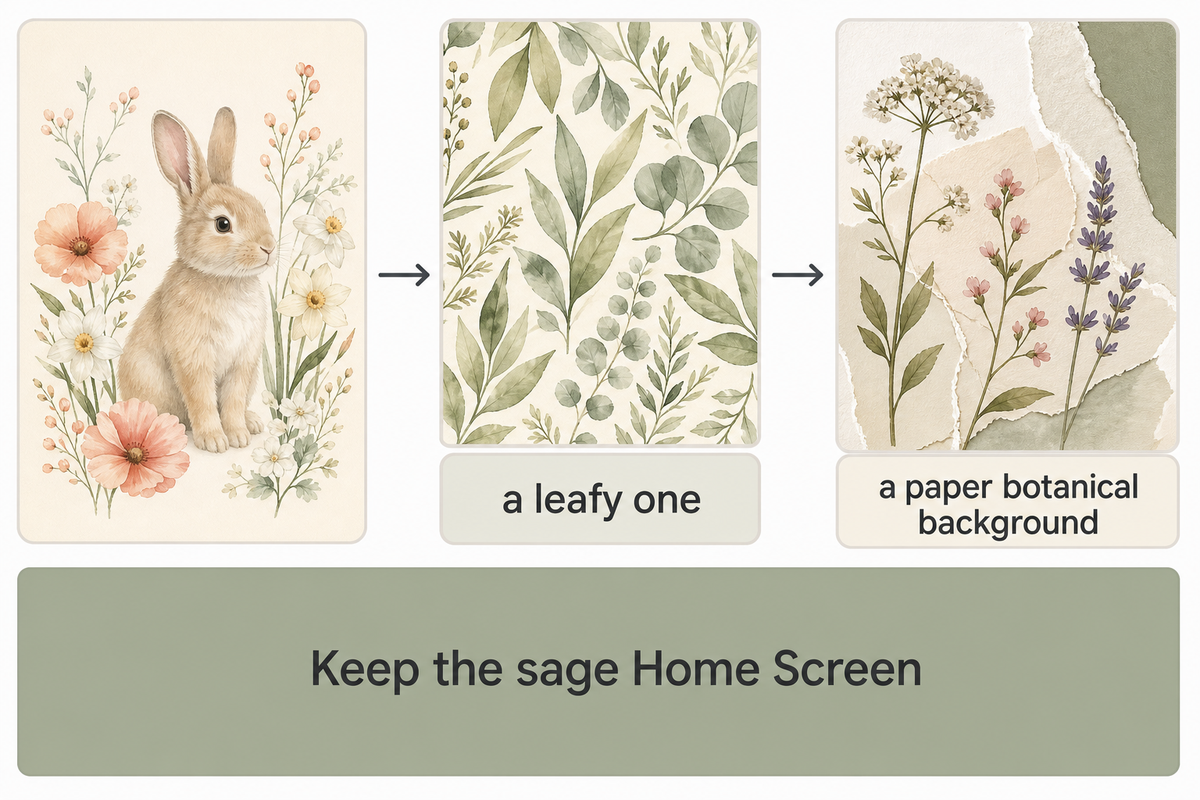
Spring wallpaper collected around Easter can stay on your phone over time, even after the seasonal detail feels finished. Keep the sage Home Screen while the bunny design is swapped for a leafy one. Other variations include using a paper botanical background or a simple gradient when a patterned background feels busy. Different textures can be used as long as they stick to a similar color palette.

Not every widget has to be changed at the same time. The background you see most often is the part to consider replacing first. Keeping the parts of the screen pair that function well gives you variety without changing every widget while you curate a collection of beautiful wallpapers.

Spring Wallpaper Questions
Spring Wallpaper Questions — iScreen

What are some good spring wallpapers for iPhone?

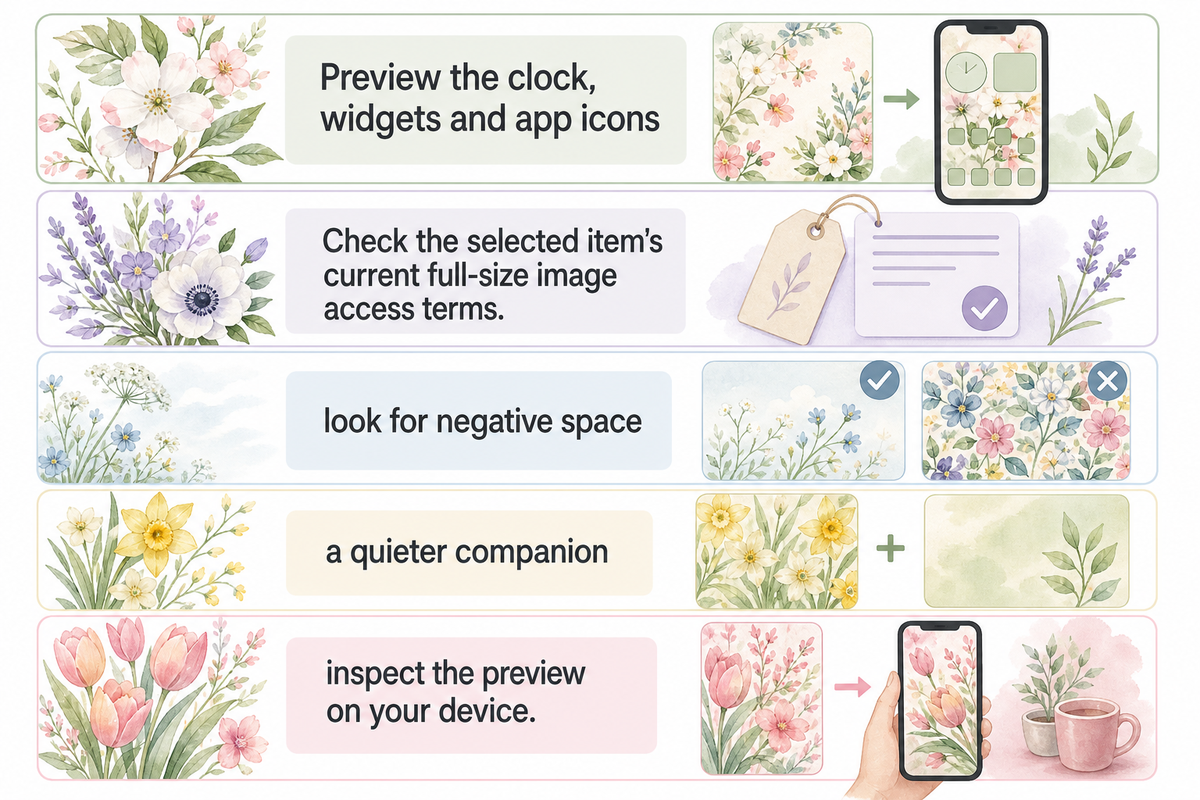
For cute spring backgrounds for iPhone, experiment with images of branches, stems, and leaves based on the layout of your screen. Preview the clock, widgets and app icons before finalizing the image. A small character near the lower edge can keep a playful detail away from the time, while a plain companion color gives a busy Home Screen less to compete with. Compare the open areas around a cherry blossom branch with those around low tulips before choosing your crop.

Where can I get spring backgrounds for my iPhone?

Open the original illustrations here or iScreen’s spring wallpaper pages. Some pages offer direct images; others use an app. Check the selected item’s current full-size image access terms. A search for spring backgrounds for iPhone free can still lead to a page where only the preview is open and the HD file is unlocked in an app.

How do I keep a floral wallpaper from looking too busy?

Place the flowers before picking their colors. Look for negative space, like positioning branches or stems along one side, or leaves or petals near the bottom, to leave room for the clock. On the Home Screen, check or compare other available color options. Preview widgets and check the labels; just because the background is light, it doesn’t mean the text is easy to read.

Should my Lock Screen and Home Screen use the same spring image?

Not necessarily. For the Home Screen, you can use the same image or select a different one. Compare a plain color, another photo or Blur in Apple’s customization preview, then check the labels behind your apps. Keeping the floral image on the Lock Screen and a quieter companion on the Home Screen is one option.

Does a 4K spring wallpaper fit every iPhone?

No. The resolution label may not give you the crop you want. Use the original portrait file, then inspect the preview on your device. The display shape and your chosen framing can cut away petals, branches or useful empty space, even when the file has plenty of pixels.

References & Sources

Recent articles

iPhone Wallpaper Changes by Itself? Find the Setting Behind It

iPhone Wallpaper Changes by Itself? Find the Setting Behind It

2026/11/8 12:34
.seo-blog-content{font-family:Arial,sans-serif!important;font-size:inherit!important;line-height:1.75!important;color:#242735!important;} .seo-blog-content h2{margin:0 0 8px!important;padding:0!important;border:0!important;} .seo-blog-content figure{margin:12px 0!important;} .seo-blog-content .answer-box{background:#f3f1ff!important;border-left-color:#7561c7!important;} .seo-blog-content .ecc-do,.seo-blog-content .ecc-dont{min-width:0!important;flex-basis:230px!important;} .seo-blog-content .faq-item{margin:0 0 24px!important;padding:0!important;border:0!important;border-radius:0!important;} .seo-blog-content table{font-size:15px!important;line-height:1.6!important;letter-spacing:normal;} .seo-blog-content th,.seo-blog-content td{font-size:inherit!important;line-height:inherit!important;} .seo-blog-content th{background:#2d2d2d!important;color:white!important;} .seo-blog-content tbody td{background:#fff;} .seo-blog-content tbody tr:nth-child(even) td{background:#f5f5f5;} .seo-blog-content tbody td:first-child{font-weight:600;} .seo-blog-content caption{caption-side:top;text-align:left;} @media(max-width:767px){.seo-blog-content table{font-size:14px!important;}.seo-blog-content th,.seo-blog-content td{padding:10px 12px!important;}} If your iPhone wallpaper changes by itself, check linked Focus screens and Shortcuts automations. Each of these can replace the Lock Screen wallpaper without requiring a visit to Wallpaper settings. A long press followed by a swipe and tap can also select another previously saved Lock Screen. A wallpaper that seems to change randomly may still follow a trigger. One way to narrow the possible options is to look at timing. A new photo when you lock your phone points to a different setting from a new layout when Sleep Focus is activated. If an image only becomes darker or blurry, look at its appearance controls before replacing it. An iPhone wallpaper changes by itself when an active shuffle, linked Focus or automation selects another background. Start with the event that preceded the change, inspect its setting, and adjust that route before testing it again. Before changing settings Check whether the photo changed or the same image simply looks different. Why does your iPhone wallpaper change by itself? Your iPhone can automatically change its background through Photo Shuffle, Focus linked to another screen, or an automated Shortcut. Saved Lock Screens provide a manual route to switching backgrounds. Start by looking to see whether the photograph, the whole screen layout, or just the image’s appearance changed. Apple’s wallpaper instructions differentiate Photos from Photo Shuffle. A Photo can be chosen, but Photo Shuffle rotates a selection. Focus adds another layer of control: activating a linked Focus can bring up its associated screen even if a user chose a different wallpaper beforehand. These instructions cover a personally controlled iPhone. For a school or company-managed phone, contact its administrator for restricted settings. Menu labeling varies by iOS version, so use the corresponding control on your device. Don’t edit anything until you understand the current situation and active Focus. If it changes constantly, start with a single tap and see what happens. Take a screenshot if the widgets and/or clock also change. Our Lock Screen customization guide shows how lock screen elements belong to a saved screen. Match the change to its trigger To figure out where to look first, use the event immediately prior to a wallpaper change. The checks in the 4-Trigger Wallpaper Trace are shuffling, Focus, automation, and manual. Timing is a good starting point, but be sure to check the setting before making the change. 4-Trigger Wallpaper Trace Choose the first check from the event you observed What you notice First setting to inspect What to look for Narrow next action Photo changes after a tap Photo Shuffle On Tap frequency Choose a single Photos wallpaper Photo changes after locking Photo Shuffle On Lock frequency Replace this shuffle selection Photo changes hourly or daily Shuffle, then Shortcuts Matching frequency or time trigger Adjust the matching route Different screen at bedtime Sleep Focus Linked screen and activation time Inspect the screen association Different screen on arrival Focus or Shortcuts Location schedule or Arrive trigger Check both before editing either Picture changes when charging Shortcuts Charger trigger with a wallpaper action Remove that trigger if unwanted Clock and widgets change too Saved screens and Focus Another complete Lock Screen selected Select the intended screen; check Focus Same photo becomes dim or blurred Appearance controls Blur, Focus dimming or Always On Adjust the matching display option Change follows a long press and swipe Lock Screen gallery Another saved wallpaper selected Return to the intended wallpaper The table shows how Apple’s Focus controls and automation triggers interact. A charging event only matters if the shortcut it triggers changes wallpaper. Other charging automations are allowed. Example: your family photo returns during the day, then a plain background appears at bedtime. Instead of instantly resetting the wallpaper, see which Focus is active when the change occurs. Check if Sleep has a screen, and if not, check if there are shortcuts active at the same time. After modifying one of the associations, select the intended photo and look at which Focus is active. Bedtime events provide the best examples; unchanged afternoon screens can’t tell you much about a bedtime trigger. Stop Photo Shuffle without deleting your photo collection To stop Photo Shuffle for the wallpaper you use, create a new wallpaper from Photos and select one image. Select that saved wallpaper instead of the shuffle selection. You can keep the old shuffle in the gallery and keep the source pictures in your photo library. Open Wallpaper settings. Go to Settings, then Wallpaper, and tap Add New Wallpaper. Choose Photos. Select the single image you want, rather than Photo Shuffle. Adjust the picture. Position the subject and finish the customization. Save the selection. Tap Add, then Set as Wallpaper Pair or Customize Home Screen. Use the new wallpaper. Check that this saved screen is selected before repeating the event that used to change it. Apple lists these shuffle frequencies: On Tap, On Lock, Hourly and Daily. Switching to Daily reduces the frequency of the picture rotating; it doesn’t stop the picture rotating altogether. On Tap also stays a shuffle mode, even though you initiate each change. A single Photos wallpaper stops the rotation within that selection. If the picture keeps changing, look at the next matching route. A linked Focus or shortcut can still select a different wallpaper, so move to the corresponding section if your wallpaper keeps returning to another picture. For an image that stays readable behind the clock, pick a subject that has space around it. The aesthetic iPhone wallpaper guide gives design ideas without changing this process. Deleting a wallpaper is an optional way of cleaning up the saved wallpapers. Removing an old selection if the new one works as intended is also covered in the steps to delete an iPhone wallpaper. Keep the original photograph if you may want to use it later. Keep Focus while stopping unwanted screen changes Go to Settings > Focus, and select the mode active when your wallpaper changes. Inspect its selected Lock Screen and Home Screen. Notification rules are specific to each Focus configuration. To customize screen previews, go to Customize Screens, and if a preview has a minus button, tap it to remove that association. This is illustrated in iDownloadBlog’s Focus unlink instructions. Leave your notification allowances and useful activation schedule intact. Next, select the wallpaper you want, and see which Focus is active. Apple’s custom Lock Screen guide details the two-way link. A Focus can select its associated screen, and vice-versa. Example: you want Work Focus to silence notifications from social apps when you arrive at the office, but to keep your usual family photo as the wallpaper too. Deleting the arrival schedule would also remove the automatic start you want. Instead, check Work Focus’s screen preview and remove the association you don’t want when that control is available. Keep the arrival schedule and allowed contacts. Pick the screen you want and check Work is active when you need it. On your next arrival, check if Work starts and which wallpaper appears. If both are as expected, you have confirmed that Work Focus starts with the intended wallpaper on arrival without rebuilding notifications. If Focus turns on when you use another Apple device, check Share Across Devices in Focus settings. Treat this separately from app filters: Apple’s guide says Focus filters don’t sync across devices with that option. For a darker version of the same Lock Screen, check the mode’s Options for its dimming control. Check Shortcuts for a scheduled wallpaper change A shortcut can replace your wallpaper automatically when its trigger runs a wallpaper action. Open Shortcuts and check automations associated with the time or event you noticed. Read the shortcut’s actions before you delete anything; the trigger alone won’t tell you whether it changes wallpaper. In the current Apple automation guide, Automation lists shortcuts with automation triggers. Older versions may organize these controls under an Automation tab. Look for the action that chooses the wallpaper or supplies the photo. Apple’s Shortcuts update History shows Set Wallpaper Photo and Switch Between Wallpapers in iOS 16.2 changes. Set Wallpaper Photo can set photos for wallpapers that use iOS 16’s new widgets and customization options. Those action names might help identify what a shortcut does, and the editor may look different on your device. “You can remove the automation trigger from your shortcut so it no longer runs automatically.” Apple, Shortcuts User Guide Get rid of the trigger in the shortcut and choose your preferred wallpaper again. Do this only if the entire automatic run is unwanted, because its other actions will also stop running at that event. Also, keep other actions and automations, unless you want their behavior to change as well. If the wallpaper changes again, look at the second event and don’t assume the first edit is bad. It’s helpful to write down a shortcut’s name and trigger, if you don’t understand what the shortcut does. For a Charger automation, the next relevant observation is a charging event. Waiting with the phone disconnected doesn’t exercise that trigger. Separate accidental switches from visual effects A changed clock or widget arrangement can indicate another saved Lock Screen, while a dimmer or softer image may come from appearance settings. Compare the subject and crop first. Then inspect the saved screen, Home Screen customization, or display option that matches what changed. Apple states switching saved Lock Screens is done by touching and holding the Lock Screen, swiping to another wallpaper, and tapping it. If you enter the gallery, select the screen you want and check Focus. Keep unwanted saved screens only if you still use them. Why does the same photo look blurry or darker? The Blur feature softens your Home Screen background behind the apps. In Wallpaper settings, customize the Home Screen and check its Blur control. Apple’s wallpaper customization guide addresses this option separately from choosing another photo. Our Home Screen wallpaper guide covers background choices for readable icons. On supported models including iPhone 14 Pro and iPhone 14 Pro Max, Always On Display can dim the locked or idle screen. Apple says its refresh rate can drop to 1 Hz. Check Settings > Display & Brightness > Always On Display if the change occurs when the phone becomes idle. Apple’s display brightness explanation also describes automatic brightness and color adjustments. A black background or darkened screen therefore requires a different first check from a replacement photograph. True Tone can adjust color and intensity; Night Shift can make colors warmer. A live weather design can look different as conditions change. Animated photo effects also deserve an appearance check before you recreate the wallpaper. Do Compare the photograph and crop. Check the clock and widget arrangement. Inspect the matching appearance control. Don’t Do not delete your photo library to stop shuffle. Do not remove useful Focus schedules before checking screen associations. Do not erase the phone to troubleshoot routine wallpaper changes. Keep one photo on both screens and recheck Choose a photo from the Settings > Wallpaper menu and select Set as Wallpaper Pair to make that choice your wallpaper for both screens. Use Customize Home Screen to set a different wallpaper for each screen. Apple’s built-in choices can handle this task without having to buy a wallpaper app. Once you’ve changed the setting associated with the unwanted switch, repeat the original event. Capture the active Focus and both screens before and after the event. Apple says switching away from a Lock Screen linked to a specific Focus also switches your Focus. If the original event hasn’t occurred yet, leave the result open. If both screens remained unchanged, document that result for the event you tested. Imagine that, prior to a morning automation, the phone shows a beach photo, then changes to a mountain image. The owner finds a Time of Day trigger attached to a wallpaper shortcut and removes it. Apple says removing the automation trigger stops the shortcut from running automatically. The owner selects the beach again and leaves the other settings alone. In this example, at the next scheduled time, the photo stays in place, and the active Focus is unchanged. If the wallpaper later changes as part of Work Focus, investigate Work’s screen association as a separate route, instead of deleting more photos. Recheck worksheet: hypothetical filled example Record Example entry What to enter for your phone Original event Morning scheduled change The event immediately before the change Picture before Beach photo Photo and crop Picture after Mountain photo Replacement image or appearance difference Focus before No Focus active The active mode Matching control Time of Day wallpaper shortcut The inspected trigger and action Single edit Removed that time trigger The one setting changed Repeat event observed Next scheduled time passed Actual event, or not yet observed Focus afterward No Focus active The mode after the event Observed result Beach stayed on both screens What each screen showed during this check If the issue continues after checking the matching routes, restart the device and check for a software update. Save its iOS version, screenshots and the triggering event for Apple Support. For a new design once the behavior is settled, browse the iScreen wallpaper collection and select your preference through the same native settings. Frequently asked questions How do I turn off photo shuffle on my iPhone? Create a wallpaper using Photos rather than Photo Shuffle, choose one image, and select that saved wallpaper. You can leave the old shuffle wallpaper in the gallery. Changing the shuffle frequency to Daily only slows rotation; it doesn’t make the selection permanently static. If the single photo is replaced later, check linked Focus screens and Shortcuts automations too. Why did my iPhone screen just change? A different photo suggests a wallpaper selection or shuffle; a different clock and widget arrangement can indicate another saved Lock Screen. A dimmer or blurred version of the same image may be an appearance setting. Note the time and active Focus, then inspect the matching control before deleting wallpapers or changing all your notification settings. The trigger table above provides a starting check for each pattern. How to set multiple pictures as wallpaper on iPhone? Open Settings, choose Wallpaper, then Add New Wallpaper and Photo Shuffle. Select the available photo categories, an album, or photos manually, according to the options shown on your phone. Choose On Tap, On Lock, Hourly or Daily. Those settings deliberately rotate pictures, so a changing image is expected. Choose a normal Photos wallpaper if you later want a single fixed picture. How do I avoid switching wallpapers after a long press? To avoid an accidental switch, leave the wallpaper gallery without selecting another screen. A long press opens the gallery; swiping and tapping a saved screen selects it. If you already switched screens, return to the intended wallpaper and check the active Focus. Does a wallpaper change mean my iPhone was hacked? No. A wallpaper change alone doesn’t show that your phone was hacked. Check its settings and assess any separate account-security alerts independently. About this guide: iScreen helps readers select and arrange wallpapers. This troubleshooting article uses Apple’s documented controls and attributed interface guidance; it doesn’t report hands-on device testing. References & Sources Change your iPhone wallpaper Apple Support. Set up a Focus on iPhone Apple iPhone User Guide. Create a custom Lock Screen Apple iPhone User Guide. Add automations to Shortcuts Apple Shortcuts User Guide. What’s new in Shortcuts for iOS 16 Apple Support, historical action changes. Change the wallpaper on iPhone Apple iPhone User Guide. Adjust brightness and color temperature Apple Support. Prevent your iPhone wallpaper from changing iDownloadBlog, secondary interface guidance.
2026/11/8 12:34
6 Aesthetic Autumn iPhone Themes to Give Your Home Screen a Cozy Fall Makeover

6 Aesthetic Autumn iPhone Themes to Give Your Home Screen a Cozy Fall Makeover

2026/11/6 18:46
  Looking for a fresh way to customize your iPhone this autumn? With iScreen, you can transform your home screen into a personalized aesthetic space that reflects your style, mood, and favorite season. From Creative Widgets, beautiful themes, custom app icons, and aesthetic wallpapers to Dynamic Island designs, iScreen brings together a variety of customization options to help you create a unique iPhone home screen. Whether you love minimalist layouts, cozy seasonal aesthetics, or detailed themed setups, you can mix and match different elements to make your phone truly your own. As autumn arrives, it’s the perfect time to give your phone a seasonal refresh. Think warm brown tones, golden falling leaves, cozy coffee moments, vintage books, and soft autumn sunlight. With a collection of autumn-inspired designs, iScreen makes it easy to bring these seasonal details to both your lock screen and home screen. Ready for a little fall inspiration?Here are six aesthetic autumn iPhone themes to help you create a warm and inviting home screen!   1. Cozy Season – A Warm Coffee & Autumn Aesthetic Style Highlight: A cozy coffee-inspired design featuring golden fallen leaves, freshly baked croissants, warm brown tones, and vintage-inspired details. Bring the feeling of a crisp autumn morning to your iPhone with this warm and inviting theme. Inspired by coffee breaks, freshly baked pastries, and the beauty of fallen leaves, it captures the simple pleasures that make the season special. The lock screen features a charming flat-lay composition of a coffee cup and golden croissant surrounded by autumn leaves. An oversized translucent digital clock stands out against the softly blurred brown background, creating a dreamy and elegant look. Subtle decorative details complete the seasonal aesthetic without taking attention away from the main image. The home screen carries the same coffee-inspired style through matching brown wallpapers, translucent widgets, and coordinated app icons. Clock, calendar, weather, and photo widgets add useful information while keeping the layout visually balanced. Small coffee and croissant images bring extra warmth and personality to the design. From the oversized lock screen clock to the carefully coordinated widgets and warm-toned app icons, every detail works together to create a cohesive autumn look. If you love coffee-inspired wallpapers, warm brown tones, and cozy seasonal details, this theme is a lovely way to bring a little autumn charm to your everyday iPhone experience.   2. Misty Autumn – A Moody & Peaceful Fall Aesthetic Style Highlight: A dreamy, atmospheric autumn look featuring misty forest scenery, muted brown tones, and soft ambient lighting. Not every autumn aesthetic needs to be bright and golden. For those who prefer a quieter and more atmospheric style, Misty Autumn offers a peaceful alternative. The lock screen showcases a foggy park walkway covered in fallen leaves, with warm streetlights glowing softly through the mist. An oversized translucent white clock stands out against the muted forest scenery, giving the wallpaper a cinematic feel reminiscent of a quiet autumn evening. The home screen continues this mood with softly blurred autumn backgrounds, translucent widgets, and coordinated brown app icons. Weather, reminder, and photo widgets are arranged alongside everyday apps, creating a layout that feels both practical and visually cohesive. Additional photo elements featuring glowing candles and seasonal details bring warmth to the darker color palette. The contrast between the misty outdoor scenery and the cozy indoor imagery gives the theme a distinctive sense of atmosphere. This design is especially suited to those who enjoy moody photography, muted colors, dark brown interfaces, and a calm, understated autumn aesthetic.   3. Vintage Autumn – A Bookish & Cottagecore Fall Aesthetic Style Highlight: A nostalgic vintage-inspired theme featuring classic literature, plaid textures, warm brown tones, and adorable seasonal details. If you love vintage aesthetics and the charm of autumn, this theme feels like stepping into a cozy reading corner. The lock screen features an oversized translucent clock layered over a carefully arranged autumn collage. Vintage books, plaid fabrics, handwritten notes, and a cute kitten wearing a knitted scarf come together to create a nostalgic, storybook-inspired atmosphere. On the home screen, matching paper-textured wallpapers tie the entire design together. Photo widgets highlight seasonal scenes, while smaller widgets display cozy everyday moments. The rich chocolate-brown app icons complement the warm background, giving the layout a consistent vintage look. There’s also a playful side to this design, with cute cat photo widgets adding personality to the overall setup. For anyone drawn to cottagecore details, vintage book aesthetics, plaid patterns, and warm brown app icons, this theme offers a charming way to personalize an iPhone for autumn.   4. Autumn Architecture – A Rich & Elegant Dark Brown Aesthetic Style Highlight: An elegant autumn-inspired design combining historic architecture, deep chocolate tones, and sophisticated seasonal details. For a more refined take on autumn, this theme combines beautiful architectural photography with rich brown and burnt-orange colors. The lock screen features a historic building framed by golden autumn leaves. A large transparent clock takes center stage, allowing the architectural details and seasonal scenery to remain visible. Subtle decorative accents add personality while maintaining a clean visual balance. The home screen introduces a deeper color palette, with a dark brown background and carefully arranged autumn-inspired widgets. Image of coffee, croissants, fallen leaves, and scenic landscapes add visual interest, while customized app icons in complementary shades of brown keep the overall layout coordinated. A matching music widget adds another layer of personality, turning the home screen into something that feels more like a curated autumn mood board than a standard app layout. With its combination of architectural photography, dark brown tones, and thoughtfully arranged widgets, this theme is a great choice for anyone who prefers a more elegant and understated seasonal look.   5. Golden Autumn – A Warm & Dreamy Fall Forest Aesthetic Style Highlight: A golden-hour autumn aesthetic inspired by sunlit forests, winding roads, and rich amber tones. Few things captures the beauty of autumn quite like golden leaves glowing in the afternoon sunlight. Golden Autumn brings that feeling to your iPhone through a palette of golden yellow, amber, and warm caramel brown. The lock screen features a stunning forest road surrounded by trees covered in golden foliage. An oversized transparent clock blends naturally into the scenery, creating a striking visual effect while allowing the winding road and glowing leaves to remain the focus. The home screen continues the golden autumn palette with a combination of music player widgets, photo widgets, and customized app icons. Seasonal photography and soft brown textures bring warmth to the layout, while the coordinated icons help tie everything together. The result is a beautifully coordinated iPhone setup that feels warm, bright, and full of seasonal charm. If golden forest wallpapers, amber tones, and warm seasonal photography are your style, this theme is a beautiful choice for your next iPhone makeover.   6. Cozy Coffee & Warm Brown – A Soft Autumn Lifestyle Aesthetic Style Highlight: A relaxed coffee-inspired design featuring warm beige tones, soft brown textures, and everyday autumn moments. For a softer and more understated look, this themetakes inspiration from cozy coffee dates, freshly baked pastries, open books, and the little moments of everyday autumn life. The lock screen features a beautiful flat-lay photograph of a coffee table, croissants, and an open book surrounded by fallen leaves. A large white digital clock adds a clean, elegant focal point, balancing the detailed photography with a simple interface. The home screen continues the warm brown aesthetic through translucent widgets, carefully selected photo elements, and matching neutral app icons. Coffee-inspired images and minimal widget layouts add visual interest without making the screen feel crowded. For those who prefer neutral wallpapers, beige widgets, and minimalist app icons, this theme brings a subtle touch of autumn warmth to the iPhone.   Give Your iPhone a Cozy Autumn Makeover with iScreen A beautiful phone theme is all about how the details come together. From the lock screen wallpaper and oversized clock to matching home screen backgrounds, creative widgets, and customized app icons, every element plays a part in creating a more personal experience. With iScreen, you can explore different aesthetic styles, customize your widgets, discover new wallpapers, and coordinate your app icons to create a home screen that reflects your mood and personality. Whether you prefer cozy coffee moments, vintage bookish details, golden autumn scenery, misty forest views, or elegant dark brown designs, there’s a seasonal style to suit your taste.   How to Get These Autumn Themes with iScreen Want to try these autumn themes on your phone? Follow these simple steps: Download iScreen: iOS Download Link:‎‎iScreen – Widgets & Wallpaper Android Download Link:‎‎iScreen – Widgets & Wallpaper Search for the themes: Open iScreen and search for the code Mia. Choose your favorite: Browse the themes and select the one you love. Save and customize: Tap the Save button. Widgets will be saved to My Widgets in the app, ready to add to your home screen. Wallpapers will be saved directly to your photo album. That’s it! Enjoy your new autumn-inspired phone aesthetic with iScreen!     Media Contact iScreen Official Team Email: iscreenofficial@gmail.com Official Website:iScreen – Phone Style, iScreen it!  
2026/11/6 18:46
Photo Shuffle Wallpaper on iPhone: iOS Lock & Home Screen Setup Guide

Photo Shuffle Wallpaper on iPhone: iOS Lock & Home Screen Setup Guide

2026/11/2 15:06
Setting up a photo shuffle wallpaper allows your Lock Screen to cycle through your photos automatically. When setting up a photo shuffle wallpaper on iPhone, iOS cycles your portraits using four triggers: On Tap, On Lock, Hourly, or Daily. A portrait that’s close to your Super Retina XDR display’s native 9:19.5 aspect ratio reduces the likelihood of the camera automatically zooming. You can, however, crop each frame to your liking using the editor. You can choose to use the 50-photo manual picker or dynamic album sync (iOS 17.1 or later). This guide outlines the album sync setup, OLED battery data, framing rules, and how to get a clear Home Screen widget. How to Set Up a New Wallpaper With the iOS Photo Shuffle Feature on iPhone Lock Screen To set up a Photo Shuffle wallpaper on iPhone, unlock with Face ID, and long press your Lock Screen. Tap the blue + button and choose Photo Shuffle from the top row. Pick Featured Photos, an Album (requires iOS 17.1 or later), or Select Photos Manually, adjust the interval using the three-dot menu, and tap Add, per Apple Support (102638). For more details on setting up Album, see Apple Support (102638). Apple introduced the modern Lock Screen gallery in iOS 16 and expanded it through iOS 17, iOS 18, and iOS 26. You can initiate a new wallpaper from three official entry points on your device. If your iPhone uses a passcode or Touch ID instead of Face ID, authenticate first then press the Lock Screen. Otherwise, the gallery button stays locked for privacy. 3 Official iOS Entry Points to Create a Photo Shuffle Lock Screen Setup Entry Point Navigation Path in iOS Tap Count Pre-Selected Photo Support Best Use Case Lock Screen Long-Press Gallery Unlock > Long-press Lock Screen > Tap + > Photo Shuffle 4 taps Opens smart categories, Album picker, or manual grid Fastest daily setup with live clock and widget preview Settings Wallpaper Menu Settings > Wallpaper > Add New Wallpaper > Photo Shuffle 5 taps Full access to People, Pets, Nature, Cities, and Albums Managing multiple Lock Screen and Home Screen pairs at once Apple Photos Share Sheet Photos app > Select images > Share > Use as Wallpaper 4 taps Pre-loads your highlighted camera roll selection directly Building a quick pack right after editing vertical portraits The six steps below outline how to set up the photo shuffle feature without losing your framing: First use Face ID or your passcode to unlock your iPhone, and then press and hold the Lock Screen. Tap the blue add new (+) button in the bottom-right corner of the gallery. Select the Photo Shuffle button in the top row of wallpaper options. Choose your source, set the frequency of shuffle, and select either Use Featured Photos or Use Album. To crop a specific frame, tap the four-square grid in the bottom left corner. Tap Add, and then customize your Home Screen pair. A common mistake happens when users want to remove one awkward picture later. Tapping the blue (+) button creates a brand new Lock Screen from scratch. Instead, long-press the Lock Screen and tap Customize under your active wallpaper card. In a Featured Photos shuffle, display the unwanted photo in the wallpaper editor, tap the three-dot menu, and choose Don’t Feature Photo. For a manual shuffle, use the trash icon or Add Photos; for an Album shuffle, add or remove photos inside that album in the Apple Photos app. You can see 4K and live wallpaper collections to build fresh packs. For faster daily swaps, read our guide on switching between saved iPhone Lock Screen pairs. Manual Selection vs Album Sync: Best Setting to Customize Shuffle Wallpaper on iPhone Select Photos Manually limits your iPhone Photo Shuffle pool to 50 images and lets you pinch-crop pictures individually in the Lock Screen editor. The Album option, added in iOS 17.1, rotates an Apple Photos album automatically and doesn’t have the 50-photo ceiling. In the initial iOS 16 release, users could only pick smart categories or tap Select Photos Manually at the bottom of the screen. Apple added the Album setting in iOS 17.1, as reported by 9to5Mac’s iOS 17.1 Photo Shuffle analysis. The source mode decides how easily your pack updates when you customize a shuffle wallpaper on iPhone. 4 iOS Photo Shuffle Source Modes Compared (iOS 16 Through iOS 26) Selection Mode Photo Count Limit Dynamic Auto-Update iCloud Local Cache Requirement Ideal Curation Scenario Select Photos Manually 50 photos maximum No (static selection) Saved into the Lock Screen pair when you tap Add Curated sets up to 50 individually framed portraits Use Album (iOS 17.1+) No 50-photo ceiling Yes (syncs with selected photo album) Requires local originals when cloud space-saving mode is on Growing Favorites or seasonal wallpaper folders Featured Photos Categories System-curated pool Yes (iOS neural indexing) Uses locally indexed People, Pets, Nature, or Cities Zero-effort family, pet, or travel highlights Apple Shortcuts Automation Unlimited album size Yes (via Find Photos action) Must be downloaded locally to avoid action timeout Custom time-of-day or Focus-triggered wallpaper swaps If you like algorithmic curation, check People, Pets, Nature, and Cities from the category menu and tap the Use Featured Photos button. Users can also select photos of one specific person or pet from their photo library to keep their photo shuffle focused on that subject. Total visual control is also possible when you choose photos manually if your pack is small. How Do You Shuffle More Than 50 Photos on an iPhone Lock Screen? To rotate more than 50 images, choose the Album option (iOS 17.1+) instead of Select Photos Manually in Photo Shuffle, per MacRumors. First, open the Apple Photos app and group your favorite photos into a dedicated photo album. Then open Lock Screen customization, select Photo Shuffle, check Album, and pick your folder. Users on Reddit’s r/ios community also use Apple Shortcuts automations to pull images from large albums at a set time. Keep one community-reported caveat in mind when using large albums with Apple iCloud space-saving photo storage (Support 105061). When full-resolution originals stay in iCloud, users report that Photo Shuffle may repeat a small locally cached subset of 12 to 16 pictures. Browsing an album on Wi-Fi can load previews without downloading every full-resolution original. Enabling Download and Keep Originals downloads full-resolution files for your entire iCloud Photos library, which requires enough local device storage. Choosing Your Photo Shuffle Wallpaper Frequency: On Tap, On Lock, Hourly, or Daily There are four rotation triggers in iOS Photo Shuffle. The first two can be accessed under the On tap and On Lock options, and the last two can be found under Hourly and Daily, respectively, in the bottom-right three-dot ellipsis menu (Apple Support 102638). On Tap and On Lock respond to screen wakes, and Hourly and Daily rotate on a 60-minute and 24-hour timer, respectively. Your daily notification habits will help determine your ideal choice of shuffle frequency. On Tap changes the background whenever you touch the awake Lock Screen, so tapping notification banners can trigger unintended wallpaper swaps. Using On Lock, Hourly, and Daily avoids touch transitions. Use The 4-Trigger Shuffle Frequency Matrix below to compare how each trigger behaves across nine practical Lock Screen setups. The 4-Trigger Shuffle Frequency Matrix & 9-Scenario Rotation Guide Scenario / Cluster Type Shuffle Frequency Option Exact iOS Trigger Event Notification Touch Behavior Supported Source Mode Best Practical Use Case Type 1: Two-Frame Interactive Flip On Tap Every finger tap on the awake Lock Screen Tapping empty screen areas swaps frames Select Photos Manually (2 aligned photos) Day/night scenes or car headlights on/off illusions Type 2: Rapid Micro-Gallery On Tap Wake tap or deliberate screen touch Can advance while clearing notifications Select Photos Manually (up to 50 photos) Showcasing a cohesive color-graded mini collection Type 3: Standard Wake Rotation On Lock Side button lock followed by screen wake Safe while tapping notification banners Manual (up to 50) or Album (iOS 17.1+) Fresh wallpaper every time you unlock your phone Type 4: Notification-Safe Rotation On Lock Display sleep-to-wake cycle only Does not swap while reading awake screen Featured Photos, Manual, or Album Prevents accidental background skips while tapping banners Type 5: Workday Paced Rotation Hourly 60-minute system clock interval Unaffected by screen taps or lock count Select Photos Manually (up to 50 photos) Steady hourly transitions during the workday Type 6: Large Album Paced Rotation Hourly 60-minute system clock interval Unaffected by screen taps or lock count Use Album (iOS 17.1+, no 50-photo ceiling) Changing scenery from time to time throughout the day Type 7: Calendar Daily Refresh Daily 24-hour cycle Holds one image all day Select Photos Manually (up to 50 photos) Minimalist users who want one stable look per day Type 8: Archive Slideshow Rotation Daily 24-hour cycle Holds one image all day Use Album or Featured Photos Long-term travel or family slideshow on the Lock Screen Type 9: Focus-Linked Schedule Hourly or On Lock Focus mode activation + shuffle trigger Follows active Focus Lock Screen pair Dedicated Work vs Personal Lock Screens Separate Work and Personal shuffle packs via iOS Focus Worked Example (24-Photo Pack Rotation Math): Suppose you have a 24-photo 4K album and wake your iPhone 72 times across a 16-hour waking day (4.5 wakes per hour). In this example, On Lock provides 72 swap opportunities per day if each wake is followed by a lock, Hourly provides 16 per waking day, and Daily provides 24 over 24 days. However, since iOS picks images randomly rather than sequentially, those counts don’t necessarily mean complete coverage of a 24-photo pool. Does Photo Shuffle Wallpaper Drain Battery on iPhone? Swapping a locally cached wallpaper image in iOS SpringBoard on On Lock or Hourly uses negligible CPU power. Real Lock Screen power draw comes from OLED display luminance, Always-On Display illumination, and background iCloud downloads. In Purdue University’s OLED study (ACM MobiSys 2021), dark interfaces saved 3% to 9% total phone power indoors and 39% to 47% total phone power at 100% brightness. Purdue’s benchmark tested six apps on Android OLED panels rather than iOS Photo Shuffle triggers directly. However, the same emissive sub-pixel physics govern Apple’s Super Retina XDR displays (USPTO Patent US8711136B2). Dark-toned shuffle packs save far more battery than switching from Hourly to Daily. Portrait Aspect Ratio, Native Resolutions, and Depth Effect Filter Rules for iOS Lock Screens Using vertical portrait images close to your Super Retina XDR display resolution, like 1320 × 2868 pixels on iPhone 16 Pro Max (Apple Support 121032), will help avoid automatic cropping. Leave the upper third of the frame clear to keep the Lock Screen clock legible. Standard iPhone camera photos shoot in a 3:4 vertical aspect ratio (3024 × 4032 pixels). Photos with a 3:4 or horizontal 4:3 aspect ratio can be cropped to fill the Lock Screen or padded at the top using Extend Wallpaper. You should still inspect each frame in the grid editor. Applying The Upper-Third Portrait Framing Rule keeps faces below the top third of the canvas so you can uncheck Extend Wallpaper blur. Native Super Retina XDR Pixel Resolutions Across 9 iPhone Tiers (460 ppi / 458 ppi) iPhone Model Tier Display Size Native Portrait Resolution (px) Pixel Density Peak Outdoor Brightness Upper-Third Clock Headroom (1/3 Height) iPhone 17 Pro Max 6.9-inch OLED 1320 × 2868 px 460 ppi 3000 nits Top 956 px clear iPhone 16 Pro Max 6.9-inch OLED 1320 × 2868 px 460 ppi 2000 nits Top 956 px clear iPhone 17 & iPhone 17 Pro 6.3-inch OLED 1206 × 2622 px 460 ppi 3000 nits Top 874 px clear iPhone 16 Pro 6.3-inch OLED 1206 × 2622 px 460 ppi 2000 nits Top 874 px clear iPhone 16 Plus & iPhone 15 Pro Max 6.7-inch OLED 1290 × 2796 px 460 ppi 2000 nits Top 932 px clear iPhone 15 Plus & iPhone 14 Pro Max 6.7-inch OLED 1290 × 2796 px 460 ppi 2000 nits Top 932 px clear iPhone 16, iPhone 15 Pro & iPhone 15 6.1-inch OLED 1179 × 2556 px 460 ppi 2000 nits Top 852 px clear iPhone 14, iPhone 13 & iPhone 13 Pro 6.1-inch OLED 1170 × 2532 px 460 ppi 1200 nits HDR Top 844 px clear iPhone 14 Plus & iPhone 13 Pro Max 6.7-inch OLED 1284 × 2778 px 458 ppi 1200 nits HDR Top 926 px clear In the Photo Shuffle editor, you can swipe left across four built-in filters: Natural, Black & White, Duotone, and Color Wash. When you edit a frame, preview how the selected filter looks on the other photos in your pack. Check our full breakdown of native 4K iPhone wallpaper dimensions if you export custom PNGs from Photoshop, Figma, or an iPad. How Do You Make a 3D Wallpaper for iPhone in Photo Shuffle? Two features create a layered 3D effect: iOS Depth Effect (iPhone XS+, no below-clock widgets) and iOS 26 Spatial Scene (iPhone 12+, Apple Support 102638). Placing even one widget row below the clock disables Depth Effect across the entire shuffle. In iOS 26, tapping the Spatial Scene icon in the Lock Screen editor adds a 3D parallax effect that shifts with device tilt. Where to Download Free 4K Photo Shuffle Wallpapers vs Curated App Packs You can build a high-quality photo shuffle pack from your personal Apple Photos library using People, Pets, Nature, Cities, or an Album. You can also use a wallpaper and widget app like iScreen (iScreen Wallpaper Collection). Every user has experienced the visual jar of a poorly matched shuffle selection. If frame one is a warm, golden-hour, beach shot, and frame two is a blinding, white, snow photo, your Lock Screen clock color becomes unreadable on the second wake. A tip would be to group photos by background brightness and color temperature before adding them to your album. Comparing iPhone Photo Shuffle Wallpaper Sources Wallpaper Source Access Model Portrait Framing Workflow Palette & Clock Cohesion Coordinated Widgets Included Personal Apple Photos Album Built into iOS Framing available in the Lock Screen editor; pre-cropping optional Varies unless manually sorted by lighting Native iOS Lock Screen widgets iOS Featured Photos (People, Pets, Nature, Cities) Built into iOS System auto-selects vertical shots from your photo library Mixed lighting across different dates Native iOS Lock Screen widgets iScreen Wallpaper & Widget App Free tier & Pro options Vertical 4K wallpapers and live wallpaper collections Curated aesthetic themes with clear upper clock zones Yes (500+ Lock & Home Screen widgets) To ensure your Lock Screen rotation aligns with your desired aesthetic, we have a selection of curated aesthetic iPhone wallpaper themes. Popular choices include dark cyber minimalism, pastel auras, and monochromatic architecture. For a single frame with continuous, kinetic movement, rather than a frame with multiple photos, check out our resource on Animated and Live iPhone wallpaper options. Pairing Photo Shuffle With a Clean Home Screen, Widget Layout, and App Icons Avoid using Set as Wallpaper Pair to mirror busy, rotating photos behind your app icons; use the Customize Home Screen (or Customise Home Screen in the UK English menu) option and select a blur or gradient background instead. Once you build the pack, tapping Add will provide two options: Set as Wallpaper Pair and Customize Home Screen. Choosing Set as Wallpaper Pair places the Lock Screen photo behind your Home Screen folders and widgets. In brightly lit areas, white text can be hard to read. Using a Home Screen background with adequate dark luminance will meet the 4.5:1 minimum contrast ratio (7:1 for small text) in the Apple Human Interface Guidelines. Blurring or darkening a background doesn’t guarantee a 4.5:1 contrast ratio across the entire image (W3C WCAG 2.2 Failure F83). Final readability on your iPhone’s Home Screen and Lock Screen depends on sufficient contrast between white text and the background directly behind it. Users can also switch to label-free Large icons in iOS 18 and 26. That’s why we suggest The Split-Pair Lock & Home Screen Architecture. The Split-Pair Lock & Home Screen Architecture Comparison Home Screen Pairing Mode How Home Screen Reacts on Shuffle White App Label Contrast Widget Backdrop Stability Recommended Setup Set as Wallpaper Pair (Unblurred) Rotates unblurred photos behind icons Low on bright or high-detail frames Backdrop changes on every shuffle swap Avoid unless every photo is dark minimal Paired Shuffle + Home Screen Blur Shifts ambient color mood softly on each swap Good on mid-to-dark palettes; verify bright shots Works with frosted glass widget cards Best for dynamic ambient color transitions Split-Pair: Lock Shuffle + Solid Dark Home Lock Screen rotates; Home Screen stays constant Consistent high contrast on dark charcoal (#242424) Stable backdrop; screenshot-style transparent widgets need a matching background and placement Gold standard for clean daily usability With a dark or blurred Home Screen in place, you can add matching Lock Screen and Home Screen widgets in iScreen. Adding a few weather or battery rings or a calendar gives your screens a beautiful, native iOS user interface (UI) resembling a fully customizable Android launcher. 2026 iOS 26 Trends: 3D Spatial Scenes, Two-Photo Tap Flips, and Setup Checklist In iOS 26, Lock Screen Photo Shuffle adds 3D Spatial Scene conversion to iPhone 12 or later (Apple Support 102638). It also adds stretchy Liquid Glass clock typography. Meanwhile, interactive two-photo On Tap flip pairs have risen in popularity as a Lock Screen customization style. See AppleInsider’s review of iOS 26 Lock Screen for more details. As detailed in AppleInsider’s iOS 26 Lock Screen review, stretchy Liquid Glass clock numerals expand into open upper-third sky areas. Viral two-photo On Tap flips use two almost identical frames. For example, a tap flips the visual state of a car headlight turning on and off. Each tap toggles the visual state in place. Make sure you’ve completed the six-point verification checklist before you exit the editor. 6-Point iPhone Photo Shuffle Pre-Flight Verification Checklist Verification Step Exact iOS Path Target Setting / Guideline Symptom if Misconfigured Immediate Fix 1. Aspect Ratio & Resolution Photos App > Crop > Wallpaper (9:19.5) Native portrait resolution with ~9:19.5 ratio (e.g., 1320 × 2868 px on 16/17 Pro Max) iOS crops in tightly or pads the top with blur Crop images to vertical Wallpaper ratio or adjust in the grid editor 2. Extend Wallpaper Blur Shuffle Grid Editor > Three-Dot Menu (…) Unchecked on every frame Washed-out fog appears behind the Lock Screen clock Inspect each frame in the grid and uncheck Extend Wallpaper 3. Upper-Third Clock Headroom Shuffle Grid Editor > Two-Finger Pinch Clean upper-third negative space (curation guideline) Clock digits cover eyes or Depth Effect turns off Drag subject slightly lower so only the top edge touches the time 4. iCloud Album Local Files Settings > Photos or On-Device Album Full-resolution files stored on-device Album shuffle repeats a small subset of cached photos Browsing on Wi-Fi loads previews without guaranteeing every original stays cached; keep shuffle originals downloaded locally 5. Depth Effect vs Widgets Lock Screen Customize > Below-Clock Row No widgets below clock if Depth Effect is desired Depth Effect toggle stays greyed out across all frames Remove the widget row below the clock or use iOS 26 Spatial Scene 6. Home Screen Legibility Tap Add > Customize Home Screen Solid Dark (#242424 / #1C1C1E), or Blur On with label readability checked across every photo White app icon titles disappear on bright shuffle frames Assign a dedicated solid dark background or verify contrast across all blurred frames All iOS 16 through iOS 26 navigation paths, Super Retina XDR specifications, and Lock Screen rules were verified against Apple Support documentation. Frequently Asked Questions About Photo Shuffle Wallpaper on iPhone How do I edit a Photo Shuffle wallpaper on iPhone or remove one specific picture? Wake your iPhone with Face ID/Touch ID. Long-press the Lock Screen Photo Shuffle pair and tap the Customize option on your active pair. From the Lock Screen preview, select the bottom-left photo grid. For a Featured Photos shuffle, tap the three-dot menu on an unwanted photo and select ‘Don’t Feature Photo’. For a manual shuffle, tap the trash icon to remove selected photos or the ‘Add Photos’ button to add more. For Album shuffle (iOS 17.1+), open the album and remove or add photos inside that album in Apple Photos. Why is my iPhone Photo Shuffle wallpaper not showing all the photos in my album? iOS skips or repeats pictures for two main reasons: full-resolution Album originals remain uncached in iCloud, or Featured Photos bypasses horizontal 4:3 shots that cut off faces. In iCloud space-saving mode, cloud-only originals won’t load instantly on the Lock Screen. Manual and Album shuffles still allow you to crop 3:4 or 4:3 pics on the Lock Screen editor. Can you set a Photo Shuffle wallpaper for the iPhone Home Screen only, or pair it with a solid background? You can’t run Photo Shuffle on the Home Screen alone with a static Lock Screen, though Customize Home Screen pairs a Lock Screen shuffle with a solid backdrop. After you configure Photo Shuffle and tap Add, choosing Set as Wallpaper Pair rotates both screens together. Tapping Customize Home Screen lets you choose a solid color, gradient, or a blurred background. Does iOS still support Live Wallpaper alongside Photo Shuffle on iPhone? Yes. In iOS 17-26, you can select a single Live Photo in the Wallpaper gallery and enable the Live Photo motion button. However, Live Photo motion and multi-image Photo Shuffle can’t be used together. How do I find which album or photos my current iPhone shuffle wallpaper uses? Long-press your Lock Screen and tap Customize on the Lock Screen card. Look in the bottom-left for the Album name button or a thumbnail stack icon to show selected pictures. References & Sources Apple Official Support (102638) – Change your iPhone wallpaper (Photo Shuffle frequencies, Album mode & iOS 26 3D Spatial Scenes) Apple iPhone User Guide – Create a Custom Lock Screen on iPhone Apple Developer – Human Interface Guidelines: Dark Mode (4.5:1 and 7:1 Contrast Ratios) Purdue University (ACM MobiSys 2021), Dark mode may not save your phone’s battery life as much as you think ACM Digital Library (MobiSys 2021), How Much Battery Does Dark Mode Save? An Accurate OLED Display Power Profiler for Modern Smartphones Apple Official Support (121032), iPhone 16 Pro Max Technical Specifications (Super Retina XDR OLED) Apple Official Support (125091), iPhone 17 Pro Max Technical Specifications (Super Retina XDR OLED) Apple Official Support (125089), iPhone 17 Technical Specifications Apple Official Support (105061), Manage your photo and video storage on iPhone and iCloud AppleInsider, Lock Screen customization in iOS 26 is both stretchy and 3D 9to5Mac, iOS 17.1 lets you choose a specific album for Lock Screen Photo Shuffle MacRumors – How to Shuffle between Photos in a Particular Album on your iPhone Lock Screen The Verge – How to use iOS Lock Screen Photo Shuffle on iPhone Gadget Hacks – Rotate Wallpapers on Your iPhone with Photo Shuffle United States Patent US8711136B2 – Electronic device having display with power management
2026/11/2 15:06
Back to top